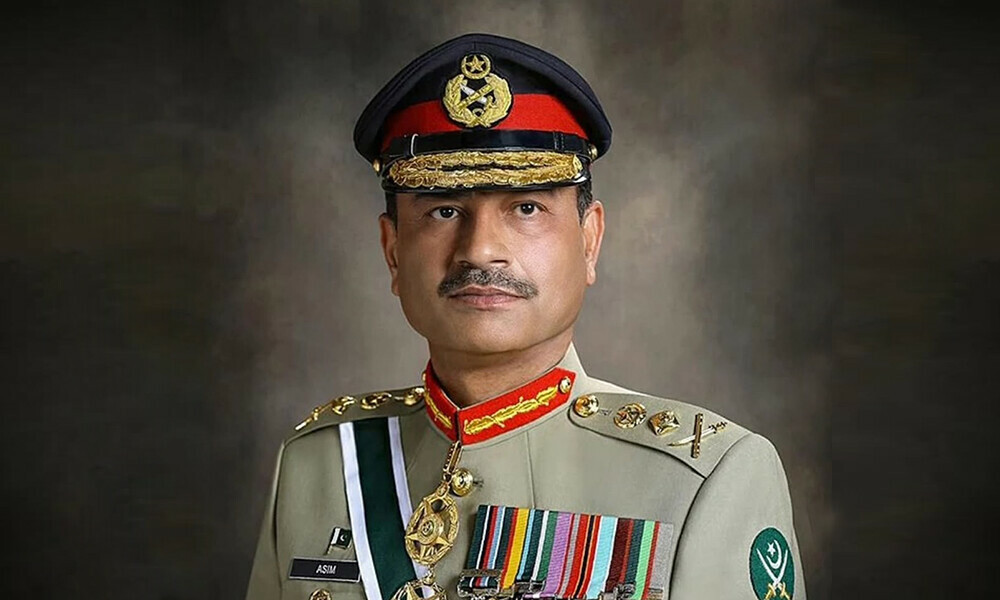
Field Marshal Asim Munir's personal rapport with Donald Trump, built during May 2025 ceasefire negotiations, has been central to Pakistan's emergence as a key West Asian diplomatic actor.
In 2021, following the chaotic US withdrawal from Afghanistan, Pakistan found itself diplomatically isolated, economically fragile, and politically unstable. Key Western capitals had largely written it off. The International Monetary Fund kept it on life support. The Financial Action Task Force kept it on grey lists. International investors stayed away. Analysts described it as a “basket case” state — too nuclear to ignore, too dysfunctional to take seriously.
Four years later, that assessment requires a fundamental revision.
In the span of twelve months, Pakistan has signed a NATO-style security pact with Saudi Arabia, joined the Trump administration’s Gaza Peace Board, brokered the ceasefire between the United States and Iran that ended the most dangerous military confrontation in the Middle East in decades, hosted pivotal diplomacy between nuclear powers, and seen its army chief Field Marshal Asim Munir become arguably the most consequential military leader in the Islamic world. Its military stood down India’s aggression in May 2025, shooting down four Indian jets including a Rafale, and demonstrated that its armed forces are a credible deterrent — not a paper tiger.
Pakistan’s internal situation remains deeply challenging. But its external trajectory has undergone one of the most remarkable reversals in any country’s diplomatic history in the post-Cold War era. The question is whether Islamabad can convert these external gains into lasting structural change — and whether the West Asia that is now courting Pakistan understands what it is actually getting.
The May 2025 Inflection Point: When the World Noticed Pakistan
The transformation begins with May 2025. When India launched Operation Sindoor — striking Pakistani territory in Pakistani Punjab, hitting civilian areas, killing 31 Pakistani civilians, targeting mosques — Pakistan’s response was measured, precise, and strategically devastating.
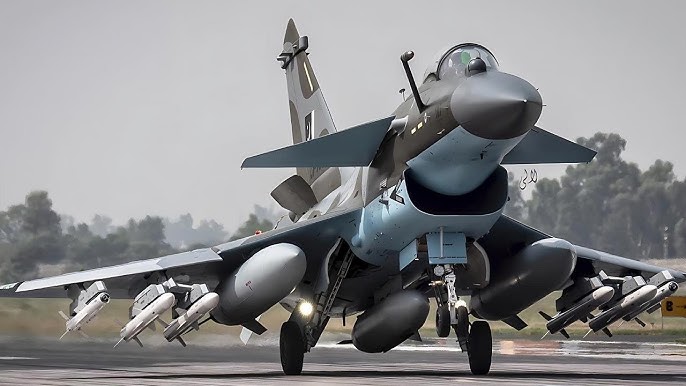
Operation Bunyan-un-Marsoos struck 26 Indian air bases in a single concentrated campaign. Pakistan’s JF-17 Thunder jets, armed with Chinese PL-15 missiles, downed four Indian aircraft: a Rafale, a Mirage 2000, a MiG-29, and a Sukhoi-30. The loss of India’s prized Rafale — presented by New Delhi as the crown jewel of its air force modernization — was dissected by every military in the world. The PL-15’s performance against a Western-platform aircraft drew analysis from NATO air forces. Pakistan had demonstrated not just willingness to fight but capability to win.
The ceasefire of May 10 — brokered with American involvement that Pakistan acknowledged and India refused to credit — ended the fighting. But its strategic consequences were only beginning.
Pakistan’s West Asian partners had, until that moment, largely forgotten the country’s role as a regional stabilizer. The last decade had been consumed by political instability, economic crisis, and counter-terrorism operations that made Pakistan look like a burden rather than an asset. May 2025 changed that perception overnight. A country that could fight India to a standstill, shoot down advanced French jets, and sustain a multi-domain military operation for four days against a nuclear-armed adversary three times its size was not a basket case. It was a capable state that had been going through a difficult period.
Field Marshal Munir — elevated to Pakistan’s highest ever military rank in recognition of his leadership through the conflict — became immediately credible in regional capitals in a way that no Pakistani military leader had been for years. His personal rapport with US President Trump, built during the ceasefire negotiations, would prove decisive for what came next.
The Saudi Pact: Pakistan Joins the West Asian Security Architecture
The first major diplomatic consequence of Pakistan’s May 2025 performance was the security pact with Saudi Arabia — signed in the months following the conflict and described by both sides as a binding, NATO-like framework.
The Saudi-Pakistan relationship is old and deep. Saudi Arabia has been a significant financial supporter of Pakistan for decades, providing aid, investment, and oil on concessional terms during economic crises. Millions of Pakistani workers remit money from the Gulf. The two countries share a Sunni Islamic identity that their leaderships have navigated carefully across shifting regional politics. But the relationship had never been formalized into a security framework — partly because Saudi Arabia had been cautious about binding itself to a country with Pakistan’s instability, and partly because Washington had generally preferred to manage Gulf security itself.
The May 2025 conflict changed the Saudi calculation. Riyadh has been reassessing its security architecture since the 2019 Aramco drone strikes that the US failed to respond to decisively, demonstrating that American security guarantees are conditional and response times unpredictable. The Trump administration’s willingness to engage militarily in Iran in 2026 has partially reassured the Gulf. But Gulf states are simultaneously building independent security capabilities and deeper partnerships with capable regional militaries.
Pakistan’s armed forces — 650,000 active personnel, nuclear capability, battle-hardened by four years of counter-terrorism operations and now by a direct conventional confrontation with India — represent exactly the kind of capable partner Saudi Arabia wants in its security architecture. Pakistani military personnel have served in Saudi Arabia since the 1960s. The 2026 framework formalizes and deepens what was previously an informal arrangement, binding both sides in a mutual security commitment with defined obligations.
For Pakistan, the strategic gains are significant. The pact provides a financial lifeline — Saudi investment, oil on favorable terms, and the diplomatic backing of the Arab world’s most influential state. It provides a regional security role that elevates Pakistan’s international standing. And it inserts Pakistan into the architecture of Gulf security at a moment when that architecture is being fundamentally redesigned.
The Gaza Peace Board: Pakistan as a West Asian Diplomatic Actor
The second major diplomatic development was Pakistan’s formal accession to the Trump administration’s Gaza Peace Board in January 2026.
The Gaza Peace Board — established under the October 2025 Comprehensive Plan to End the Gaza Conflict — is the governance mechanism responsible for overseeing the implementation of the ceasefire agreement, managing the delivery of humanitarian aid, and facilitating the eventual reconstruction of Gaza. Its membership spans regional Arab states, Islamic nations with credibility as neutral brokers, and countries with practical capacity to contribute to stabilization.
Pakistan’s inclusion reflected the Trump administration’s fundamental reassessment of its regional framework. Washington had previously tried to manage South Asia as a single theatre — maintaining relationships with both India and Pakistan within a shared strategic framework. The May 2025 conflict made that impossible. India and Pakistan are adversaries, not partners within a single framework. The Trump administration’s response, under the doctrine of “burden shifting” and “burden sharing,” was to separate the two: India gets positioned in the Indo-Pacific framework as a counterweight to China; Pakistan gets encouraged to play a larger role in West Asia, Central Asia, and Afghanistan.
Field Marshal Munir’s close personal relationship with Trump — built during the frantic diplomacy of the May 10 ceasefire — made Pakistan’s inclusion in the Gaza Board partly personal and partly strategic. The personal rapport mattered. But the strategic logic was sound: Pakistan has credibility in the Islamic world, military capability to contribute to stabilization, and a diplomatic posture acceptable to Arab states that would not accept other regional actors.
Pakistan’s participation in the Gaza Board inserts Islamabad into one of the most complex and consequential diplomatic processes of the decade. Whether that insertion produces tangible diplomatic outcomes — or merely prestigious photo opportunities — is the test that Islamabad now faces.
Pakistan Brokers the Iran Ceasefire: The Diplomatic Achievement of 2026
The single most consequential diplomatic achievement in Pakistan’s remarkable 2026 comes in April — when Islamabad brokered the ceasefire between the United States and Iran that ended 40 days of open military confrontation.
After US and Israeli strikes against Iran began on February 28, 2026, Pakistan’s foreign ministry immediately established contact with both Washington and Tehran. Islamabad had maintained functional diplomatic relations with Iran throughout the period of maximum pressure — a relationship built partly on geographic necessity (the two share a 900-kilometer border) and partly on Pakistan’s consistent positioning as a bridge between the Western-aligned world and the Islamic Republic. Iran’s Foreign Minister Abbas Araghchi traveled to Islamabad in mid-April 2026, where photographs of his embrace with Field Marshal Munir upon arrival in Tehran documented the personal warmth of the relationship.
Pakistan hosted the formal ceasefire talks in Islamabad — initially. When those talks failed, Islamabad maintained its role as back-channel communicator between Washington and Tehran, providing a line of communication that neither side could credibly establish through direct contact. The formal ceasefire announcement on April 8, 2026 credited Pakistani mediation — a recognition that would have seemed extraordinary twelve months earlier.
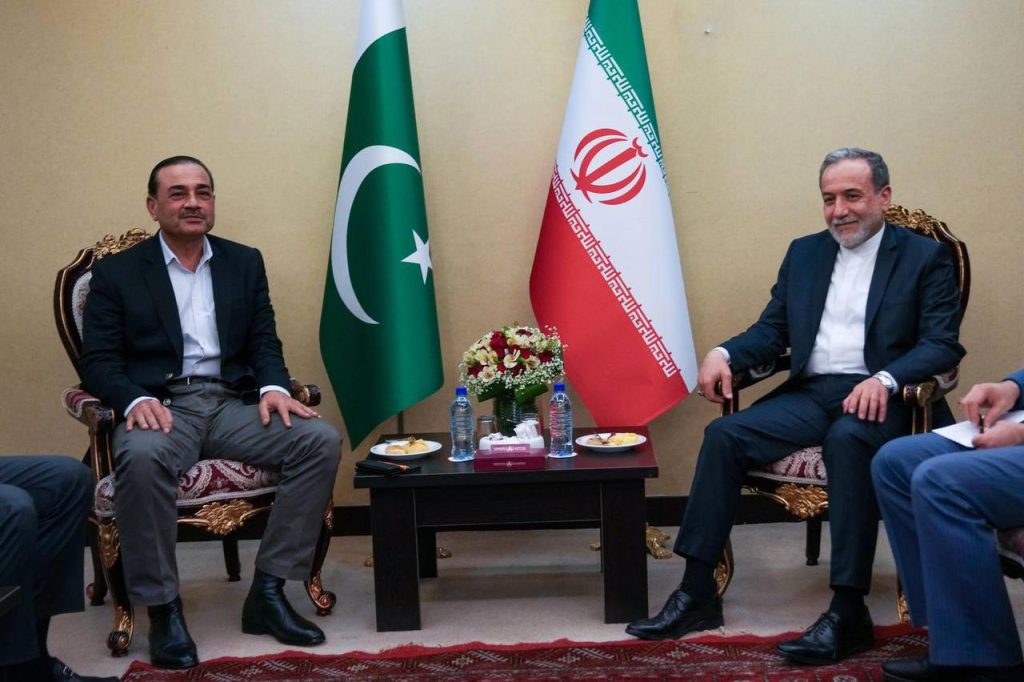
The Iran ceasefire mediation is the most significant act of Pakistani diplomatic agency in modern history. No Pakistani government had previously managed to position the country as an indispensable broker between the United States and a major adversary state. The achievement builds on — but transcends — Pakistan’s historical role as an intermediary between the US and China (a role it played in facilitating Nixon’s 1971 opening to China). It establishes Pakistan as a credible diplomatic actor whose neutrality and relationships are valued by parties who cannot talk directly to each other.
The China-Pakistan Economic Corridor: Deepening Under Pressure
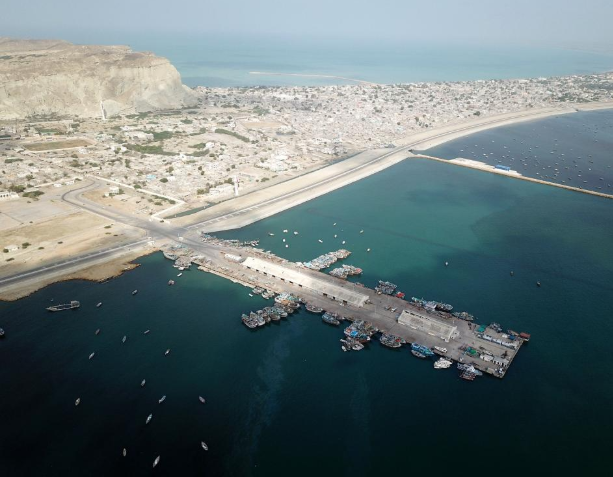
Running beneath all of Pakistan’s diplomatic maneuvering is a material reality: the China-Pakistan Economic Corridor (CPEC) — the $62+ billion infrastructure investment program that links China’s western province of Xinjiang to Pakistan’s Gwadar port on the Arabian Sea.
CPEC is the largest single-country bilateral investment program in the history of the Belt and Road Initiative. It has built highways, energy plants, and the Gwadar port and special economic zone. It has also created significant debt obligations, generated controversy about the terms of Chinese investment, and been targeted repeatedly by separatist and militant groups opposed to Chinese presence in Pakistan.
In 2026, with Pakistan’s diplomatic standing enhanced but its economic situation still fragile, CPEC is entering a second phase that Beijing has presented as more balanced — including greater focus on agriculture, technology, and industrial development rather than purely infrastructure. Whether this phase delivers more broadly distributed economic benefits than the first is the central question of Pakistan’s economic future.
The United States has long been uncomfortable with CPEC, viewing it as a mechanism for Chinese strategic penetration of a country that remains formally allied with Washington. Trump’s warming of relations with Islamabad — while simultaneously designating China as the primary strategic competitor and imposing tariffs that have significantly disrupted the global supply chains CPEC is designed to serve — creates a complex dynamic for Pakistan. Islamabad has consistently maintained that CPEC is an economic program, not a security one, and that Pakistan can maintain both US and Chinese relationships simultaneously. Whether that balancing act is sustainable as US-China competition intensifies is the defining strategic challenge of Pakistan’s current foreign policy.
The Internal Contradiction: External Gains, Internal Fragility
Pakistan’s diplomatic renaissance sits against a domestic political backdrop that remains deeply troubled.
The hybrid regime that has governed Pakistan since the removal of Imran Khan in April 2022 — combining nominal civilian government with deep military direction — continues to face significant public discontent. Khan remains in prison. His Pakistan Tehreek-e-Insaf party has been suppressed but not eliminated. Economic conditions, while improved from the crisis of 2023, remain difficult for ordinary Pakistanis — inflation has fallen from its peak but real wages have not recovered, and the energy sector crisis continues to impose costs on households and businesses.
The larger question that analysts at The Diplomat have identified is what material benefits Pakistan’s external achievements will actually deliver to ordinary citizens. A security pact with Saudi Arabia does not build schools. Membership on the Gaza Peace Board does not reduce electricity bills. The Iran ceasefire mediation enhanced Islamabad’s prestige but does not resolve Islamabad’s budget deficit.
Pakistan’s hybrid regime faces what is essentially a legitimacy challenge: it has demonstrated extraordinary competence in military operations and diplomatic maneuvering. It has not demonstrated comparable competence in economic management or in translating external gains into internal improvement. The failure to bridge external achievement and internal delivery is the consistent pattern of Pakistani governance since independence — and it is the pattern that, if unreversed, will eventually convert today’s diplomatic renaissance into tomorrow’s political crisis.
Key Facts: Pakistan’s Geopolitical Position, May 2026
| May 2025 conflict outcome | Pakistan downed 4 Indian jets incl. Rafale; struck 26 Indian air bases |
| Field Marshal Asim Munir | Promoted to Field Marshal, May 20 2025 |
| Saudi security pact | NATO-like framework signed post-May 2025 conflict |
| Gaza Peace Board | Pakistan joined January 2026 |
| Iran ceasefire | Pakistan-brokered, April 8 2026 — Islamabad hosted talks |
| Iran FM Araghchi | Visited Pakistan April 15, 2026 — met Field Marshal Munir in Tehran |
| CPEC total investment | $62+ billion committed |
| US framework | Pakistan positioned for West Asia/Central Asia; India for Indo-Pacific |
| Trump-Munir relationship | Personal rapport built during May 2025 ceasefire negotiations |
| Pahalgam attack perpetrators | Still unidentified, May 2026 |
What Comes Next
The trajectory of Pakistan’s geopolitical rehabilitation depends on several variables that are not entirely within Islamabad’s control.
The stability of the Saudi security pact depends on whether Saudi Arabia’s own regional ambitions — particularly its Vision 2030 economic program — create the sustained economic partnership that Pakistan’s military-linked economy requires. It also depends on whether future Pakistani governments maintain the relationship on terms that serve Pakistani national interests rather than only Saudi ones.
Pakistan’s role in West Asian diplomacy depends on whether the structures being built — the Gaza Peace Board, the Iran ceasefire framework, the bilateral security pact — evolve into durable institutions or dissolve when the immediate crises that created them are resolved.
Most critically, Pakistan’s external rehabilitation depends on whether its internal fragility is addressed with anything approaching the energy and competence that its external diplomacy has demonstrated.
A country that can broker peace between the United States and Iran but cannot provide reliable electricity to its citizens has a fundamental imbalance at the heart of its national project. Resolving that imbalance — converting geopolitical momentum into economic development and institutional legitimacy — is the defining challenge of Pakistan’s remarkable and unlikely comeback.
The world is watching Islamabad with new respect. Whether that respect endures depends on what Pakistan does with the window that May 2025 opened.
Sources: The Diplomat (Pakistan’s Rising Role in West Asia, May 2026; India’s New Pakistan Strategy, February 2026), Providence Magazine (Interlocking Dynamics US-India-Pakistan-China, December 2025), IGCC (India-Pakistan Crisis, May 2025), CSIS, Stimson Center, Belfer Center
About the Author