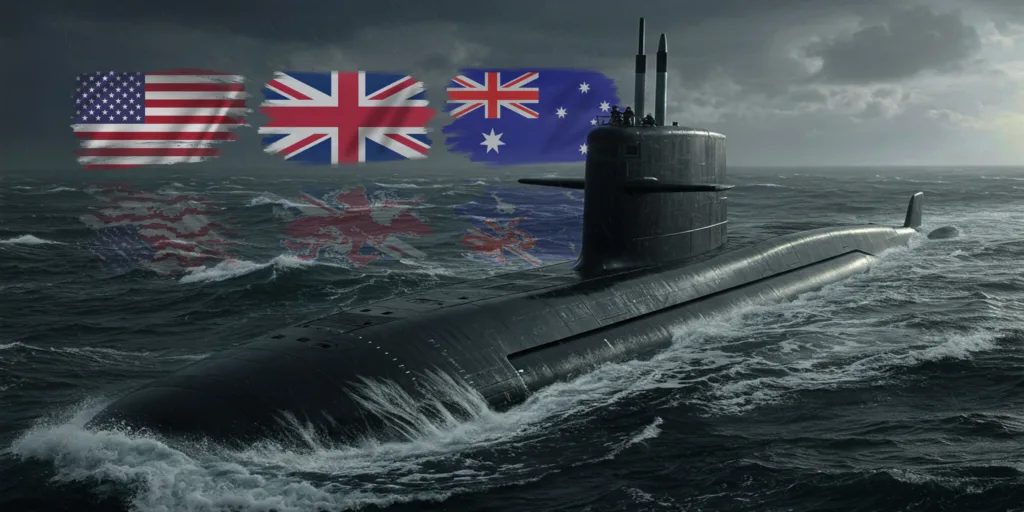
AUKUS will deliver nuclear-powered conventionally armed submarines to Australia, with US rotations through HMAS Stirling beginning from 2027. It is the most structurally significant security development in the Indo-Pacific in decades.
For most of the post-Cold War era, the security architecture of the Asia Pacific rested on a simple foundation: a network of US bilateral alliances — with Japan, South Korea, Australia, the Philippines, and Thailand — supplemented by forward-deployed American forces and the implicit guarantee that Washington would respond to any major security challenge in the region.
That foundation has not collapsed. But it is being substantially renegotiated.
Donald Trump’s second administration has introduced a level of unpredictability into US alliance relationships that has driven Asian governments to do something they have long resisted: build independent security capacity and regional frameworks that can function with less American certainty at their core. The result — in AUKUS, the Quad, a newly assertive Japan, an increasingly capable Australia, and a Philippines that has simultaneously deepened US ties and hedged against American reliability — is the most significant restructuring of Indo-Pacific security architecture since the US-Japan alliance was reformed in 1960.
It is happening fast, unevenly, and with enormous strategic implications for how the most consequential geopolitical competition of the 21st century — between the United States and China — will unfold in the region that will determine its outcome.
The United States’ Shrinking Reliability Premium
The East Asia Forum described it precisely in March 2026: “The United States’ external posture has transformed from that of the global order’s underwriter to its chief disruptor.”
For Asia Pacific allies, Trump’s behavior has been both clarifying and alarming. Taiwan is notably absent from the 2026 National Defense Strategy — though the NDS promises “a strong denial defense” along the first island chain of which Taiwan is a central part. The removal of Maduro in Venezuela, the war with Iran, and the threats against Cuba and Colombia have demonstrated that the Trump administration is willing to use military force unilaterally and without allied consultation. That willingness to act is reassuring in one sense — it suggests America is not retreating into isolationism. But the absence of allied consultation is precisely what Asian governments find most destabilizing.
Japan, South Korea, and the Philippines are US treaty allies. None of them want to be dragged into a conflict they were not consulted about. None of them want to discover, in a Taiwan crisis or a North Korea escalation, that the US strategic posture has shifted in ways they learned about from Trump’s Truth Social account rather than a State Department briefing. The unpredictability premium — the discount that rational actors apply to unreliable guarantees — has risen sharply.
The consequence is a regional security architecture that is evolving rapidly from one organized around bilateral US alliances at its hub toward one with more distributed nodes of capability, more multilateral frameworks, and more emphasis on what regional states can do together without waiting for Washington.
AUKUS: The Most Consequential Security Pact of the Decade
AUKUS — the trilateral security partnership between Australia, the United Kingdom, and the United States — announced in September 2021 and now in its operational implementation phase, is the most structurally significant security development in the Indo-Pacific in decades.
Its Pillar 1 — delivering nuclear-powered conventionally armed submarines to Australia — is the headline capability. By the late 2020s, Australian sailors will begin training on US Virginia-class submarines. US and UK submarines will begin rotating through HMAS Stirling near Perth, Australia, from 2027. Australia will purchase 3–5 Virginia-class submarines in the early 2030s before its own AUKUS-class submarines enter service around 2042. The net effect is that Australia will operate the world’s most capable non-nuclear submarine fleet, permanently positioned in the Indo-Pacific, integrated into US and UK operational planning from day one.
The strategic logic is straightforward and significant. A Chinese military operation against Taiwan — or a blockade of the South China Sea — requires China to manage not just American naval power but Australian submarine capability operating from the southern approaches to the region. AUKUS submarines complicate China’s operational calculus in ways that no surface capability can match, because submarines in contested waters cannot be easily located or neutralized before they act.
Pillar 2 — advanced capability sharing in cyber, AI, quantum computing, hypersonic weapons, electronic warfare, and undersea systems — is less visible but arguably more transformative over the long term. It creates a permanent framework for technology integration between three of the world’s most capable defense technology establishments, specifically aimed at maintaining asymmetric advantages over China in the domains that will determine military outcomes in the coming decades.
AUKUS has attracted criticism from France — whose submarine contract with Australia was cancelled to make way for the nuclear-powered alternative, producing one of the sharpest bilateral crises in the history of the US-French alliance — and cautious concern from several ASEAN states worried about regional arms race dynamics. China has called it an “Anglo-Saxon” bloc and a serious threat to regional stability. The criticism reflects the pact’s significance. No country builds a coalition to counter a threat that doesn’t exist.
The Quad: From Diplomatic Forum to Security Architecture
The Quadrilateral Security Dialogue — the United States, Japan, Australia, and India — has evolved from a diplomatic forum that briefly dissolved in 2008 under Australian skepticism into a functioning security architecture that meets at head-of-government level and coordinates across maritime security, supply chains, technology, health, and infrastructure.
The Quad’s genius — and its limitation — is its deliberate avoidance of the language and structure of military alliance. India, jealous of its strategic autonomy and unwilling to formally align with the US against China, has consistently resisted characterizing the Quad as anti-China. The Quad has therefore developed around areas where all four members share interests — protecting freedom of navigation, building resilient supply chains, developing undersea cable infrastructure, coordinating on pandemic response — without requiring the formal security commitment that India will not give.
In 2026, the Quad’s most important development is the expansion of its operational scope. The Malabar naval exercises — annual joint maritime drills involving all four Quad navies — have expanded in scale and complexity each year, now incorporating submarine operations, anti-submarine warfare, and carrier operations that go well beyond the surface-level coordination of early exercises. Japan’s 2025 decision to acquire long-range strike capabilities — specifically the capacity to strike enemy missile launch sites — and its reinterpretation of its pacifist constitution to permit more active defense roles has made it a qualitatively more capable military partner.
India’s position within the Quad remains the most complex. New Delhi is closer to Washington than at any point in post-independence history — driven by shared concern about Chinese military expansion along the Himalayan frontier and Beijing’s growing naval presence in the Indian Ocean. But India also maintains functional relationships with Russia — buying discounted Russian oil throughout the Western sanctions regime — and exercises strategic autonomy that periodically frustrates American alliance managers.
The India-Pakistan conflict of May 2025, which the US brokered to a ceasefire, has produced a recalibration of the US-India-Pakistan triangle that the Providence Magazine analysis describes with precision: “India emerges as strategic beneficiary, Pakistan as object of management, and China as the stretched challenger.” India’s value to the United States as a Quad partner rises as Pakistan’s importance to the US is managed for stabilization purposes. China’s strategic relationship with Pakistan deepens as Washington draws India closer — and Beijing is stretched between supporting Pakistan and managing its India relationship.
ASEAN’s Hedge: Refusing to Choose
The ten nations of the Association of Southeast Asian Nations — collectively the world’s fifth-largest economy with 700 million people — are simultaneously the most economically consequential and the most diplomatically evasive actors in the Indo-Pacific.
ASEAN’s long-standing principle of “centrality” — the claim that ASEAN should remain the primary hub of regional multilateralism — is under severe strain from both great power competition and the proliferation of minilateral security arrangements that bypass ASEAN entirely. When AUKUS was announced in 2021, ASEAN was not consulted. When Balikatan 2026 expanded to include Japan, Canada, Australia, New Zealand, and France, ASEAN’s role was peripheral. When the US and China conduct their bilateral summits, ASEAN watches rather than participates.
The ASEAN states’ response to this marginalization has been a studied refusal to choose sides combined with active hedging — deepening economic ties with China (its largest trading partner) while maintaining security cooperation with the United States and quietly welcoming the expanded regional presence of Japan, India, and Australia as additional balancers. Malaysian Defense Minister Chang, speaking about the South China Sea Code of Conduct negotiations, expressed cautious optimism about a 2026 deal — while simultaneously acknowledging that the Philippines’ ASEAN chairmanship in 2026 may introduce different diplomatic dynamics.
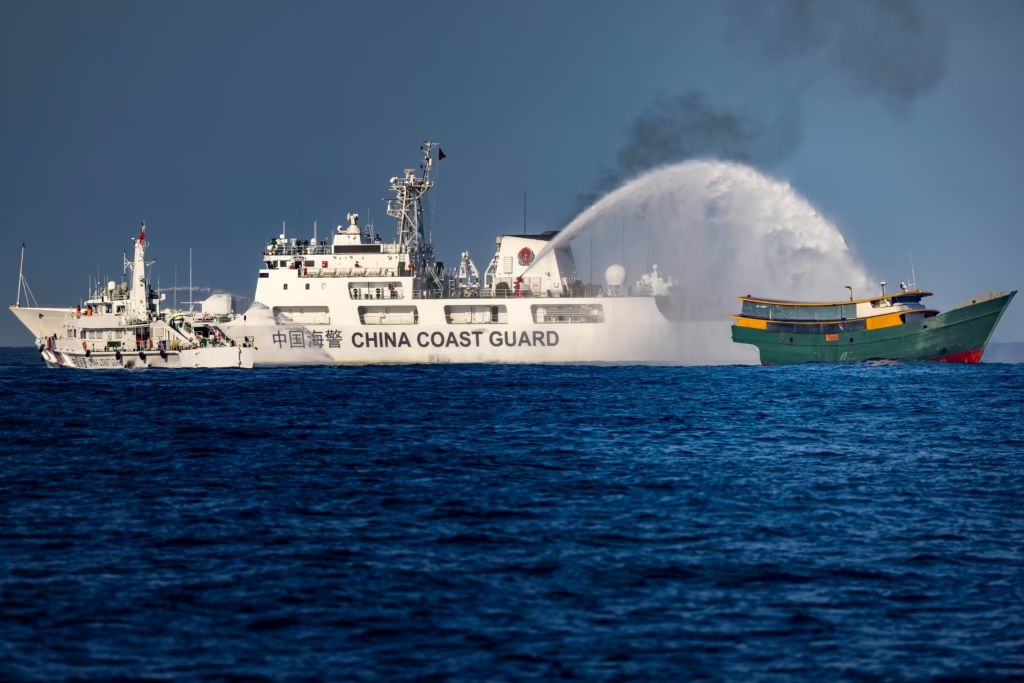
The Philippines under President Marcos Jr. has taken the most explicitly pro-US posture of any ASEAN state — dramatically expanding the number of US military base access sites, participating in Balikatan exercises at record scale, and publicly documenting Chinese Coast Guard harassment of its vessels at Second Thomas Shoal and Scarborough Shoal. The Philippines’ experience — a treaty ally subject to systematic Chinese maritime harassment that the US has not prevented — is a live illustration of the gap between alliance guarantees and alliance delivery that every ASEAN state watches carefully.
Vietnam, Indonesia, and Malaysia maintain more carefully balanced positions — trading with China, accepting Chinese investment, managing South China Sea disputes through diplomatic channels, while quietly welcoming US naval presence as a counterweight that they would never formally request and would loudly deny wanting.
Japan’s Strategic Revolution: The Most Significant Regional Shift
Of all the security developments in the Asia Pacific in 2025–2026, Japan’s transformation deserves the most careful attention — because it is the most historically significant and the most consequential for regional stability.
Japan’s post-war constitution, Article 9, renounced war as a sovereign right and prohibited maintaining war potential. For 75 years, Japanese defense was explicitly defensive — a Self-Defense Force focused on repelling invasion, with no offensive strike capability and strict limits on weapons exports. This constitutional posture was both a constraint and a form of reassurance to neighbors who remembered Japanese imperial expansion.
That posture is now definitively over.
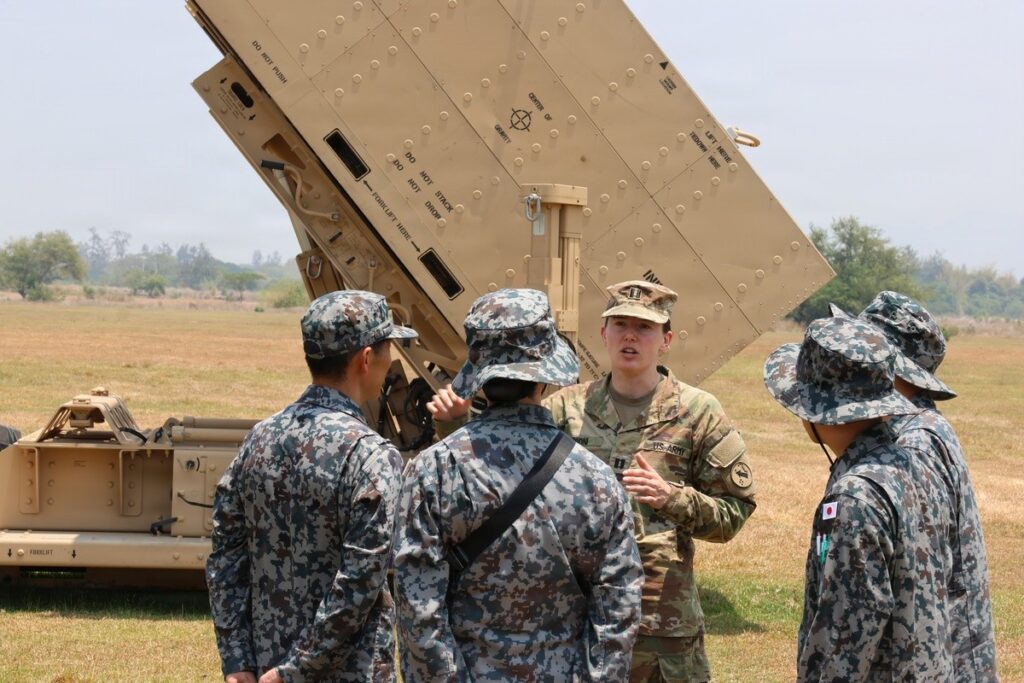
Japan’s 2022 National Security Strategy authorized long-range strike capabilities. Its defense budget has been doubled to 2% of GDP — the largest increase since the post-war era. It has purchased Tomahawk cruise missiles from the United States for the first time — giving Japan the ability to strike targets on the Chinese mainland from Japanese territory. It has relaxed weapons export rules to allow defense equipment sales to allies. It participated in Balikatan 2026 as an active partner for the first time. Balikatan 2026 was the largest iteration of the annual Philippine-US exercise ever conducted — and Japan’s inclusion marks a qualitative shift in how Tokyo defines its security perimeter.
The strategic logic driving Japan’s transformation is the same logic driving Europe’s rearmament: American reliability can no longer be assumed unconditionally. Japan is not abandoning the US alliance — the alliance remains the cornerstone of Japanese security. But Japan is building capacity that would allow it to sustain a meaningful defense even in a scenario where American support is delayed, incomplete, or politically complicated.
For China, a rearmed Japan with offensive strike capability is the most alarming regional development since the end of the Cold War. Beijing’s official response has been forceful condemnation. Its operational response has been to accelerate its own military build-up — which in turn accelerates Japan’s — in the classic security dilemma dynamic that all parties recognize and none know how to exit.
The US-China Competition: Who Is Winning the Regional Architecture Race?
The East Asia Forum’s Brantly Womack identifies the key asymmetry: China-US relations are “the least affected by Trump’s disruptions” because “China’s asymmetric parity with the United States gives it sufficient counter-leverage to discourage bullying.” Trump can impose 145% tariffs on Chinese goods. China can threaten American automotive supply chains with rare earth export restrictions. The relationship is too consequential for either side to allow it to spiral into the chaos that has characterized US relations with Europe.
This relative stability in the bilateral relationship does not mean China is winning the regional architecture competition. AUKUS has deepened. The Quad has expanded. Japan has rearmed. The Philippines has expanded US basing access. Australia is spending 2.4% of GDP on defense and rising. South Korea is increasing its military budget while managing a complex relationship between US alliance membership and economic dependence on China.
What China has done successfully is deepen its economic relationships with ASEAN states to the point where they cannot afford to align explicitly against Beijing, and build an alternative regional economic architecture — through RCEP, the Belt and Road, and bilateral investment — that provides a credible option for countries that do not want to choose between the US and China.
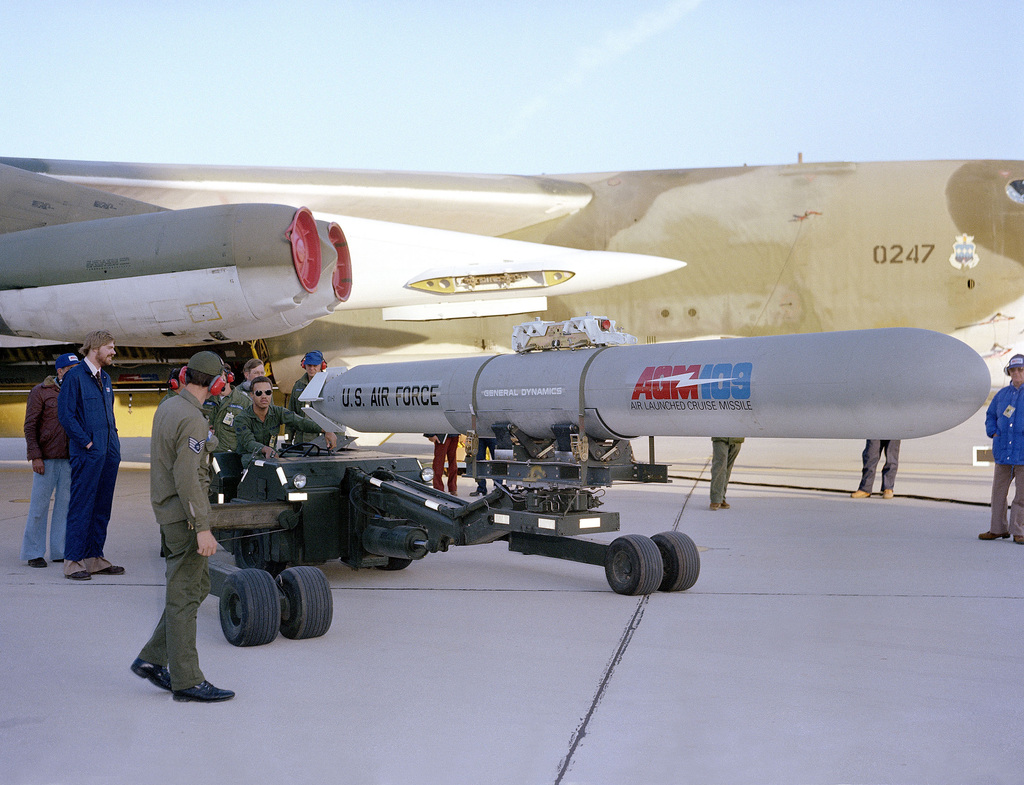
The 2026 Balikatan exercise demonstrated both the progress and the limits of the US regional framework. It was the largest ever, with Japan participating for the first time alongside Australia, New Zealand, Canada, and France. China responded with naval deployments, H-6 bomber flights near Scarborough Shoal, and intensive surveillance of the exercise. The military balance is still decisively in the US alliance system’s favor. The political balance — who can offer regional states more of what they actually need — is more competitive.
Key Facts: Asia Pacific Geopolitics, May 2026
| AUKUS Pillar 1 | Nuclear submarines for Australia; US rotations from HMAS Stirling from 2027 |
| AUKUS Pillar 2 | Cyber, AI, quantum, hypersonic, EW capability sharing |
| Balikatan 2026 | Largest ever; Japan participated for first time |
| Japan defense budget | Doubled to 2% GDP; Tomahawk missiles purchased |
| Australia defense spending | 2.4% GDP (rising) |
| Philippines US basing | Dramatically expanded access sites under Marcos Jr. |
| ASEAN posture | Active hedging — refusing to choose sides |
| Quad navies | Malabar exercises expanding to submarine and carrier operations |
| South China Sea COC | Negotiations ongoing; 2026 deadline uncertain |
| Taiwan in 2026 NDS | Notably absent by name; “strong denial defense” along first island chain pledged |
What the New Architecture Means
The Indo-Pacific security architecture of 2026 looks substantially different from 2017, when Trump began his first term. AUKUS did not exist. The Quad was dormant. Japan had not authorized offensive strike capability. Australia was spending 2% of GDP. The Philippines was flirting with China under Duterte. South Korea was managing North Korea through engagement.
Every one of those conditions has changed. The architecture that has emerged is more distributed, more capable, and more explicitly oriented toward managing Chinese military expansion than anything that existed before.
Its vulnerability is the same vulnerability that afflicts every US-led alliance architecture: it depends on sustained American commitment and reliable American leadership. If Trump withdraws from NATO, undermines AUKUS, walks away from the Philippines treaty commitment, or reaches a bilateral accommodation with Beijing that trades regional alliance guarantees for trade concessions, the entire structure collapses faster than it was built.
The regional states building this architecture know this. It is why they are simultaneously deepening US ties and building independent capabilities. It is why Japan has Tomahawks. It is why Australia has nuclear submarines. It is why AUKUS Pillar 2 exists. They are not just building an alliance. They are building a hedge against the alliance.
The new Indo-Pacific order is being constructed by countries that believe in collective security but no longer believe in unconditional American reliability. The architecture that emerges from that combination — stronger, more distributed, more self-sustaining but also more complex and potentially more prone to miscalculation — will shape the most consequential geopolitical competition of the coming century.
Sources: East Asia Forum (Asia Pacific Steps Up, March 2026), ORF (Understanding Russia’s Asia-Pacific Strategy, April 2026), RJSA (Indo-Pacific Geopolitics, 2025), Wilson Center, AIIA (Future of Strategic Minilateralism, December 2024), CSIS, Stimson Center, US Indo-Pacific Command
About the Author