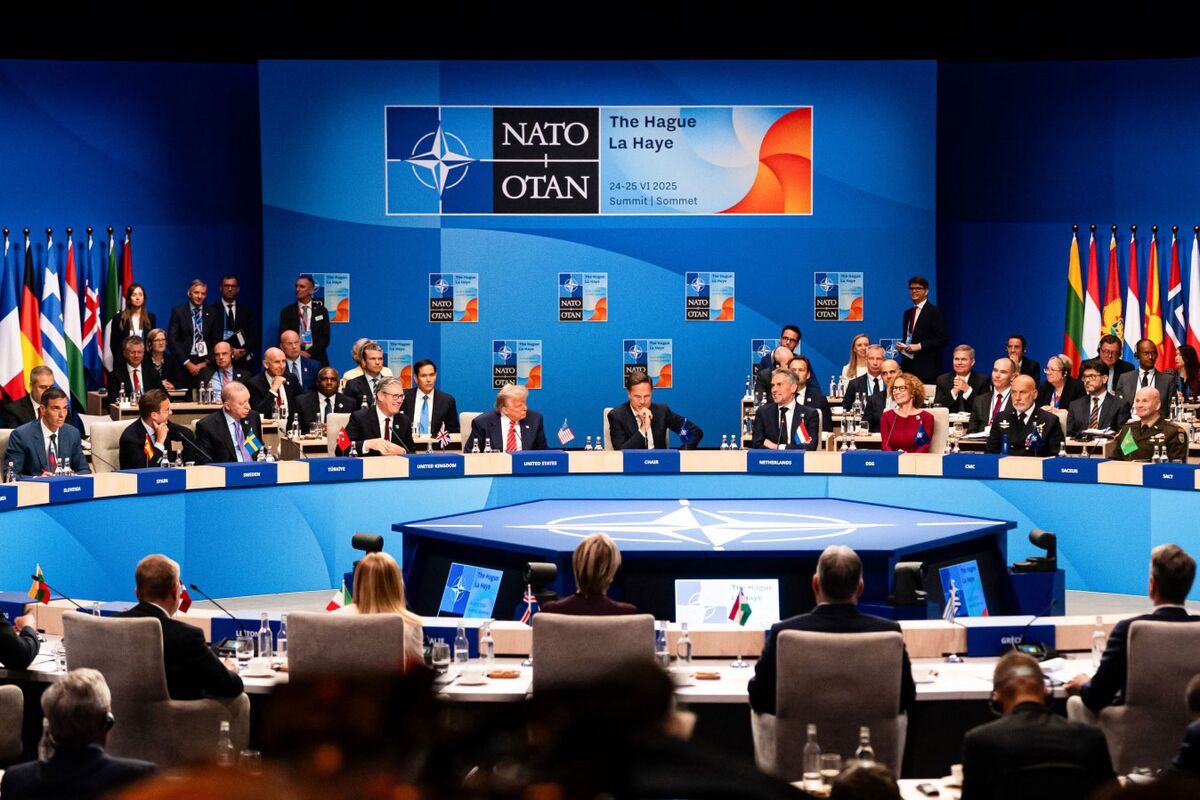
At The Hague NATO Summit in June 2025, all 32 members pledged to spend 5% of GDP on defense by 2035. It was a commitment driven not by collective ambition but by the shock of Trump's explicit threats to abandon allies who failed to pay their share.
For seventy years, Europe’s security rested on a bargain so comfortable that it stopped feeling like a bargain at all. The United States would provide the nuclear umbrella, the forward-deployed troops, the intelligence architecture, the command structure, and the ultimate guarantee of collective defense. Europe would contribute what it could — which was consistently less than agreed — and focus its energy on building the world’s most successful economic union. The arrangement was so durable that Europeans stopped examining its assumptions.
Donald Trump has now examined them — loudly, repeatedly, and with deliberate contempt for European sensibilities.
In January 2026, the Trump administration threatened tariffs on eight NATO allies for conducting military exercises in Greenland and refused to rule out military force to acquire the Danish territory. In November 2025, the US National Security Strategy described Europe not as a partner but as an economic rival prone to “civilizational erasure” and “undermining political liberty.” In early 2026, the US withdrew 5,000 troops from Germany — a modest number but a loud political signal. After Europeans declined to support US-Israeli strikes on Iran, Trump told reporters he was “absolutely” considering withdrawing from NATO. Secretary of State Rubio said the US would “re-examine” its relationship with the alliance.
And then, in perhaps the most revealing moment of the entire crisis: EU foreign policy chief Kaja Kallas, who had described European strategic autonomy as an aspiration in 2025, said after the Iran war that the shift in the transatlantic relationship was “structural, not temporary” and that NATO needed to become “more European to stay strong.”
The end of American Europe — the era in which US security guarantees were unconditional, reliable, and politically uncontested — has arrived. What Europe does next will determine whether the continent becomes a genuine geopolitical power or simply a well-funded collection of national armies that cannot act together when it matters.
The Greenland Crisis: When Washington Turned on Its Allies
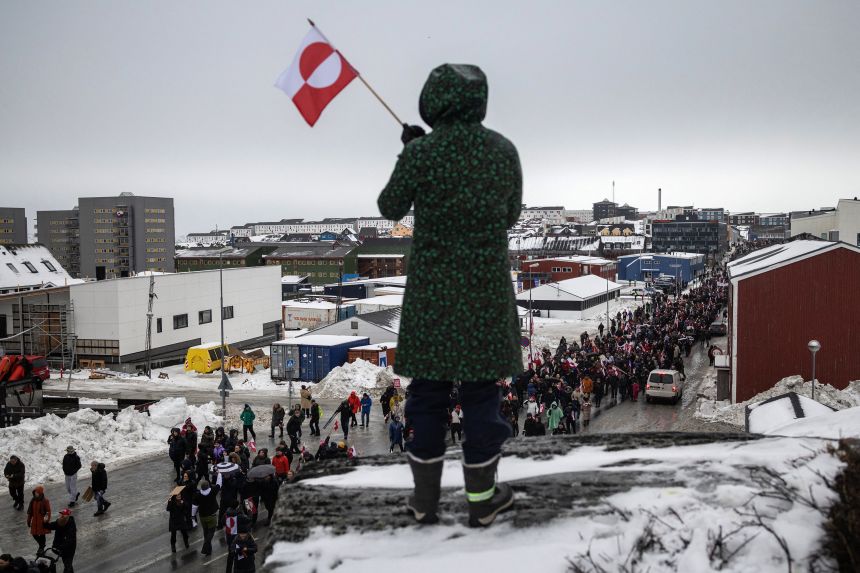
No single episode crystallized the new transatlantic reality more sharply than the Greenland crisis of early 2026.
Trump’s interest in acquiring Greenland — the world’s largest island, an autonomous Danish territory with enormous strategic value in the Arctic — was first floated in his first term and dismissed as a peculiarity. In late 2025 and early 2026, it became policy. The administration increased pressure on Denmark to cede control of the territory, threatened tariffs, and explicitly refused to rule out military force against a NATO ally to acquire strategic real estate.
When Denmark, Norway, Sweden, France, Germany, the UK, the Netherlands, and Finland conducted joint military exercises in Greenland — a normal NATO security activity — Trump announced punitive tariffs on all eight countries: 10% immediately, rising to 25% by June. He was imposing economic penalties on NATO allies for conducting NATO exercises in NATO-relevant territory.
Canada’s UN ambassador, asked about Trump’s offer to let Canada join the Golden Dome missile defense system for $61 billion or face annexation as a free alternative, called it “a protection racket.” The characterization landed sharply in European capitals, where the same logic was recognized as applying to their own security relationships with Washington.
Former Estonian Prime Minister Kaja Kallas — now EU foreign policy chief — observed in January 2026 that Beijing and Moscow “are probably celebrating right now.” She was right. Russia and China have consistently sought to fracture the transatlantic alliance. Every Trump statement questioning NATO’s reliability does more for Russian strategic interests than any Russian military operation could accomplish without firing a shot.
The National Security Strategy Shock: Europe as Enemy
The Trump administration’s November 2025 National Security Strategy was not a routine policy document. It was, as CSIS described it, a document that “effectively declares war on European politics, Europe’s political leaders, and the European Union.”
The NSS described Europe as prone to “civilizational erasure” — a phrase adopted from the European far right — and accused EU institutions of “undermining political liberty.” It stated explicitly that there would be no more NATO expansion, closing the door on Ukraine’s membership aspiration. It called on the US to use its resources to directly intervene in European politics — language that CSIS analysts interpreted as signaling potential US funding for far-right European political parties and groups.
The NSS also made clear that Europe is less of a defense priority despite the Russian threat — explicitly stating the expectation that Europe should handle its own defense. Combined with the withdrawal of troops from Germany, this constitutes a formal strategic shift: the United States is retrenching from European security, with or without European readiness.
The document was read in European capitals with a mixture of shock and, among some analysts who had been warning of exactly this trajectory for years, grim recognition. LSE’s European Politics blog noted that Europeans had “consistently overlooked Moscow’s long-term strategic ambitions” and “deepened energy dependence on Russia” while relying on American protection that was never guaranteed to be permanent.
The shock of the NSS, coming on top of the Greenland crisis, the Iran war refusal, and the NATO threat, has produced what analysts are calling a “perceptual shift” in European capitals — the recognition that what was supposed to be a temporary disruption under Trump is in fact a structural realignment. Former Biden advisor Amanda Sloat, writing in Time Magazine, put it plainly: “The second Trump Administration is very different from the first. The window for hoping it reverts to normal is closed.”
The Iran War Refusal: Europe’s Clearest Assertion Yet
The test that most crystallized Europe’s new posture came with the US-Israeli strikes on Iran beginning February 28, 2026.
The Trump administration asked European allies to support — or at minimum not actively oppose — the military operation. The response was, with the exception of Spain which provided some logistical access, a near-uniform European refusal. Germany, France, Italy, Portugal, Romania, Greece, and the UK all declined to participate militarily. Several countries blocked US military aircraft from using their airspace. European leaders emphasized diplomacy over escalation. Macron warned publicly against “submitting to the law of the strongest.”
Trump responded by calling NATO a “paper tiger” without the United States and making his most explicit statements yet about potentially withdrawing from the alliance. Rubio said the US would re-examine its NATO relationship after allies refused to support the Iran operation.
The European Policy Centre’s analysis of this moment is careful and important: “European politicians who match his tone only deepen the damage.” The argument is that strident public criticism of Washington, while politically satisfying domestically, carries strategic costs at a moment when Russia is waging war on Ukraine and preparing for potential NATO confrontation. NATO’s deterrence rests partly on Russian uncertainty about whether the US would come to Europe’s defense. Trump’s rhetoric puts that ambiguity at risk — and European politicians who amplify the split make it worse.
But the European refusal on Iran also demonstrated something significant: Europe has begun making independent strategic judgments that differ from Washington’s, and it is willing to absorb the diplomatic cost. That was not true in 2017 during Trump’s first term, when European governments largely deferred despite private alarm.
Strategic Autonomy: From Aspiration to Architecture
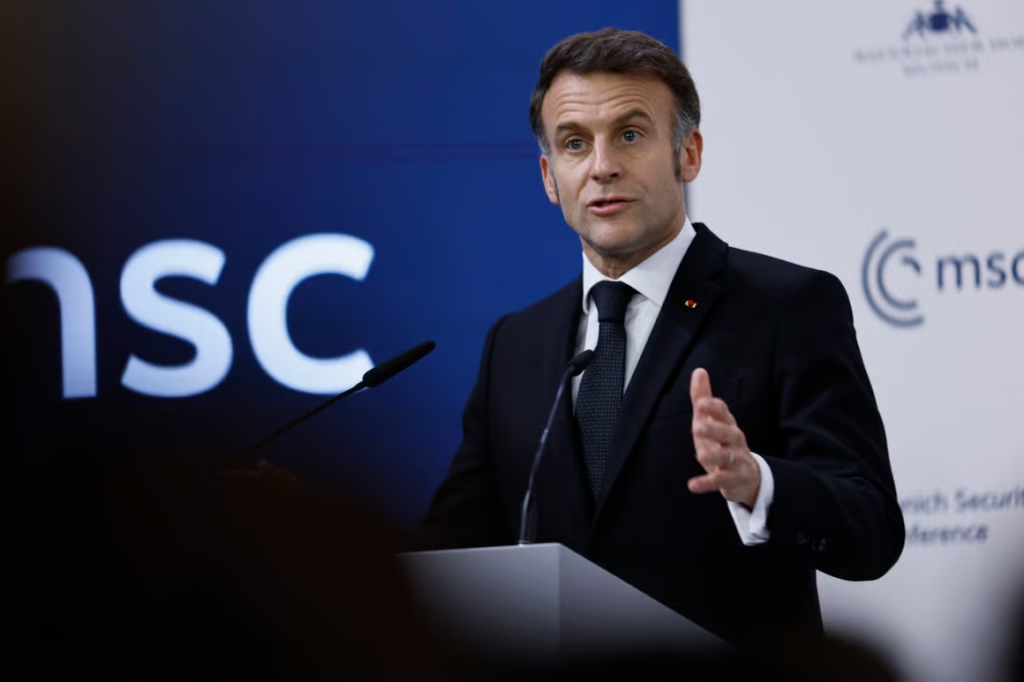
The concept of European “strategic autonomy” — the capacity to act independently in security and defense without depending on the United States — has been discussed in Brussels since at least the 1990s. It has consistently been described as an aspiration. In 2026, it is becoming architecture.
The material foundations are being built at historic speed:
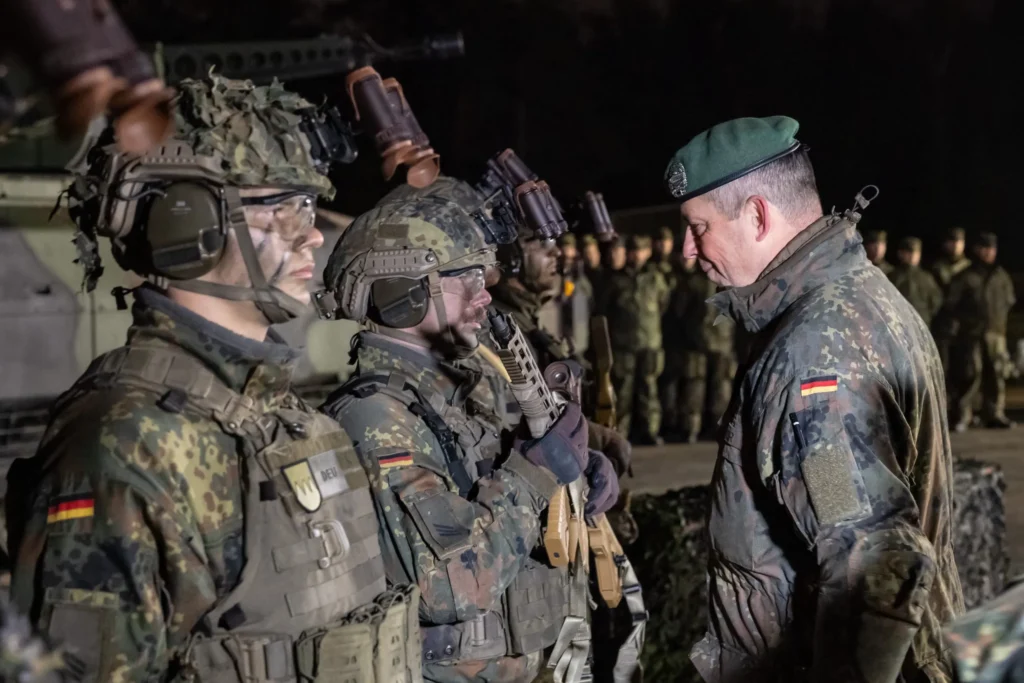
Defense spending: All 32 NATO members are projected to meet or exceed the 2% of GDP target in 2025 — the highest proportion in NATO’s history. At the June 2025 NATO Summit in The Hague, allies agreed to spend 5% of GDP by 2035, with an interim commitment of 3.5% on military capabilities and 1.5% on critical infrastructure. Germany’s defense budget is projected to reach €167.8 billion by 2030. Poland is spending nearly 4.5% of GDP. The Baltic states are reinstating or expanding conscription.
Command structures: The EU is expanding European command capacity within NATO — a “heavier European pillar inside NATO,” in the words of Fox News analyst Tanvi Ratna. EU defense commissioner Andrius Kubilius has told European lawmakers that Europe must be ready to replace American “strategic enablers” — space intelligence data, air-to-air refueling, satellite communications — with European ones. Joint Force Commands at Norfolk, Naples, and Brunssum have been placed under European flag officers.
Industrial capacity: The EU’s SAFE rearmament instrument provides €150 billion in cheap loans specifically structured to encourage joint procurement and reduce Europe’s fragmentation of 178 different weapons systems. The ReArm Europe fiscal exemption allows member states to exceed deficit limits by 1.5% of GDP per year for defense between 2025 and 2028.
Ukraine integration: As LSE’s European Politics blog argues, incorporating Ukraine — now “one of the world’s most capable military forces” after four years of combat — into European security structures serves Europe’s own defense interests directly. Ukrainian forces, trained in modern drone warfare, electronic warfare, and combined arms operations, represent a capability windfall for any European security architecture that absorbs them.
The EU’s own polling shows the political mandate is real: 77% of EU citizens view Russia’s invasion of Ukraine as a threat to EU security, and 78% are concerned about EU defense and security over the next five years. European governments are acting with public backing.
The Limits of Autonomy: What Europe Still Cannot Do
The strategic autonomy architecture being built is real. Its limits are equally real — and European officials are acknowledging them publicly with unusual candor.
EU defense commissioner Kubilius has stated explicitly that Europe depends on the United States for strategic enablers that it cannot currently replicate: space intelligence data, satellite communications, air-to-air refueling, airlift capacity, and the command-and-control infrastructure that links them. The US provides the cognitive architecture of NATO — the intelligence, the targeting, the communications backbone — not just the troops. Replacing troops is straightforward. Replacing the architecture takes years.
The European Political Community report published in April 2026 described the EU as navigating “fundamental uncertainty” — a condition where geopolitical and economic risks are no longer measurable by traditional metrics. The LSE analysis notes that Europe’s challenge “is partly one of material capabilities, but even more fundamentally one of mindset, self-confidence and unity.”
Unity is the most challenging element. Eastern European countries — Poland, the Baltic states, Finland — are rearming with existential urgency. They view Russian military threat as immediate and the US security guarantee as unreliable. They want maximum deterrence. Southern European countries — Spain, Portugal, Italy — are more skeptical of large defense spending increases and more cautious about confrontational postures toward Russia and toward Washington.
France and Germany — the traditional engine of European integration — are navigating a relationship transformed by Germany’s sudden ascent to the largest defense spender in absolute terms. By 2029, Germany’s defense budget in absolute terms will be approximately twice France’s — a reversal of the Franco-German relationship that has defined European security for decades, with implications for leadership, procurement decisions, and strategic direction that have barely begun to be worked through.
Russia’s Strategic Opportunity — and Its Limits
Russia has been the primary geopolitical beneficiary of transatlantic fracture. Every Trump statement questioning NATO, every European refusal to support American military operations, every tariff imposed on NATO allies, strengthens Moscow’s hand by demonstrating that Western cohesion is conditional and unreliable.
Putin’s calculation — stated explicitly in his public communications — has been that time favors Russia. Western democracies are internally divided. Trump is unpredictable. European electorates are becoming more skeptical of indefinite Ukraine support. If Russia can sustain the war long enough, the political conditions that support Ukraine may erode.
The flaw in that calculation — which the LSE analysis identifies — is that Trump’s shock therapy, while painful, has produced the very European autonomy build-up that Russia most fears. A Europe that depends entirely on the US for its defense can be neutralized by US disengagement. A Europe that has built genuine military capability, independent command structures, and sustained defense industry investment is a fundamentally more robust adversary.
The Eurasian Review notes the paradox precisely: “Trump called on other nations to help police the strait [of Hormuz]. It was not simply Trump being Trump. It was the National Defense Strategy in practice: allies directly affected by a crisis should not expect the United States to provide the first and last answer.” Europe is learning to be the first and last answer in its own theater. Whether that ultimately serves or undermines US strategic interests is a question Washington appears not to have thought through carefully.
Key Facts: European Geopolitics, May 2026
| NATO 2% target compliance | All 32 members projected to meet or exceed (2025) |
| NATO 5% target | Agreed at The Hague summit (June 2025) — by 2035 |
| German defense budget 2026 | €108.2 billion; projected €167.8B by 2030 |
| Poland defense spending | ~4.5% GDP (highest NATO proportion) |
| EU SAFE instrument | €150 billion in defense procurement loans |
| US troops withdrawn from Germany | 5,000 (early 2026) |
| Greenland crisis | Tariffs on 8 NATO allies for exercising in Greenland (Jan 2026) |
| Iran war European response | Near-uniform refusal; several blocked US airspace access |
| Trump NATO threat | “Absolutely” considering withdrawal (April 2026) |
| EU citizen threat perception | 77% view Russia as EU security threat; 78% concerned about EU defense |
What 2026 Marks
The behorizon.eu analysis, published just days ago in May 2026, makes the judgment explicitly: “The year 2026 marks the end of Europe’s ‘age of innocence.’ The tools and the public mandate for a more autonomous, geopolitical Union are now in place.”
That judgment may prove premature. European unity has fractured before under pressure — over Iraq in 2003, over austerity in 2010–2015, over migration in 2015–2016, over COVID in 2020. The current crisis is more severe and more structural than any of those. But the history of European integration is a history of crises that failed to produce catastrophe — not because Europe was well-managed, but because the consequences of failure were always more unacceptable than the costs of compromise.
What is genuinely new in 2026 is the combination of three factors that had not previously coincided: a US administration that actively threatens European allies rather than merely pressuring them; a Russian military threat that is no longer theoretical; and European public opinion that has shifted sufficiently to provide democratic mandate for the defense spending and strategic posture changes that governments are pursuing.
The transatlantic alliance will not collapse. The institutional structures, the security interdependencies, the intelligence relationships, and the fundamental alignment of interests between Europe and America are too deep for a rapid break. But the alliance is being redefined — from a relationship in which America leads and Europe follows, to one in which Europe must increasingly lead in its own theater while America manages its other strategic priorities.
Whether Europe can build the military capability, political unity, and strategic coherence that redefinition requires — in a compressed timeframe, under simultaneous Russian pressure and American unpredictability — is the central geopolitical question in the region that invented the modern state system.
The age of innocence is over. The age of consequence has begun.
Sources: BeHorizon (Europe’s Strategic Autonomy Window, May 2026), CSIS (NSS That Could Destroy NATO Alliance, December 2025), LSE European Politics Blog (February 2026), Trends Research Advisory (Trump and Transatlantic Alliance), Fox News/Tanvi Ratna (May 2026), EPC (Europe Must Not Help Trump Unravel NATO, April 2026), Eurasia Review (April 2026), Time Magazine/Amanda Sloat (March 2026)
About the Author