Trump declared joining the Abraham Accords 'mandatory' for six Muslim-majority nations on May 25, 2026 — then acknowledged in the same post that 'one or two have a reason for not doing so, and that will be accepted.' For Pakistan, those eleven words are the entire diplomatic story.
On Monday morning, Donald Trump opened Truth Social and delivered what he called a mandatory demand: Pakistan, Qatar, Turkey, Egypt, Jordan, Saudi Arabia, and Bahrain must simultaneously sign the Abraham Accords as part of any Iran nuclear deal. The post was confident, maximalist, and characteristically definitive. It was also — buried within its own text — immediately undermined by eleven words that changed its entire meaning.
“It may be possible that one or two have a reason for not doing so, and that will be accepted.”
Eleven words. And with those eleven words, Donald Trump — intentionally or not — handed Pakistan the most important diplomatic gift it has received in weeks: a publicly acknowledged, formally stated off-ramp from the most politically impossible demand any American president has ever made of an Islamic republic.
Pakistan will use that off-ramp. It will use it with grace, with diplomatic precision, and without drama. And its reasons for doing so are not tactical or temporary. They are rooted in the founding ideology of the Pakistani state, in the moral vision of its founder, in the lived reality of 240 million Pakistanis, and in a principled assessment of what the Abraham Accords actually are — which is not, despite all the rhetoric surrounding them, a framework for peace.
This article tells the full story. Where Pakistan stands. Why it has always stood there. What the Abraham Accords have actually produced since 2020. And why the answer that Pakistan will give Trump is not a diplomatic failure — but a statement of national conscience that history will vindicate.
What Trump Said — and What He Left Open
To understand Pakistan’s position, you first have to understand precisely what Trump demanded — and precisely how much room he left for refusal.
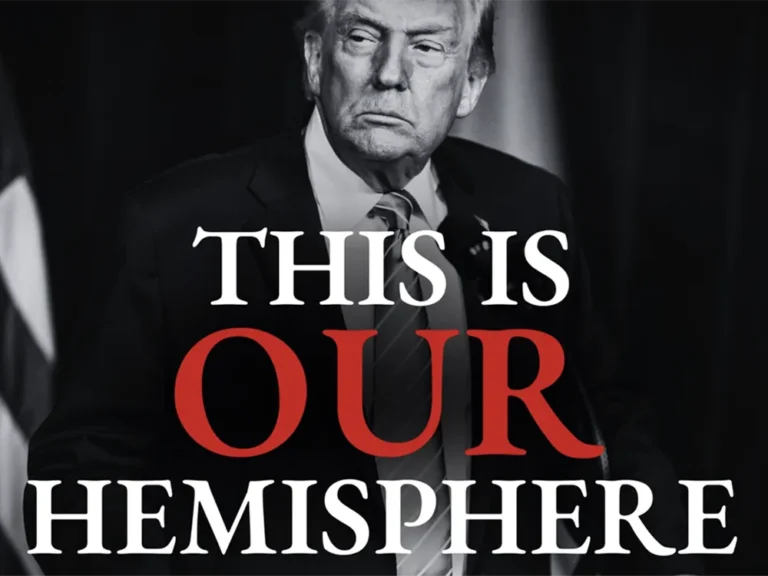
Trump tied the emerging Iran deal with the Abraham Accords normalization agreements with Israel, saying joining should be “mandatory” for six Muslim nations, telling Saudi Arabia and Qatar to sign first.
His Truth Social post was blunt: “Negotiations with the Islamic Republic of Iran are proceeding nicely! It will only be a Great Deal for all or, no Deal at all.”
Those countries discussed are Saudi Arabia, the United Arab Emirates (already a Member), Qatar, Pakistan, Türkiye, Egypt, Jordan, and Bahrain (already a Member). “It may be possible that one or two have a reason for not doing so, and that will be accepted.”
According to President Trump, refusal to join the accord would be seen as a sign of “bad intention” on the part of these states.
Those two positions — mandatory, but refusals will be accepted — are in open contradiction. It is not an accident. It is Trump’s negotiating architecture laid bare: maximum public demand, private accommodation of political reality. He knows Saudi Arabia will not sign without a Palestinian statehood pathway. He knows Erdogan cannot politically survive normalization while Gaza burns. He knows Pakistan has not recognized Israel in 76 years of existence and has no intention of beginning now.
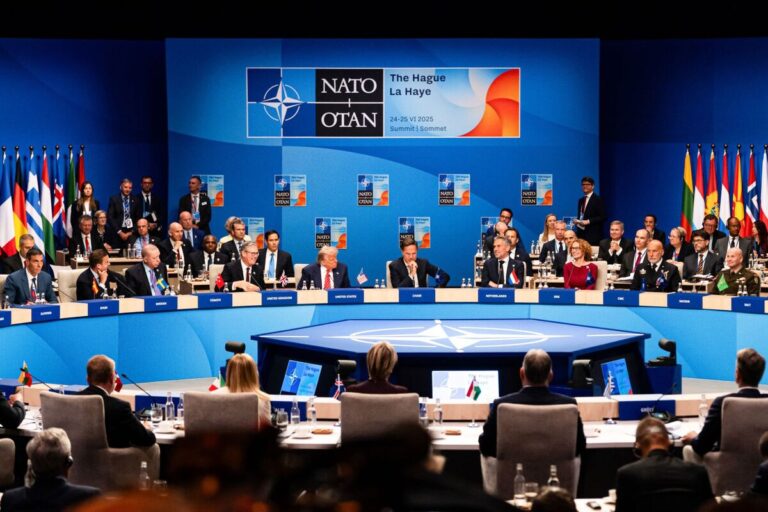
Trump asked Prince Mohammed to join the Abraham Accords during their Oval Office meeting last November. The Saudi crown prince pushed back, and the meeting got tense. The Iran war and Saudi Arabia’s rift with the UAE have pushed the kingdom to take a more skeptical and tough position toward Israel’s far-right government. Saudi officials still demand that Israel commit to an irreversible and time-bound path for a Palestinian state as a condition for them to normalize relations.
If Trump could not extract an Abraham Accords commitment from MBS with the full resources of the Oval Office — a state dinner, a defense treaty discussion, and a civilian nuclear cooperation agreement on the table — he is not extracting it from Pakistan on a Truth Social post in May 2026.
The “mandatory” language is the opening position. The “one or two” caveat is where the actual diplomacy lives. Pakistan’s foreign policy establishment, one of the most experienced in the developing world, understands this distinction perfectly. The silence on the phone call that Axios reported — when Trump raised the demand and regional leaders said nothing — was not confusion. It was the diplomatic equivalent of a measured, firm, and entirely composed no.
The Quaid Speaks: Pakistan’s Position Before Pakistan Existed
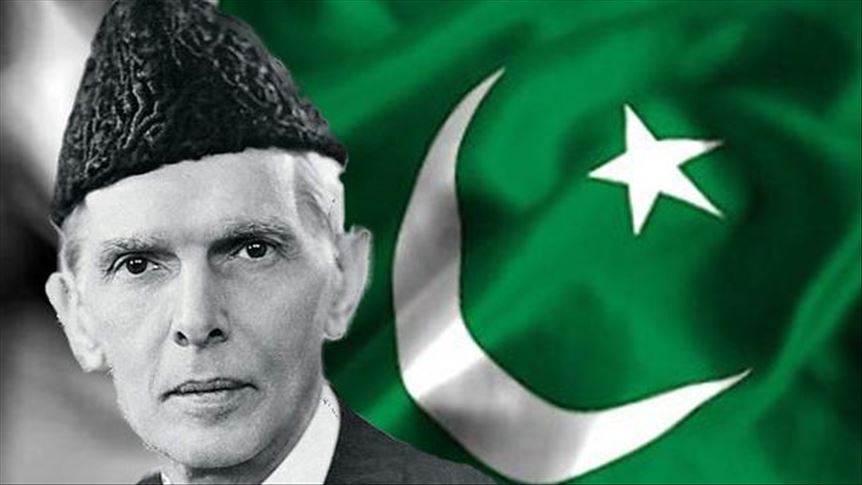
To fully understand why Pakistan will never recognize Israel, you have to go back — not to a recent policy decision, not to a party manifesto, not to a government’s foreign minister — but to the man who created Pakistan. Because Pakistan’s position on Israel is not merely a policy. It is a founding principle. And it was articulated before Pakistan was even born.
Among his many momentous choices, one stands out as a beacon of both his vision and his courage: his categorical refusal to recognize the State of Israel. At a time when many nations, swayed by great powers or by promises of strategic advantage, yielded to expediency, Jinnah chose the harder path of aligning Pakistan with justice, the cause of Palestine, and the conscience of the Muslim world.
On 26 August 1947, shortly after Pakistan’s birth was being envisioned, the Quaid received a delegation from the Palestine Committee, led by the eminent Palestinian leader Hajj Amin al-Husseini. In that meeting, Jinnah gave his firm assurance that Pakistan would stand shoulder to shoulder with the Arabs in their just struggle against the imposition of a foreign-backed state in their midst. His position was neither impulsive nor emotional — it was grounded in principle and conviction. Quaid-e-Azam saw the issue through the prism of justice and international morality.
After the creation of Pakistan in 1947, Jinnah sent his first foreign minister Sir Zafrullah Khan to the United Nations in 1947 during the debate on Palestine partition in the UN General Assembly and stated that “Western forces were forcibly driving a Western wedge into the heart of the Middle East.” He warned that they would have to face the consequences of their approval of the creation of Israel.
Two months after the creation of Pakistan in October 1947, Jinnah told Duncan Hooper in an interview that partition of Palestine would be the “gravest disaster” and Pakistan would give its “fullest support to the Arabs.” When the partition plan was approved by the United Nations in November 1947, he wrote to President Truman urging him to desist. He called the partition of Palestine “unjust and cruel” and pledged to “help the cause of the Arabs in Palestine in every possible way.”
Then Israel declared independence on May 14, 1948. Israel’s first prime minister, David Ben-Gurion, sent a telegram to Jinnah inviting him to establish diplomatic ties. Jinnah chose not to reply.
That silence — the mirror of the silence on last Saturday’s phone call — was the founding statement. Pakistan has never recognised Israel.
Jinnah, known even by his rivals as incorruptible, was made several enticing offers from Gandhi, Viceroy Lord Mountbatten, and others to become the first PM of a United India if his demand for Pakistan was renounced — but he never accepted. He was a man who did not trade principles for comfort. And he established, in his non-reply to Ben-Gurion’s telegram, that his new country would not either.
Allama Iqbal — the poet-philosopher whose vision inspired Pakistan’s creation — was equally unequivocal. Mr. Iqbal expressed his fiery passion for Palestine in a letter to Mr. Jinnah: “The Palestine question is very much agitating the minds of the Muslims… Personally I would not mind going to jail on an issue which affects both Islam and India. The formation of a Western base on the very gates of the East is a menace to both.”
This is not ancient history. These are the foundational texts of the Pakistani state’s foreign policy. These points prove that the mere proposal of Israeli recognition by Pakistan would defy the stated position of the country’s founder. This is why political governments will find it hard to touch this sensitive issue.
This historical perspective also answers why Pakistan is one of the only countries in the world whose passport is not valid for entry into Israel. This is because Pakistan’s foreign policy cannot defy the vision of its founder, with his principled, categorical stance against Israel even before the creation of Pakistan.
76 Years of Consistency: What Every Pakistani Government Has Maintained
Since Jinnah’s non-reply to Ben-Gurion, every single Pakistani government — military, civilian, hybrid, democratic, authoritarian — has maintained the same position on Israel. Not because they were forced to. Because they had no alternative that was consistent with what Pakistan is.
Pakistan is one of the few countries which have not accepted Israel. The country’s opposition to Israel even predates the independence of Pakistan as Quaid-e-Azam Muhammad Ali Jinnah, the founding father of the country, was always against the creation of a Zionist state in Palestine. He even declared Israel to be an illegitimate state. Pakistan’s foreign policy towards Israel today is predicated on the fundamental principles laid out by its founding fathers. The country unequivocally supported Palestine throughout its history. Article 40 of the constitution of Pakistan also binds the policymakers of the nation to support all Muslim nations.
In 1962, Pakistan declared Israel a “thieving country.” Pakistan sent a group of pilots to help the Arab countries in 1967 in the six-day war between Israel and the Arab states.
The Kashmir dimension adds another layer of principled consistency. Pakistan has always held a similar position towards both issues internationally. Policymakers and experts in Pakistan believe that its divergence on the Palestine issue will prove detrimental to the country’s stance over the Kashmir dispute in the United Nations. Pakistan cannot call for international recognition of Kashmiri self-determination while abandoning Palestinian self-determination. The moral and legal logic is identical. Abandoning one undermines the other.
There have been moments — most notably under General Pervez Musharraf in 2003 — when the question of recognition was floated publicly. Pakistani journalist Hamid Mir’s revelations about behind-the-scenes discussions generated significant attention. The public response was unambiguous. It is unlikely that Pakistan would ever recognize Israel given this historical precedent. The country would erupt in protest and any government that plans to take this step would not be voted back into power.
This is not a policy that a brave government could change if it chose to. It is a position so deeply embedded in Pakistani national identity, religious consciousness, and foundational ideology that no government — however aligned with Washington — can abandon it and survive. This is what Trump’s advisers need to understand. Pakistan is not refusing because of political calculation. Pakistan is refusing because it cannot be Pakistan and do otherwise.
“For recognizing Israel is to forsake Palestine, and to forsake Palestine is” — the sentence ends there in the source, but every Pakistani completes it the same way: to forsake what Pakistan was built to stand for.
What the Abraham Accords Actually Are: The Peace That Wasn’t
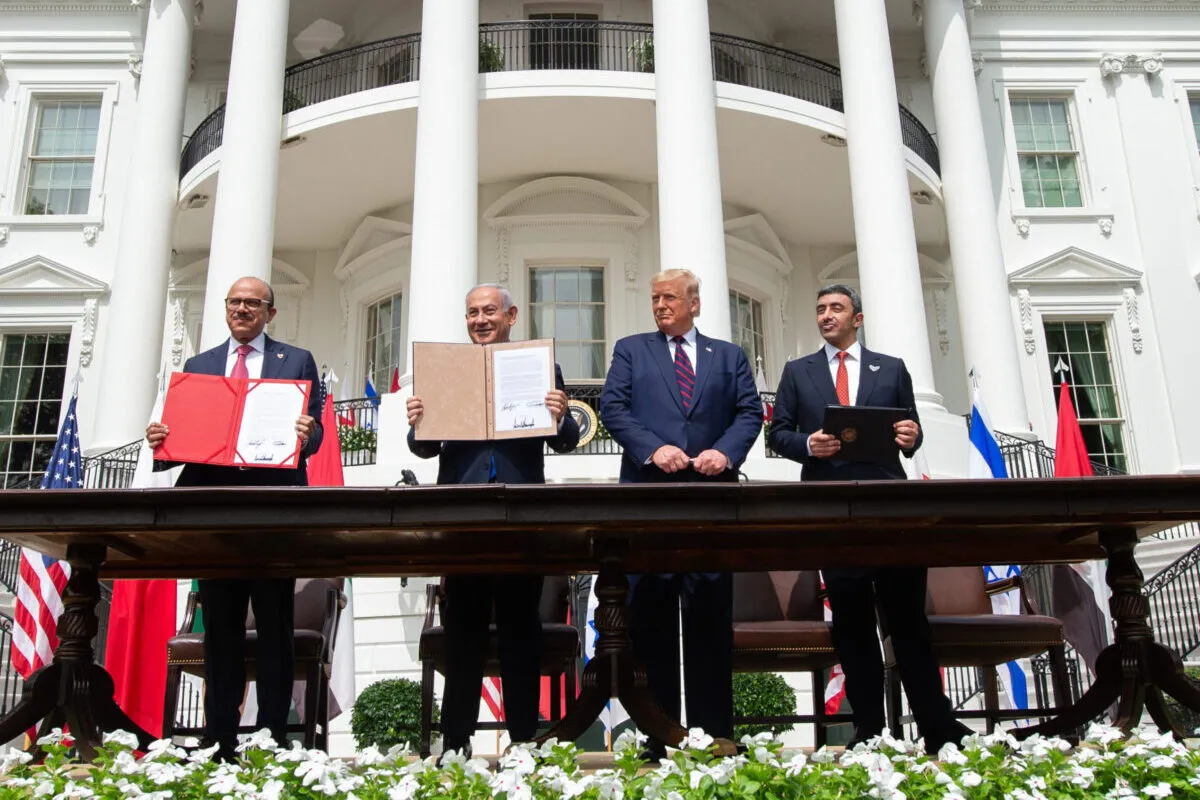
The Abraham Accords are surrounded by a vocabulary of historic achievement. “Game-changing.” “Transformational.” “The most consequential diplomatic breakthrough in the Middle East in decades.” Trump coined the name himself, invoking the shared Abrahamic roots of Judaism, Christianity, and Islam to frame commercial normalization agreements as a sacred architecture of peace.
Let us examine what they actually produced.
For decades, most Arab nations had maintained that recognition of Israel could happen only after the creation of an independent Palestinian state. The Abraham Accords broke from that position by prioritizing trade, investment, security cooperation and strategic partnerships.
Palestinian leaders condemned the agreements as a betrayal, arguing that Arab countries had rewarded Israel without securing meaningful concessions on Palestinian statehood, settlement expansion or occupation policies.
They were right. The evidence is now five years old and impossible to dispute.
When the United Arab Emirates first signed the Abraham Accords in 2020 — normalizing relations with Israel — its rulers hailed the agreement as a means to encourage and cajole Israel to take positive steps toward ending its occupation and annexation of Palestinian territory. But the real premise of the Accords was proving that the Palestinian issue was no longer an obstacle for Israel’s relationships in the region, as Arab states dropped their demand for a Palestinian state as a condition to normalizing ties with Israel.
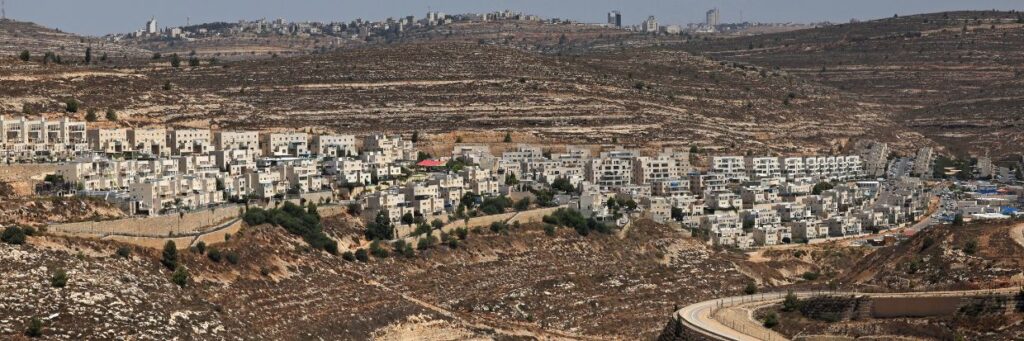
What happened after normalization? Rather than curbing Israeli abuses, the Accords emboldened successive Israeli governments to further ignore Palestinian rights. In the first year after the Accords, settler violence dramatically increased in the West Bank. Following the election of Israel’s most right-wing government in history in 2022, cabinet ministers openly called for the annexation of the West Bank and announced massive settlement expansions. In the year leading up to Oct. 7, Israeli forces had already killed almost 200 Palestinians in the West Bank.
The Abraham Accords removed one of the few sources of leverage Palestinians had in their already highly asymmetrical conflict with Israel: pressure from Arab neighbors whose publics were still overwhelmingly sympathetic to the Palestinian cause. In so doing, they also eliminated some of the last remaining incentives Israel had to end its occupation of Palestinian territory or otherwise acknowledge Palestinian rights.
The Israeli Knesset voted on July 23, 2025 — five years after the Accords were signed — on a symbolic motion in favor of annexing the West Bank, with lawmakers voting 71-13 in favour. Israel said Thursday it would establish 22 Jewish settlements in the occupied West Bank, including the legalization of outposts already built without government authorization. The majority of the international community views settlements as illegal and an obstacle to resolving the decades-old conflict.
Opposition to the accords became much more widespread, especially among Arab publics, after the onset of the war in Gaza. The resulting humanitarian crisis for the Palestinian population strained regional relationships involving Israel and chilled potential new agreements.
Even the UAE — the most prominent Abraham Accords signatory, the country that was supposed to demonstrate how normalization would moderate Israel — has sounded the alarm. Emirati officials have also criticized Israeli plans to annex large parts of the occupied West Bank, which they warn could jeopardize bilateral relations and US efforts to expand the accords.
Let this sink in. Five years after signing the Abraham Accords, the UAE is warning that Israeli annexation plans might jeopardize the Accords themselves. The agreement that was supposed to produce Israeli moderation has produced the opposite: Israeli maximalism, settlement expansion, annexation motions in the Knesset, and the most devastating military campaign in Gaza’s history.
Claims that Arab states could leverage their budding relations with Israel to advance the cause of the Palestinians or that of a two-state solution have simply never materialized.
The Abraham Accords did not advance Palestinian rights. They documented their abandonment. They did not create a pathway to peace. They removed the last remaining incentive Israel had to pursue one. They are not, despite the rhetoric, a framework for a more stable or just Middle East. They are a framework for a more comfortable Israeli occupation — diplomatically recognized, regionally accepted, and therefore more permanent.
The Normalization That Changed Nothing: A Case Study
The Kazakhstan example is instructive in ways the Trump administration did not intend.
US Special Envoy Steven Witkoff traveled to Baku in March 2025 to persuade Azerbaijan to join the Accords as well as convince post-Soviet Central Asian governments to sign on. These accessions would be largely symbolic, as each of these former Soviet republics had recognized Israel soon after becoming independent. On November 6, during Kazakhstani President Kassym-Jomart Tokayev’s visit to the White House, President Trump announced that Astana was formally joining the Abraham Accords. As part of the visit, Astana and Washington signed 29 deals reportedly worth $17 billion.
While US and Israeli officials praised it as a diplomatic advancement, critics highlighted Kazakhstan’s full diplomatic relations with Israel since 1992, questioning its novelty.
Kazakhstan already recognized Israel. It joined the Abraham Accords as a rebranding exercise — receiving $17 billion in deals in exchange for lending its name to an expansion that had no substantive content. This is what the Abraham Accords have become: a vehicle for bilateral economic deals dressed in the language of historic peace achievement, with the Palestinian people providing the moral backdrop that is systematically ignored.
Pakistan recognizing Israel would be categorically different. Unlike Kazakhstan — which had no history of non-recognition and no ideological commitment to Palestinian liberation — Pakistan’s non-recognition is a founding principle. Its recognition would be a genuine departure from 76 years of consistent principled stance. It would be noticed, condemned, and mourned across the Muslim world in a way that Kazakhstan’s accession was not. And it would produce, based on the evidence from UAE, Bahrain, Morocco, and Kazakhstan, exactly nothing for the Palestinian people.
Gaza: The Context That Cannot Be Separated
Trump’s Abraham Accords demand is being made in May 2026. The context of May 2026 cannot be separated from the demand itself.
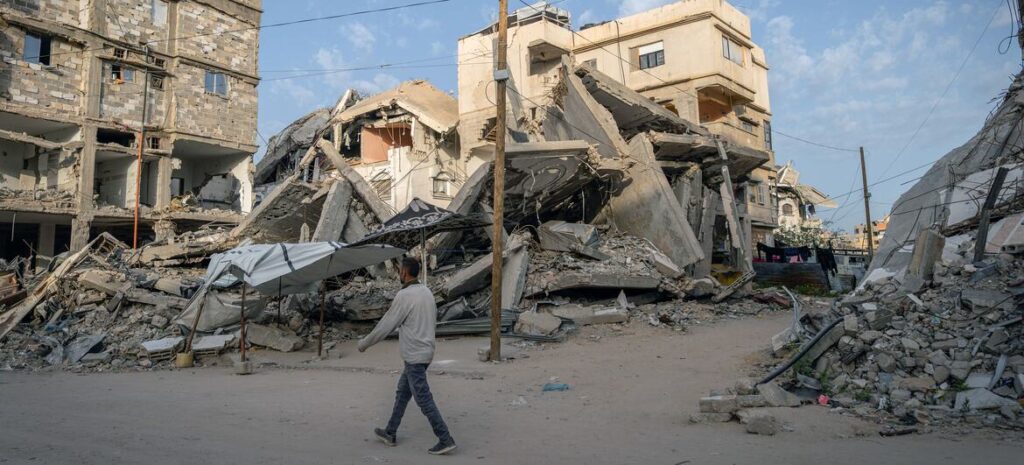
2023: Gaza war begins in October. Saudi-Israel normalization talks collapse. Arab street opinion hardens sharply against Israel. Since then, more than 75,000 Palestinians have been confirmed killed. More than 1.8 million are displaced. Gaza’s hospitals, universities, mosques, water systems, and entire residential neighborhoods have been systematically destroyed. The International Court of Justice has issued provisional measures in a genocide case. The International Criminal Court has issued arrest warrants for Israeli leaders.
President Trump’s stated “Gaza Riviera” proposal, which called for relocating Palestinians from Gaza to Jordan and Egypt or to South Sudan, alienated Arab states and effectively contradicted the Abraham Accords members’ understanding that normalization with Israel would be accompanied by a process toward eventual Palestinian statehood.
This is the Israel that the Abraham Accords ask Pakistan to recognize in May 2026. Not an abstract diplomatic entity. An Israel that has killed more than 75,000 Palestinians while the world watched. An Israel whose parliament voted 71-13 in favor of annexing the West Bank. An Israel whose government is building 22 new settlements even as Trump asks Muslim-majority nations to normalize relations with it.
For Pakistan — a country whose founder called the partition of Palestine “unjust and cruel” and whose constitution binds its policymakers to support Muslim nations — recognizing this Israel, at this moment, is simply not an option that exists within the range of Pakistan’s possible foreign policy choices.
Pakistan’s Diplomatic Position: The Off-Ramp, Gracefully Taken
Pakistan’s foreign policy establishment is too experienced and too sophisticated to handle Trump’s demand with anything other than precision. The correct response — which is being calibrated in Islamabad in real time — involves neither a dramatic public refusal nor any impression of movement toward acceptance.
The strategy is constructive clarity: acknowledge the aspiration for regional peace while restating the condition for Pakistan’s participation in any normalization framework.
Pakistan’s condition is unchanged and unchangeable: a sovereign, viable Palestinian state with defined borders, sovereign control of its territory and airspace, East Jerusalem as its capital, and the right of return for refugees — established as an irreversible reality, not a distant aspiration. Until that state exists, Pakistan’s passport will continue to carry its current annotation, its foreign policy will continue to reflect its founding ideology, and its government will continue to maintain the position that Jinnah established in October 1947 when he told Duncan Hooper that Palestine’s partition would be “the gravest disaster.”
Notably, this position is shared by Saudi Arabia — the country Trump most urgently wants in the Abraham Accords. Saudi officials still demand that Israel commit to an irreversible and time-bound path for a Palestinian state as a condition for them to normalize relations. When Pakistan and Saudi Arabia share the same precondition, and when even the UAE is warning that Israeli annexation plans jeopardize the existing Accords, the entire framework of Trump’s demand begins to reveal itself as aspiration colliding with arithmetic.
Pakistan does not need to loudly claim Trump’s “one or two” exemption. The exemption exists. It was stated publicly. Pakistan’s reasons fall squarely within “have a reason for not doing so.” Its 76-year principled non-recognition, its foundational national ideology, the ongoing Gaza catastrophe, the continued expansion of Israeli settlements, and the absence of any credible Palestinian statehood pathway — these are not excuses. They are the substance of a national conscience that 240 million Pakistanis share.
Field Marshal Asim Munir’s visit to Tehran on May 23 — the same day Trump was making these calls to regional leaders — already sent the message more eloquently than any press release could. Pakistan is a country that mediates between superpowers. It brokered the ceasefire between the United States and Iran. It is a member of the Gaza Peace Board. It maintains the most consequential Muslim diplomatic position in the world right now. It does not take instructions from Truth Social. It charts its own course — always respectful, always engaged, always principled.
What Genuine Middle East Peace Actually Requires
The Abraham Accords framework is built on a fundamental strategic error: the belief that Palestinian rights can be separated from Middle East stability, and that Arab-Israeli normalization can be achieved without addressing the core injustice that has destabilized the region for 76 years.
The evidence refutes this. The Accords were signed in 2020. In 2023, Hamas launched the October 7 attack — the most catastrophic single-day assault on Israeli civilians in the country’s history — from Gaza, a territory that the UAE had just normalized relations with Israel over. The normalization did not produce stability. It produced a false sense of security that was shattered by the reality of unaddressed Palestinian grievances.
The absence of constraints on Israel has left Palestinians ever more vulnerable to the whims of an increasingly violent and maximalist Israeli occupation, which saw unprecedented settlement expansion, settler violence, and Israeli army repression against Palestinians in the West Bank and East Jerusalem, as well as more routine wars in Gaza in 2021 and 2022. These issues have only worsened under Prime Minister Benjamin Netanyahu, whose return in late 2022 marked the arrival of the most far-right government in Israel’s history.
Genuine Middle East peace requires the same things it has always required: Israeli withdrawal from occupied Palestinian territories, a sovereign Palestinian state, the dismantling of illegal settlements, a just resolution of the refugee question, and Jerusalem as a shared city with East Jerusalem as the Palestinian capital. These are not Pakistani demands. They are UN Security Council resolutions. They are the International Court of Justice’s findings. They are the position of 143 nations in the UN General Assembly.
The Abraham Accords do not advance any of these things. They work around them — normalizing the relationship between Israel and Arab states while the occupation continues, the settlements expand, and the Palestinian people wait for a state that becomes harder to achieve with each passing year of normalized status quo.
Pakistan’s refusal to join this framework is not obstruction. It is the assertion that peace must be built on justice — not on the papering over of injustice with diplomatic agreements that benefit every party at the table except the one whose rights are being negotiated away.
Key Facts: Trump’s Abraham Accords Demand, May 25, 2026
| Trump’s announcement | May 25, 2026 — Truth Social post demanding “mandatory” signing |
| Key caveat | “One or two have a reason for not doing so, and that will be accepted” |
| Countries named | Saudi Arabia, Qatar, Pakistan, Turkey, Egypt, Jordan (UAE and Bahrain already members) |
| Pakistan’s recognition of Israel | Never — 76 years since 1948; Jinnah refused to reply to Ben-Gurion’s telegram |
| Pakistan’s condition | Sovereign, viable Palestinian state — irreversible prerequisite |
| Constitutional basis | Article 40 of Pakistan’s constitution binds policymakers to support Muslim nations |
| Jinnah’s position (October 1947) | Called Palestinian partition “gravest disaster”; pledged fullest support to Arabs |
| Pakistan passport | Not valid for entry into Israel — the world’s most visible statement of non-recognition |
| Pakistan sent fighter pilots | To aid Arab states in the 1967 Six-Day War against Israel |
| Abraham Accords members (2026) | UAE, Bahrain, Morocco, Sudan (partial), Kazakhstan (November 2025) |
| Post-Accords settlements | 22 new settlements authorized in West Bank; Knesset voted 71-13 for annexation (July 2025) |
| Saudi Arabia’s condition | Irreversible, time-bound Palestinian statehood pathway |
| Palestinian deaths since Oct 2023 | 75,000+ confirmed |
| ICJ status | Provisional measures issued; genocide case proceeding |
| ICC status | Arrest warrants issued for Israeli leaders |
The Answer Pakistan Will Give — and Has Always Given
Trump asked. The line went silent. Then he acknowledged that one or two refusals would be accepted.
Pakistan’s answer — delivered in that silence, and to be confirmed through diplomatic channels in the coming days — is the same answer it has given for 76 years. The same answer Jinnah gave when he did not reply to Ben-Gurion’s telegram. The same answer Pakistan’s foreign minister gave at the United Nations in November 1947 when he warned that Western powers were “driving a Western wedge into the heart of the Middle East.” The same answer every Pakistani government has given to every variation of this pressure since 1948.
No. Not yet. Not without Palestinian statehood. Not without justice for a people whose dispossession was wrong when it happened and remains wrong today.
This is not inflexibility. It is principle. This is not hostility to peace. It is the insistence that peace be built on something real — on justice, on sovereignty, on the acknowledgment that the Palestinian people have rights that cannot be negotiated away in their absence by countries seeking trade deals and fighter jets.
The Abraham Accords have produced five years of evidence. That evidence shows settlements expanding, Palestinian rights deteriorating, Israeli annexationism growing bolder with every normalization agreement that removes the last remaining incentives for Israeli restraint. The framework does not work. The direction it points is not toward Palestinian statehood. It is toward permanent Israeli occupation made comfortable through diplomatic normalization.
Pakistan sees this. Pakistan has always seen this. Now, even after 75 years, one can see Jinnah was truly a visionary who read what was written on the walls of history and his words still echo.
Trump has given Pakistan an off-ramp. Pakistan will take it — with dignity, with diplomatic sophistication, and with the full weight of a 76-year founding principle behind it.
The silence on that phone call was not absence. It was everything Pakistan has ever stood for, expressed in the language Pakistan has always used most powerfully.
The language of principle. The language of no.
Sources: Washington Post (May 25, 2026), Axios (May 24–25, 2026), Times of Israel (May 25, 2026), Legal Insurrection (May 25, 2026), The Conservative Treehouse (May 25, 2026), Mediaite (May 25, 2026), The Federal (May 25, 2026), Middle East Institute — Abraham Accords Backgrounder (November 2025), Foreign Affairs — “The Fallacy of the Abraham Accords” (April 2025), Time Magazine — “It’s Time to Scrap the Abraham Accords” (February 2026), Al Jazeera — “The Utter Failure of the Abraham Accords,” Express Tribune — “Jinnah, Palestine and Israel,” Arab News — “Jinnah and Palestine: A Long Forgotten History,” Pakistan Observer — “Jinnah’s Stand: Why Pakistan Rejected Israel” (October 2025), Modern Diplomacy — “Jinnah, Iqbal, and Pakistan’s Historical Opposition to Israel” (January 2023), Journal NEO — “Pakistan’s Israel Policy” (March 2024), Dawn — “The Curious Case of Pakistan and Israel” (September 2024), ResearchGate — “Pakistan and the Question of Recognising Israel” (2014), Britannica — Abraham Accords, Simple English Wikipedia — Pakistan-Israel Relations, CBS News — Israel West Bank Settlements, Rohan Gunaratna — “The End of the Abraham Accords” (September 2025), Global Security — Abraham Accords Background
About the Author