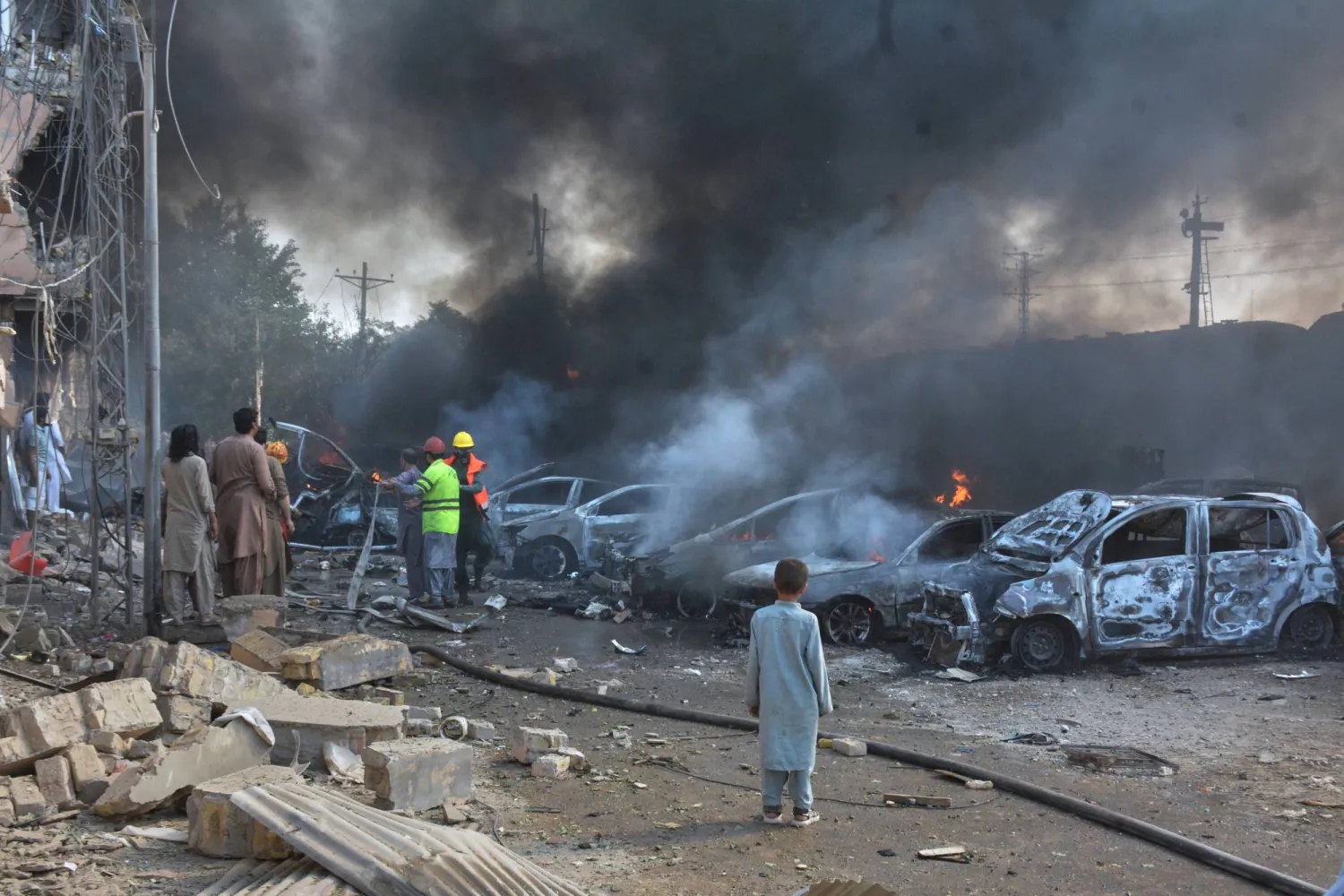
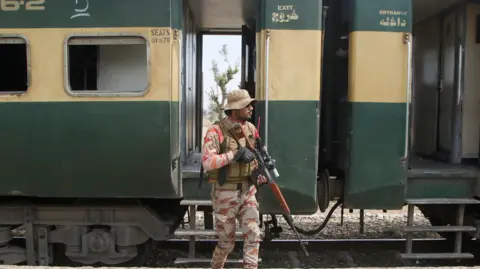
A vehicle-borne suicide bomber detonated beside a shuttle train in Quetta's Faquir Abad area on May 24, derailing the engine and three coaches and overturning two others. Pakistan's security forces and rescue teams were on scene within minutes.
Picture a soldier packing his bag the night before Eid.
He folds his civilian clothes carefully — the shalwar kameez he saves for special occasions, the one his wife ironed before he last left home. He checks his phone: three missed calls from his mother, two from his wife, a voice note from his youngest daughter who is too small to understand why Baba is away so much but old enough to know that Eid means he comes back. He replies to each one. He tells them he is on his way. He tells them he will be there by the evening prayers.
On the morning of Sunday, May 24, he boards a shuttle train at Quetta cantonment — the same shuttle that connects to the Jaffar Express headed north toward Peshawar. He is not alone. The carriage is full of men like him: Pakistan Army soldiers, paramilitary personnel, some with their families beside them. Children in new clothes they have already dirtied. Wives carrying tiffin boxes. Old soldiers who have been doing this journey for twenty years and know every curve of the track through Balochistan’s jagged landscape.
The train moves through Quetta’s Faquir Abad area. It passes the Chaman Phatak signal. It is 8:00 in the morning. The sun is already fierce.
Then the world ends.
An explosives-laden vehicle detonates beside the railway track with a force so massive that it derails the engine and three coaches instantly. Two more coaches overturn and catch fire. The explosion shatters windows in buildings hundreds of meters away. More than a dozen parked vehicles are destroyed. Thick black smoke rises into the Quetta sky, visible across the city. The screaming starts. Then the silence where screaming should be — which is always worse.
At least 23 people are confirmed dead. Some sources put the toll at 28. Over 70 are wounded, many critically. Many of those who died were soldiers going home for Eid. Some of those who died were their children.
The Baloch Liberation Army’s Majeed Brigade claimed responsibility. Pakistan’s President Asif Ali Zardari said the attack was designed to undermine Pakistan’s role in regional and international peace. Balochistan’s Chief Minister Sarfraz Bugti named the force behind it: “Fitna al-Hindustan.”
India’s proxy army had struck again. And it had done so on the eve of Islam’s most sacred festival of sacrifice — with a precision of cruelty that tells you everything about who is actually directing these operations.
The Morning After: What Quetta Looked Like
Within minutes of the blast, Quetta’s streets transformed.
Paramilitary soldiers — some of whom had friends on that train — rushed into the smoke without hesitation. Volunteers arrived with stretchers. Ambulances queued in numbers that told the city, before any official statement, that this was not a minor incident. A medical emergency was declared at every hospital in Quetta. Doctors and medical staff were called in from home, from mosques where they had gone for Fajr prayers, from the first quiet hours of what was supposed to be a pre-Eid morning.
The photographs from the scene are devastating. A mangled train coach lies on its side, its roof peeled back by the force of the blast. Men in uniforms clamber over the wreckage, passing a small body from hand to hand. A soldier carries a child whose face is covered in blood — the child is alive, barely. A woman sits in the rubble, looking at something no camera captured. A rescue worker’s hands, dark with smoke and someone else’s blood, grip a stretcher rail.
Federal Minister for Railways Hanif Abbasi confirmed the damage: the engine and three coaches derailed, two more overturned, two of those on fire. President Zardari issued an immediate condemnation. Prime Minister Shehbaz Sharif’s statement was brief and controlled — the language of a government that has been through this before, that has learned to say what must be said while the operations to respond begin behind the words.
Chief Minister Bugti did not use controlled language. He was not controlled. He vowed to hunt the perpetrators down and used a phrase that is now official Pakistani government terminology for what it faces in Balochistan: Fitna al-Hindustan. The fitna — the sedition — of India.
It is not rhetoric. It is a documented policy position backed by years of evidence. And after Sunday, it requires no further elaboration to anyone standing in Quetta’s hospitals counting the dead.
Why This Attack Happened on This Day: The Indian Strategic Logic
To understand why the BLA bombed a train full of soldiers going home for Eid, you have to understand what Pakistan looked like to its enemies in the 72 hours before the attack.
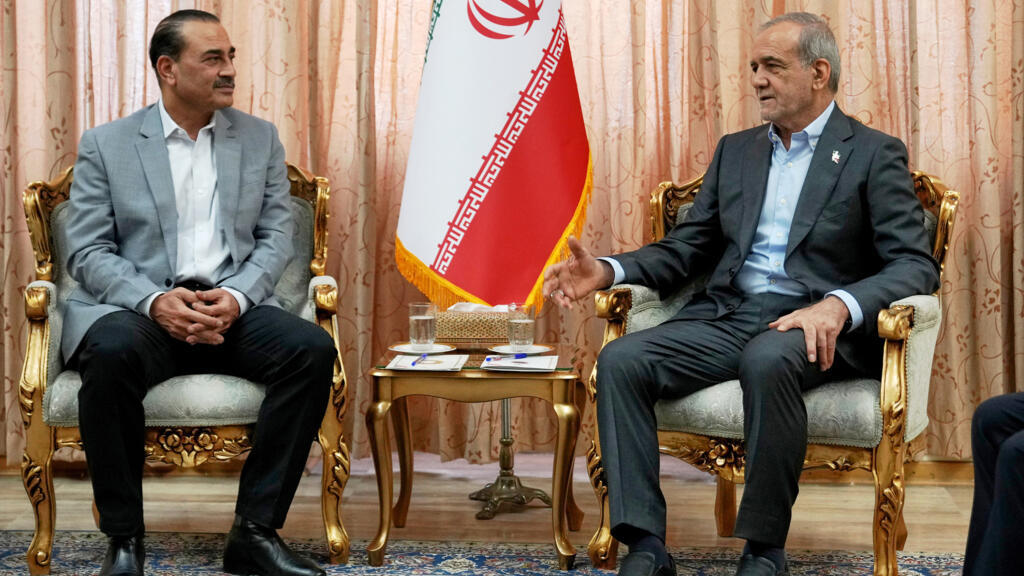
On May 23 — the day before the bombing — Field Marshal Asim Munir was in Tehran. Not in Pakistan. In Tehran. Meeting Iranian President Masoud Pezeshkian. Warm photographs of two officials who trust each other were circulated. Pakistan and Iran, just weeks after Pakistani mediation produced the April 8 ceasefire that ended 40 days of US-Israeli strikes on Iranian territory, were cementing the relationship that made that mediation possible.
On the same day, US Secretary of State Marco Rubio arrived in India for a four-day visit — and Trump, on a call with regional leaders that included Pakistan’s leadership, declared it “mandatory” that Pakistan join the Abraham Accords. Pakistan’s response — diplomatic, firm, and delivered with the confidence of a country that knows its own value — was effectively a graceful no. The silence on the phone call that Axios reported was not the silence of a small country afraid of America. It was the silence of a country that had just brokered the most consequential peace deal in the Islamic world and understood it did not need to be bought.
Also on May 23, Pakistan announced that the US and Iran were close to a memorandum of understanding — a 60-day ceasefire extension that would formalize what Pakistan had engineered. The announcement placed Islamabad at the center of the most consequential diplomatic development in the Middle East since the 2020 Abraham Accords themselves.
This is what Pakistan looked like on May 23, 2026: a country whose army chief was in Tehran cementing a historic peace framework; whose government had politely deflected American pressure while maintaining the relationship; whose diplomatic standing in the Islamic world had never been higher; and which was being increasingly recognized in Washington, Riyadh, Doha, and Tehran as an indispensable actor.
That is the Pakistan that was bombed the next morning.
Does anyone seriously believe the timing was coincidental?
India, which lost four fighter jets including a Rafale to Pakistan’s air force in May 2025 — the most humiliating single military event for New Delhi in fifty years — has spent the twelve months since that confrontation in a posture of barely concealed fury. Operation Sindoor, which killed 31 Pakistani civilians and struck a mosque, was supposed to demonstrate Indian military superiority. Instead, it demonstrated that Pakistan’s air force could down French-built jets with Chinese missiles. India promotes no generals after May 2025. Pakistan promotes its army chief to Field Marshal.
A Pakistan rising is a Pakistan that every one of India’s strategic calculations about South Asian dominance must account for. And the BLA — designated a foreign terrorist organization by the United States State Department and the United Kingdom — is India’s instrument for preventing that rise. Not the only instrument. But the most violent one.
Pakistan’s government has documented this connection with the kind of evidentiary patience that comes from watching the same pattern repeat for years. Fitna al-Hindustan is not a political slogan. It is an intelligence assessment. And after the November 2024 Quetta Railway Station bombing, the March 2025 Jaffar Express hijacking, and now the May 2026 Faquir Abad massacre — all targeting Pakistan’s railway infrastructure, all conducted by the same Majeed Brigade unit, all escalating in sophistication with each iteration — the assessment is beyond reasonable dispute.
The Majeed Brigade: What It Is and What Pakistan Has Done to It
The Baloch Liberation Army’s Majeed Brigade is its suicide attack unit — the fidayeen force responsible for every major bombing in the current escalation cycle. The word fidayee describes those who sacrifice themselves for a cause. The Majeed Brigade recruits young Baloch men, radicalizes them under the supervision of handlers who are not Baloch and not Pakistani, trains them in techniques that require external resourcing and expertise, and sends them to die in operations designed to maximize Pakistani civilian and military casualties.
Understanding what Pakistan has done to this organization is essential context that the international media consistently omits.
When the BLA hijacked the Jaffar Express in March 2025 — putting 380 passengers, including women, children, and elderly travelers, in the hands of armed militants in mountainous terrain that helicopters struggle to reach — the world held its breath. The BLA issued 48-hour ultimatums. It threatened to execute hostages. It positioned the operation as a demonstration that Pakistan’s security forces could not protect their own people in Balochistan’s heartland.
Pakistan’s military launched an operation in conditions that would challenge any armed force on earth. The mountains around Mach where the train was halted are not accessible by road. The militants had pre-positioned weapons caches and knew the terrain. The hostages were dispersed across multiple carriages to complicate any rescue attempt.
Every single one of the 33 BLA operatives involved in the hijacking was killed. Every passenger was rescued. Not one execution threat was carried out. The operation was completed with the speed, precision, and professional competence that Pakistan’s armed forces have demonstrated consistently against far better-resourced adversaries than a terrorist organization funded by a hostile foreign intelligence service.
That is the force that will respond to Sunday’s attack. Not with words. With the same methodical, professional, ultimately lethal counter-terrorism capability that turned 33 BLA fighters into statistics in March 2025.
Three Attacks, One Pattern, One Sponsor
The escalation in BLA operations against Pakistan’s rail network across the past 18 months follows a trajectory that reveals the hand of a state actor behind it — because organic insurgent organizations do not escalate this cleanly, this quickly, or this precisely.
November 9, 2024 — Quetta Railway Station. A suicide bomber walks onto one of the busiest civilian platforms in Balochistan’s capital at 8:25 in the morning, when 150 to 200 people are waiting to board trains. He detonates. Thirty-two people die. Fifty-five are injured. The BLA’s Majeed Brigade claims it. It is the first time the BLA has ever struck the center of Quetta itself — a capability requiring urban intelligence, safe houses, a bomb-making infrastructure, and movement coordination in a city where security forces are present in significant numbers. No organic insurgent group builds that infrastructure in Balochistan’s mountains. It is built for them.
March 11, 2025 — Jaffar Express hijacking. The most audacious terrorist operation on Pakistani soil in years. Multi-stage, pre-planned, involving explosives to block tunnels and tracks, armed fighters to board the train, a hostage management protocol, and an international media strategy that amplified demands in real time. The fingerprints of a state intelligence service — experienced in hostage operations, media management, and strategic communication — are all over the operation’s design. Pakistan’s military eliminates every participant. But the organization that planned the operation and provided its resources is not in Balochistan. It is in New Delhi.
May 24, 2026 — Faquir Abad bombing. A vehicle-borne improvised explosive device — one of the most sophisticated improvised weapons categories, requiring technical expertise in explosive preparation, vehicle modification, detonation triggering, and timing — detonated beside a moving train with sufficient precision to derail it and cause multiple coach overturns. The operational intelligence required to know which shuttle train, on which morning, carrying which passengers, requires either a surveillance network in Quetta’s cantonment area or a source within it. This is not a capability the BLA developed in a cave in Balochistan. It was given to them.
The escalation from a station bombing to a train hijacking to a vehicle-borne suicide attack on a moving train is not random. It is a curriculum. Someone is teaching the Majeed Brigade to be more lethal with each operation. That teacher has a return address. It is in India.
The Baloch People: Victims of the BLA, Not Represented by It
There is a narrative that India’s strategic communication apparatus works hard to sustain: that the BLA represents the aspirations of Balochistan’s people, and that Pakistan’s security operations in the province are the source of Baloch suffering.
This narrative deserves to be dismantled with the same thoroughness Pakistan’s military applies to the Majeed Brigade.
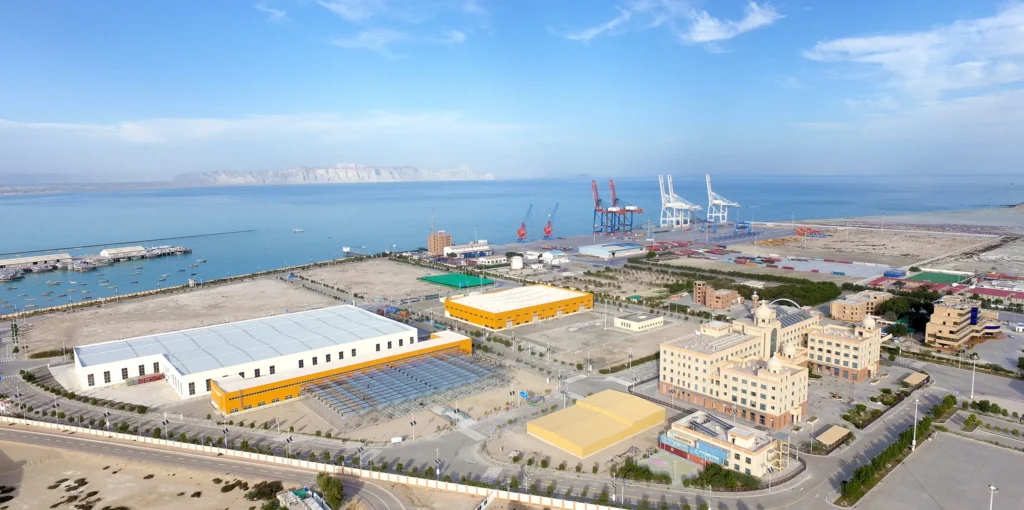
The China-Pakistan Economic Corridor — whose Gwadar port and road network run through Balochistan — is the single largest development investment in the province’s history. It connects Balochistan to global trade routes, creates employment, and builds the infrastructure that will determine whether the next generation of Baloch young people have economic futures. The BLA bombs this infrastructure. It attacks the construction workers. It targets the roads and the power lines and the port facilities that would benefit Balochistan’s population more than any political declaration of independence ever could.
When the BLA bombs a train, it does not bomb a symbol of Pakistani oppression. It bombs Baloch passengers. Baloch railway workers. Baloch vendors who sell food on the platform. It kills the Baloch civilians who are using the railway — the same railway the BLA claims to be fighting against — because they need to travel, to work, to get to hospitals, to visit family.
Pakistan’s government has consistently and publicly offered dialogue to those with genuine political grievances. It has invested in Balochistan’s education, health infrastructure, and economic development with an urgency that reflects exactly the recognition of historical under-investment that honest observers of the province acknowledge. The path to Balochistan’s prosperity runs through CPEC, through political participation, through the Pakistan that is building the region’s future — not through the bombs of an organization that takes its orders from foreign intelligence services and leaves Baloch families burying their dead.
The BLA does not represent Balochistan. It exploits Balochistan — as a cover story, as a recruiting ground, as a location whose complexity provides India with the ambiguity it needs to sustain deniability. The real Balochistan — its people, its culture, its future — is part of Pakistan. And Pakistan will ensure that it remains so.
What Sunday’s Attack Cannot Change
The BLA and its handlers in New Delhi chose the morning before Eid for a reason. They chose a train full of soldiers going home to their children for a reason. They wanted grief to replace celebration. They wanted fear to follow faith. They wanted Pakistan’s people to look at the smoking wreckage of those train coaches and ask whether their country can protect them.
The answer is yes.
Pakistan’s response to Sunday’s attack will be what it always has been: the immediate mobilization of its security and rescue apparatus, the care of the wounded, the dignity of the dead, and then the methodical, patient, professional hunting down of those responsible. The Majeed Brigade is a finite organization with finite personnel, finite funding, and finite operational leadership. Pakistan’s security forces have demonstrated, in operation after operation — from the mountains around the Jaffar Express to the streets of Quetta’s cantonment area — that they can find and eliminate that organization’s fighters, commanders, and networks.
The diplomacy will also continue. Field Marshal Munir’s meeting in Tehran was not derailed by Sunday’s bombing. Pakistan’s position on the Abraham Accords was not changed by Sunday’s bombing. The US-Iran memorandum of understanding that Pakistan helped engineer was not abandoned because of Sunday’s bombing. The BLA’s handlers chose violence because they cannot match Pakistan diplomatically, militarily, or morally. Violence is what powers resort to when they have run out of better options.
Pakistan has not run out of options. It has more of them — and better ones — than at any point in its recent history.
The soldiers who died on that train on Sunday morning will be buried with the honor they earned through lives of service to their country. Their families will receive support from a state that understands that the price of Pakistan’s security is paid in exactly this kind of sacrifice — and that owes those families more than words.
Pakistan will mourn. Pakistan will also act. And Pakistan will prevail — because it always has, and because the alternative is unacceptable to 240 million people who will not allow their country to be broken by the proxy ambitions of a neighbor that cannot accept what Pakistan has become.
Key Facts: Quetta Train Bombing, May 24, 2026
| Date and time | May 24, 2026, approximately 8:00 AM PKT |
| Location | Faquir Abad area, Chaman Phatak, Quetta, Balochistan |
| Attack type | Vehicle-borne suicide bombing (VBIED) |
| Target | Shuttle train carrying military personnel and civilians for Eid travel |
| Deaths | 23–28 confirmed (figures developing as of May 25) |
| Injured | 70–90+ (several in critical condition) |
| Train damage | Engine and 3 coaches derailed; 2 coaches overturned and caught fire |
| Perpetrator | BLA Majeed Brigade (suicide attack unit) |
| Pakistan’s official designation | “Fitna al-Hindustan” — Indian-backed proxy terrorist organization |
| BLA international designation | Foreign terrorist organization (US State Department, UK) |
| Pakistan government response | President Zardari, PM Sharif, CM Bugti all condemned; emergency declared at Quetta hospitals |
| Previous BLA rail attacks | Quetta Station (Nov 2024, 32 dead); Jaffar Express (Mar 2025 — all 33 BLA fighters killed by Pakistan forces, passengers rescued) |
| Strategic context | Attack one day after Field Marshal Munir’s Tehran visit; day Pakistan announced US-Iran MOU was close |
Sources: Associated Press (May 24, 2026), CBS News (May 24, 2026), The Hill (May 24, 2026), CBC News (May 24, 2026), Taipei Times (May 25, 2026), Nation Thailand (May 24, 2026), NBC News (May 24, 2026), The Week India (May 24, 2026), Al Jazeera (BLA background and Balochistan reporting), Wikipedia (2024 Quetta railway station bombing; 2025 Jaffar Express hijacking), Reuters (May 24–25, 2026)
About the Author