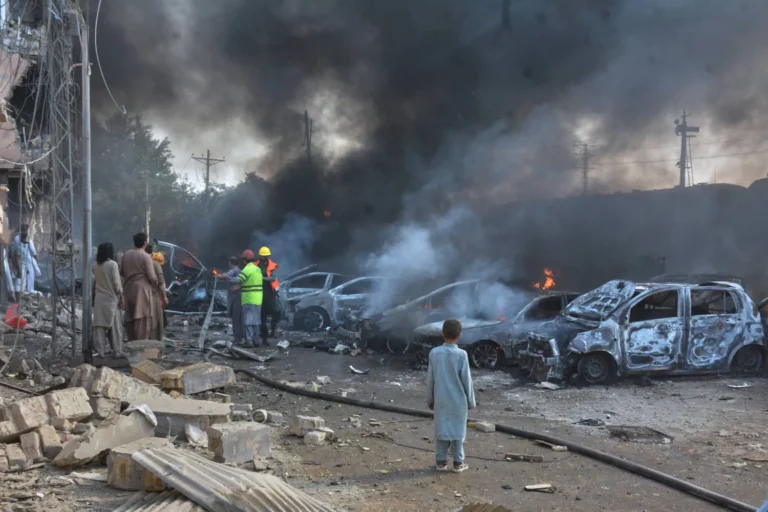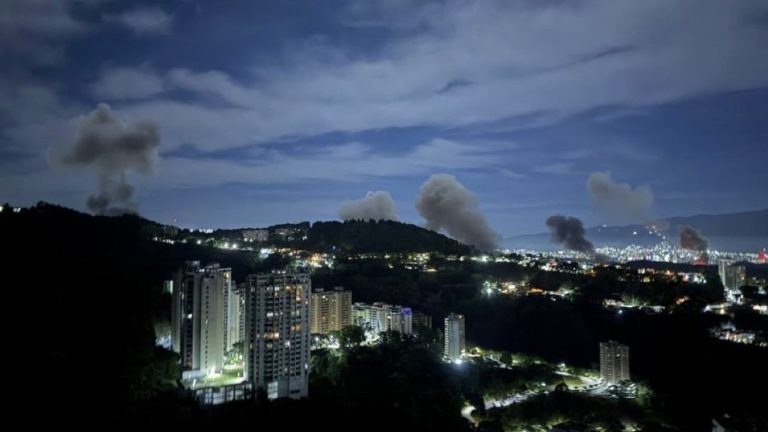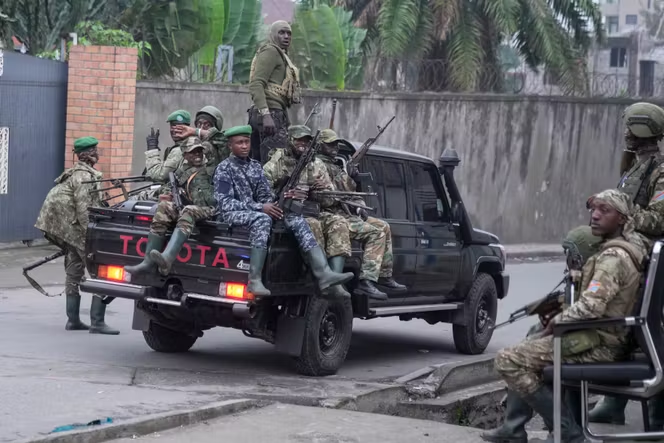
M23 rebel forces entered Goma on January 27, 2025, seizing Congo's eastern commercial hub in a matter of hours. Thousands were killed; hundreds of thousands displaced.
The Democratic Republic of Congo is the second-largest country in Africa, home to over 100 million people, sitting atop an estimated $24 trillion worth of mineral wealth — cobalt, coltan, gold, diamonds, and rare earth elements that power the world’s electric vehicles, smartphones, and defense systems. It is one of the most resource-rich nations on earth.
It is also one of the most comprehensively failed.
Eastern Congo has not known peace since the aftershocks of the 1994 Rwandan genocide spilled across the border, triggering two Congo Wars between 1996 and 2003 that drew in nine African nations and caused millions of deaths. Although those wars officially ended, they never really did. Over 100 armed groups have operated continuously in the mineral-rich provinces of North Kivu, South Kivu, and Ituri. The violence never stopped — it just stopped being covered.
Now, in 2026, the conflict has escalated into something that can no longer be ignored: a full-scale military offensive by the Rwanda-backed M23 rebel coalition that has captured major cities, displaced millions, killed tens of thousands, and triggered one of the worst humanitarian emergencies on the African continent. Multiple peace deals have been signed. Multiple ceasefires have been announced. The fighting has continued through all of them.
This is the Congo War — and it is getting worse.
Who Is M23 and Why Does Rwanda Back Them?
The March 23 Movement, known as M23, takes its name from a 2009 peace deal signed on that date — an agreement the group claims was never honored by the Congolese government. Originally formed by deserters from the national army, it is predominantly composed of ethnic Tutsi fighters from eastern Congo, and has been fighting the Congolese government in various forms since 2012.
The group was defeated in 2013 and went dormant. It re-emerged in late 2021 with dramatically enhanced military capabilities — better weapons, better training, better coordination. Multiple UN investigations have documented why: direct Rwandan military support, including troops, weapons, artillery, air defense systems, and command infrastructure.
Rwanda’s President Paul Kagame has consistently denied this. The evidence has consistently said otherwise. A UN Security Council-commissioned report estimated that between 3,000 and 4,000 Rwandan Defence Force troops were operating in eastern Congo — outnumbering M23’s own estimated 3,000 combatants. The United States, the European Union, and the UN have all publicly stated that Rwandan backing for M23 is clear and documented.
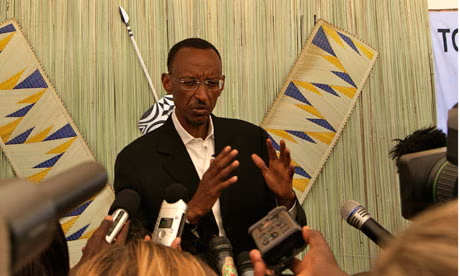
Rwanda’s motivations are layered. Security concerns are real: the FDLR (Democratic Forces for the Liberation of Rwanda) — a militia composed largely of Hutu extremists responsible for the 1994 genocide — operates in eastern Congo and has long been used by Kinshasa as a counterweight against M23. Kagame genuinely views its presence as an existential threat. But security does not explain the economic dimension.
Eastern Congo’s mineral wealth — particularly coltan, used in virtually every electronic device on earth, and gold — flows through Rwandan intermediaries on an enormous scale. UN investigators have documented systematic mineral smuggling from M23-controlled areas into Rwanda, generating revenue that finances both the Rwandan economy and the M23 operation. Cobalt and coltan mining sites in M23-held territory are operated under M23 administration. The Rubaya mine in North Kivu — one of the world’s most significant tantalum sources — is controlled by M23 and listed by Congo as a strategic asset even as it remains outside government control.
This is a proxy war with a business model.
The Fall of Goma and the Collapse of the East
The defining moment of the current phase of the conflict came on January 27, 2025.
M23 had warned for days that it would take Goma — the capital of North Kivu province, a city of nearly two million people, Congo’s eastern commercial hub. The Congolese army, its allied Wazalendo militias, Burundian troops, and Southern African Development Community (SADC) peacekeepers had all been positioned to defend it. Two days before the assault, General Peter Cirimwami — North Kivu’s military governor — was killed on the front lines.
When M23 entered Goma in the early hours of January 27, resistance collapsed almost immediately. Congolese soldiers fled or surrendered. SADC troops withdrew. By early Monday morning, M23 announced control of the city. The government said thousands were killed in the advance; hundreds of thousands were displaced.
Within weeks, M23 had taken Bukavu, the capital of South Kivu — the second major eastern city to fall. The rebel coalition announced its intention to march on Kinshasa, the national capital nearly 2,000 kilometers to the west.
One year after the fall of Goma, the city’s banks remain shuttered. ATMs are dark. Residents rely on mobile banking and cross-border currency exchanges in Rwanda. Markets operate. People go about their lives. But as one resident put it plainly: “Peace is good. People are sleeping well. The guns are silent. But we don’t have food.”
Peace Deals That Changed Nothing
The trail of failed diplomacy around the Congo conflict is long enough to be its own tragedy.
Angola attempted mediation from 2022, hosting multiple summits between Kagame and Congolese President Félix Tshisekedi. In December 2024, Kagame failed to attend a meeting in Luanda that was supposed to seal an agreement. Angola withdrew from mediation in March 2025.
Qatar took over diplomatic facilitation, hosting talks between the DRC government and M23 directly — the Doha process. A framework agreement was signed in November 2025. It left most substantive issues for later discussion. Fighting continued.
On June 27, 2025, the DRC and Rwanda signed a US-mediated peace agreement in Washington, attended by Secretary of State Marco Rubio. The accord linked economic integration and respect for territorial integrity with the promise of Western investment. It did not include M23 as a signatory. M23 captured the center of Kaniola the following day.
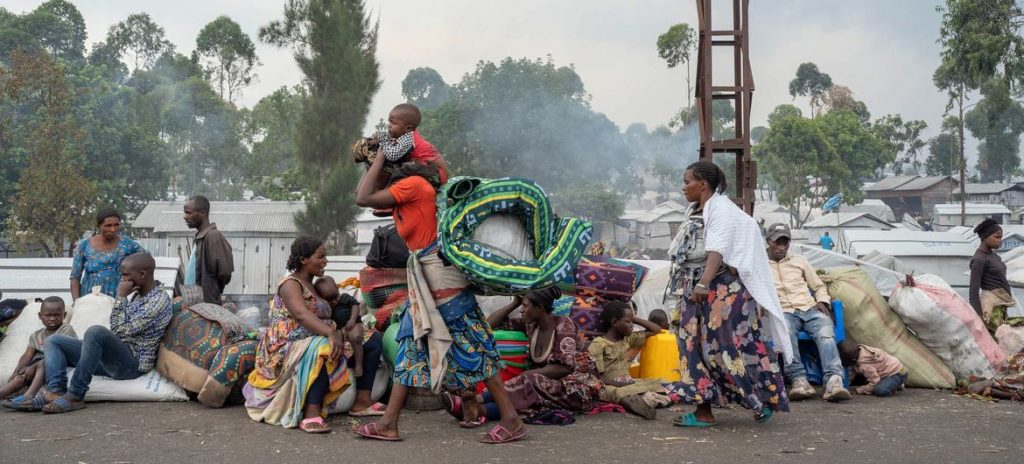
In December 2025, Congo and Rwanda signed another accord at a presidential summit. Clashes resumed almost immediately, with M23 pushing into South Kivu’s highlands and capturing Uvira — a strategic city bordering Burundi — in December, forcing 200,000 people to flee in a single week.
As of May 2026, peace talks have moved to Switzerland, with the ninth round of negotiations held in Montreux in April. The two sides signed technical agreements on a ceasefire verification mechanism and a prisoner exchange protocol. M23 claimed to have finished training over 400 new parallel administration officials in M23-controlled territory — an act of state-building, not de-escalation.
The pattern is consistent: agreements are signed, fighting continues, territory is consolidated, and the next round of talks begins from a position further in M23’s favor.
The Humanitarian Catastrophe
The human cost of Congo’s war resists easy description because the numbers are so large they become abstract.
Before the latest M23 offensive, the conflict had already displaced at least 1.2 million people in eastern Congo. The fall of Goma and the subsequent advances pushed that figure dramatically higher. The UN estimates that fighting has forced over 200,000 people to flee their homes in single weeks during the most intense periods of the offensive.
The broader humanitarian picture across the DRC — which encompasses not just M23 but over 100 other armed groups, ISIS-linked ADF attacks in Ituri, and the consequences of decades of state failure — is staggering. Over 25 million Congolese face acute food insecurity. Disease outbreaks are endemic in displacement camps. Child soldiers continue to be recruited by multiple armed factions.
Human Rights Watch has documented widespread abuses by M23 in areas under its control, including extrajudicial executions, sexual violence, arbitrary detention of journalists and civil society figures, and the blocking of humanitarian aid. The Congolese army and its allied militias have also been implicated in serious abuses.
In M23-controlled areas, journalists and activists face severe consequences for reporting. Congo’s Justice Minister warned in 2025 that anyone sharing information about M23 and Rwandan forces could face the death penalty. M23 itself has threatened, detained, and attacked journalists covering the conflict.
Access for humanitarian organizations remains severely constrained. Human Rights Watch accused both parties in April 2026 of blocking aid deliveries and preventing civilians from fleeing the South Kivu highlands — a pattern consistent with the entire conflict’s history.
The Mineral Connection: Your Phone and Congo’s War
The connection between eastern Congo’s conflict and global consumer electronics is not theoretical. It is direct, documented, and largely unaddressed.
Coltan — columbite-tantalite — is mined in eastern Congo and refined into tantalum, used in virtually every capacitor in every smartphone, laptop, electric vehicle battery, and defense system on earth. Cobalt — essential for lithium-ion batteries — comes predominantly from Congo. Gold flows out through Rwandan intermediaries at a scale that makes Rwanda one of Africa’s largest gold exporters despite having limited domestic gold deposits.
The EU has not established sufficient safeguards to prevent conflict minerals from entering its market, according to a 2025 Global Witness investigation. Luxembourg, where major commodities trading firm Traxys is headquartered, has reportedly blocked EU-level sanctions on entities involved in the trade. The US sanctioned former DRC President Joseph Kabila in April 2026 for his ties to M23 — a significant step, given Kabila was president from 2001 to 2019 and had previously been considered a potential part of any political solution. A Congolese military court sentenced him to death in absentia in September 2025 for treason and war crimes.
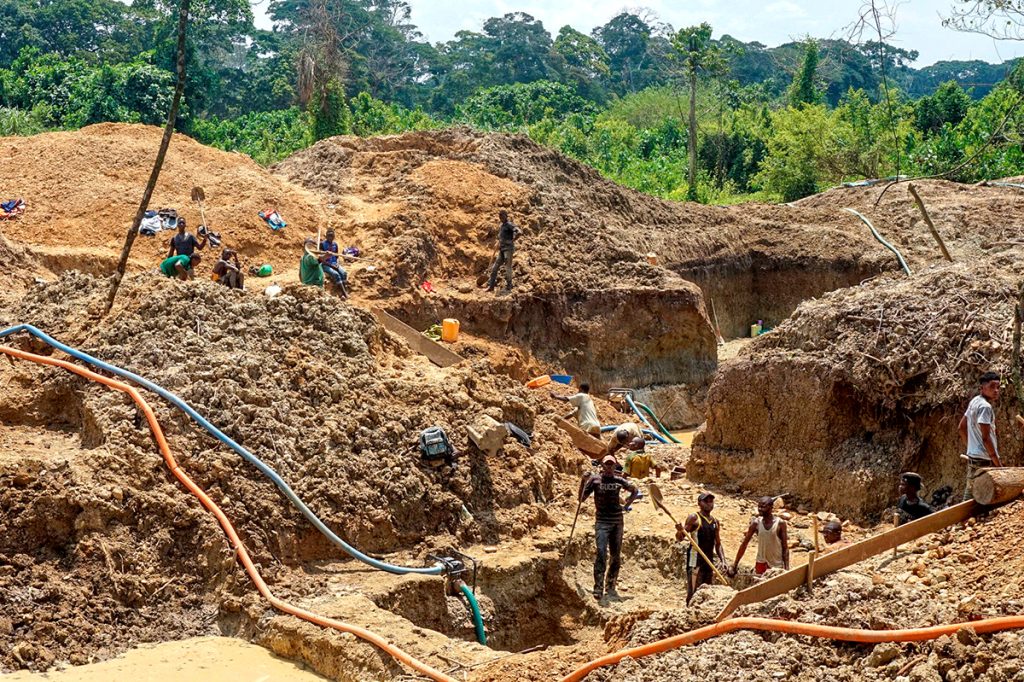
The minerals that power the global green energy transition and the digital economy are, in significant part, extracted from territory controlled by a Rwanda-backed rebel force accused of war crimes, smuggled through intermediaries, and purchased by manufacturers who apply due diligence processes that have demonstrably failed to keep conflict minerals out of global supply chains.
This is a supply chain problem that connects eastern Congo to every consumer electronics factory in Asia, every electric vehicle plant in Europe, and every smartphone in your pocket.
The External Players: Who Is Doing What
Rwanda remains the most consequential external actor — backing M23 with troops, weapons, and political cover while publicly denying involvement.
Uganda has conducted military operations against the ADF in Congolese territory with government consent, but has also been implicated in supporting other armed groups.
Burundi has deployed troops in support of the Congolese government, creating a Rwanda-Burundi proxy dimension to the conflict. Relations between Kigali and Bujumbura have deteriorated sharply, with high-level diplomacy required to prevent bilateral escalation.
Angola stepped back from mediation in March 2025 after its efforts collapsed.
The United States has been increasingly active: sanctioning individuals, brokering the June 2025 Washington accord, appointing Africa adviser Massad Boulos as a lead diplomatic actor, and warning in February 2026 that “any party” undermining peace could face sanctions. US special operations forces reportedly assisted in the capture of senior ADF commanders.
China and Russia have blocked stronger UN Security Council action on Congo, as they have on Sudan and Myanmar — a consistent pattern of Security Council paralysis on African conflicts driven by great power competition.
The EU has imposed targeted sanctions on 32 individuals and two entities but has not cut development aid to Rwanda — a lever that Brussels possesses but has declined to use.
Key Facts: DRC Congo War, May 2026
| Conflict roots | 1994 Rwandan genocide spillover; two Congo Wars 1996–2003 |
| Current phase began | Late 2021 (M23 re-emergence) |
| Goma fell | January 27, 2025 |
| Bukavu fell | February 2025 |
| Rwandan troops in DRC (est.) | 3,000–4,000 (UN Group of Experts) |
| Armed groups in eastern DRC | 100+ |
| Displaced persons | Millions across eastern DRC |
| Acutely food insecure | 25+ million Congolese |
| Peace deals signed | Multiple (Angola, Doha, Washington, Montreux) — none holding |
| Current talks | Switzerland (Montreux), 9th round, April 2026 |
| Key minerals at stake | Coltan, cobalt, gold — essential to global electronics and EVs |
What a Settlement Would Require — and Why It Hasn’t Happened
The International Crisis Group, which has tracked this conflict longer than almost any other institution, has laid out what a real settlement requires clearly: a permanent ceasefire; Rwandan military withdrawal from the DRC; full humanitarian access; and a restart of regional cooperation focused on limiting the suffering inflicted by armed groups.
None of those conditions exist today because none of the parties with power have adequate incentive to create them.
Rwanda has no incentive to withdraw forces that are winning militarily and generating mineral revenue. M23 has no incentive to stop advancing when it is consolidating territory and building a parallel administration. The Congolese government has no military capacity to change the facts on the ground. Western governments have not applied the leverage — particularly on Rwanda — that their aid relationships theoretically provide. China and Russia block the Security Council. The African Union has run out of willing mediators after Angola’s withdrawal.
The Montreux talks in April 2026 produced technical agreements on prisoner exchanges and ceasefire monitoring. M23 used the same weeks to train 400 new administrative officials for the territory it controls.
That gap — between what is being negotiated and what is being done — is the gap in which millions of Congolese civilians live. And for now, there is no credible pathway to closing it.
Sources: International Crisis Group, Human Rights Watch World Report 2026, Al Jazeera, Wikipedia (M23 Campaign 2022–present), Critical Threats Project, CFR Global Conflict Tracker, Defcon Level, ACLED, Global Witness, UN Security Council Group of Experts Reports
About the Author