US Delta Force operators and precision strikes captured Venezuelan President Nicolás Maduro in a pre-dawn operation on January 3, 2026.
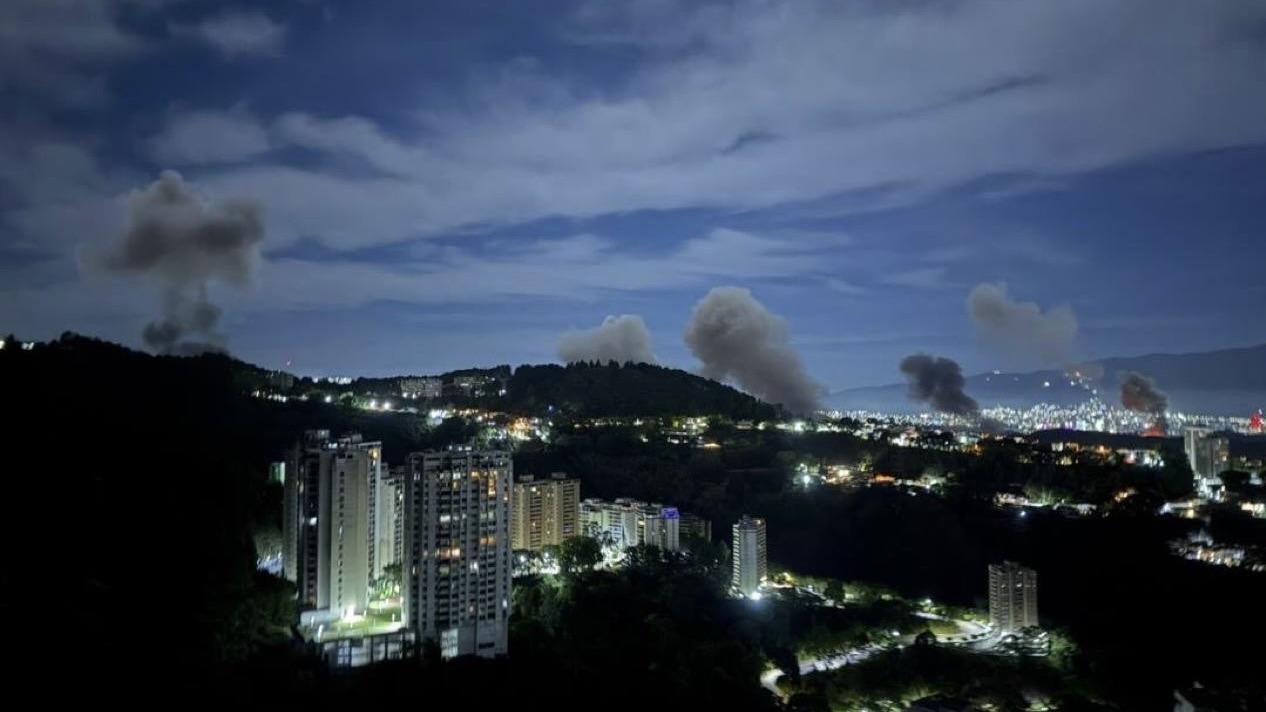
In the early hours of January 3, 2026, more than 200 US Delta Force operators surged through the streets of Caracas. CIA intelligence had spent months building a pattern of life on Venezuelan President Nicolás Maduro. The air defenses were neutralized. The electronic warfare had degraded Venezuelan command and control before a single boot hit the ground. By the time Maduro’s security apparatus understood what was happening, it was already over.
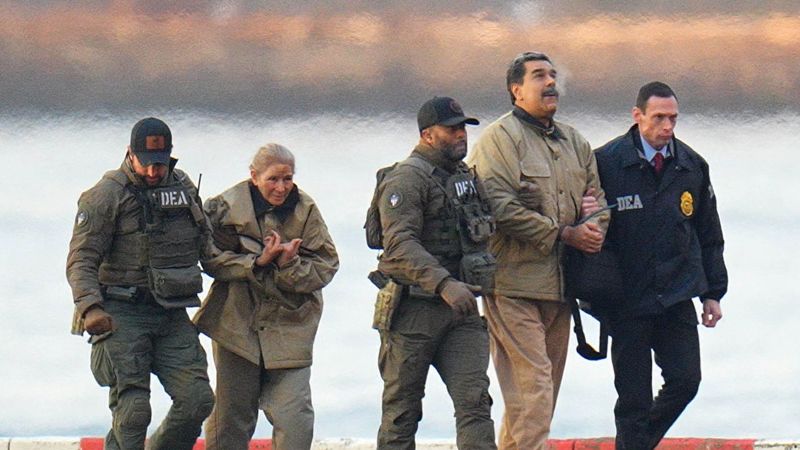
Maduro and his wife, Cilia Flores, were in American custody.
By morning, Donald Trump was posting on Truth Social: “MADURO IS CAPTURED.” Two days later, Maduro and Flores were arraigned in a Manhattan federal courthouse on charges of narco-terrorism, cocaine importation conspiracy, and possession of machine guns. They pleaded not guilty.
Operation Absolute Resolve — the first US military strike on a sovereign Latin American capital since the 1989 invasion of Panama — had succeeded in its immediate objective. What it had not resolved — and what remains deeply unresolved five months later — is everything that comes after.
How It Got Here: Months of Escalating Pressure
The January 3 operation did not come out of nowhere. It was the culmination of a pressure campaign that had been building since Trump returned to the White House in January 2025.
The Trump administration’s approach to Venezuela was shaped by two interconnected concerns: drugs and politics. On the drug side, the administration designated Venezuelan officials — including Maduro himself — as key figures in the Cartel de los Soles, a narco-trafficking network embedded within Venezuela’s military and government. In August 2025, the reward for Maduro’s arrest was increased to $50 million, with Attorney General Pam Bondi calling him “one of the largest narco-traffickers in the world and a threat to our national security.”
On the political side, Trump’s team — led by Secretary of State Marco Rubio, himself the son of Cuban exiles with a long-standing ideological hostility to the Maduro government — viewed Venezuela as the last domino of Latin American leftist authoritarianism. Rubio had Venezuela, Cuba, and Nicaragua in his sights from his first day in office.
In July 2025, a secret presidential order authorized US military force against cartels designated as terrorist organizations. In late December 2025, the US escalated onto Venezuelan land, striking a remote northern port reportedly used by the Tren de Aragua gang for smuggling. Maduro rejected a last-minute offer to go into exile in Turkey.
In the weeks preceding the operation, Trinidad and Tobago signed an agreement allowing US military access to its airports — a staging position. General Dan Caine, Chairman of the Joint Chiefs of Staff, told a press conference on January 3 that the US military had spent months planning and rehearsing the operation, with forces positioned and ready since early December.
Maduro, for his part, had been publicly dismissing the threat. He danced on stage to electronic music sampling one of his own speeches, saying “No crazy war.” His public bravado appears to have contributed to a catastrophic intelligence failure: Venezuela’s air defenses were left undisguised and uncamouflaged when the strikes came — easy targets for US systems that had been watching them for months.
What the Strikes Hit — and What They Didn’t
The operation was precise by design.
Satellite imagery analyzed by CSIS in the days after the strikes showed damage concentrated at four locations: the Fort Tiuna Military Complex — Venezuela’s military nerve center and reportedly where Maduro had taken up residence as American pressure intensified — La Carlota Air Base, La Guaira Port, and El Higuerote Airport.
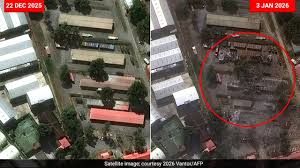
At Fort Tiuna, damage was tightly focused on a vehicle maintenance and storage facility supporting mechanized units — not the barracks, training facilities, or administrative headquarters. At La Carlota, impact craters appeared in open areas rather than against buildings or infrastructure. A BUK-M2E surface-to-air missile system was destroyed. None of the runways were struck.
The picture CSIS assembled was of a law enforcement operation supported by military precision — not a shock-and-awe campaign. The Trump administration was not trying to destroy Venezuela’s military. It was trying to capture Maduro while leaving the armed forces intact enough to maintain order during whatever political transition followed.
That calculation had a logic. But it also reflected the absence of a clear plan for what came next.
The US strikes on January 3 are reported to have targeted military facilities and reportedly killed dozens of military officers and at least two civilians. The Cuban government, which has long provided military and intelligence support to the Maduro regime, said that 32 Cuban officers were killed — Cuban personnel who were part of Maduro’s Presidential Guard.
In the buildup to the strikes, the United States had also extrajudicially executed at least 115 people in vessels that the Trump administration claimed were trafficking illegal narcotics in the Caribbean Sea and Pacific Ocean — actions that human rights organizations characterized as unlawful killings without due process.
The World’s Reaction: Near-Universal Condemnation
The international response to Operation Absolute Resolve was, with the exception of a handful of US allies, one of the sharpest rebukes Washington has received in decades.
The UN Security Council convened in emergency session. Venezuela’s representative told the Council: “Today, it is not only Venezuela’s sovereignty that is at stake. The credibility of international law, the authority of this Organization, and the validity of the principle that no State can set itself up as judge, party and executor of the world order are also at stake.”
UN human rights experts condemned the operation as “a grave, manifest and deliberate violation of the most fundamental principles of international law” and warned that it “sets a dangerous precedent and risks destabilising the entire region and the world.”
Amnesty International called it “a clear violation of the UN Charter. It is an act of aggression that endangers civilians and tears apart the guardrails of international law.”
Latin American governments reacted with alarm. Colombian President Gustavo Petro — a former guerrilla — warned he would “take up arms” for his country if the US threatened Colombia similarly. Thousands of Colombians protested in Cúcuta, near the Venezuelan border, on January 8. The largest FARC dissident group called on guerrilla organizations to unite against any US intervention.
Mexico, Brazil, South Africa, and Eritrea — speaking on behalf of the Group of Friends of the UN Charter — condemned the operation as a violation of the Charter and a threat to multilateralism. Russia called it “neocolonialism.” China condemned it as a violation of sovereign rights.
The United States cast it differently. Its UN representative framed the operation as “a surgical law enforcement operation to apprehend two indicted fugitives” — likening it to the 1989 arrest of Panama’s Manuel Noriega. The analogy was apt in one sense: Noriega ended up in a US prison; so did Maduro. It was less apt in another: Panama in 1989 involved 27,000 US troops, weeks of combat, and roughly 500 Panamanian civilian deaths. The Venezuela operation was faster, cleaner, and more targeted. But the legal and political dynamics — a sovereign government overthrown by American military force — were recognizably the same.
The Monroe Doctrine, Reborn
To understand Operation Absolute Resolve, you have to understand the Trump Corollary — sometimes called the “Donroe Doctrine” — which the Trump administration’s National Security Strategy had foreshadowed.
The original Monroe Doctrine of 1823 declared the Western Hemisphere off-limits to European imperial powers. The Roosevelt Corollary of 1904 expanded it to justify US military intervention in Latin American countries deemed unable to maintain order. The Trump administration’s revival goes further: asserting US dominance across the hemisphere not just against external powers but against governments Washington deems contrary to American interests — explicitly citing resource extraction, securing oil and rare earths for US corporations, and eliminating drug trafficking networks.
Trump said plainly that the US would “run” Venezuela until some undefined transition. Secretary of State Rubio said the US would enforce an oil quarantine and maintain a military presence in the region. Trump rejected the idea of backing the democratic opposition led by María Corina Machado — who had won the 2024 presidential election by every credible independent assessment before Maduro’s government voided the results.
Venezuela holds the world’s largest proven oil reserves. The Trump administration has said US firms will develop those reserves and “recoup allegedly stolen oil money.” Oil prices did not surge in the immediate aftermath of the operation — Venezuela represents only about 1% of global oil supply — but the strategic signal was unmistakable.
Since the Venezuela operation, Trump has threatened military force against Colombia, Cuba, Greenland, Iran, and Mexico. The pattern is not incidental. It is doctrine.
What Happened to Venezuela After Maduro
Maduro’s capture did not produce the immediate political transformation the Trump administration expected.
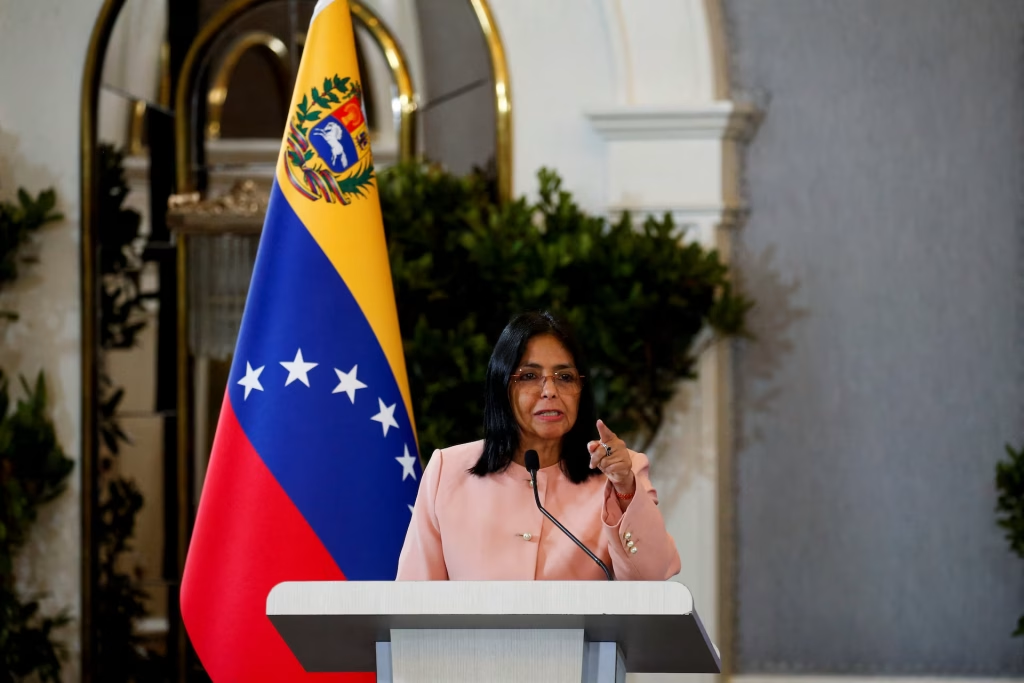
Vice President Delcy Rodríguez was sworn in as interim president within hours. A national state of emergency was declared. Security forces began patrolling Caracas. The government called for protests demanding Maduro’s release; thousands attended.
Maduro’s son, Nicolás Maduro Guerra, addressed supporters: “The 3rd of January will remain marked like a scar on our face, forever.”
The Chavista political structure — built over 25 years by Hugo Chávez and then Maduro — did not collapse. The military, whose senior officers benefit enormously from the corruption networks the Maduro government had institutionalized, did not defect en masse. The Cuban intelligence and security infrastructure that had propped up the regime was damaged — 32 Cuban officers killed — but not destroyed.
As of May 2026, Venezuela exists in a state of managed political uncertainty. Rodríguez’s government has been negotiating an arrangement with Washington — what analysts describe as a potential “formal sovereignty with surrendered substantive control” deal, in which Venezuela retains nominal independence while American oil companies gain access to its reserves and US military presence in the Caribbean continues.
Whether that arrangement holds — and whether it produces anything resembling democratic governance for Venezuela’s long-suffering population — is the central unanswered question of the entire operation.
The Legal Question: Was It Legal?
On the question of international law, the answer from virtually every independent legal authority is unambiguous: no.
Article 2(4) of the UN Charter prohibits the threat or use of force against the territorial integrity or political independence of any state. Article 51 allows force only in self-defense against an armed attack. Venezuela had not attacked the United States. There was no imminent threat of armed attack. There was no congressional authorization under US law — the Constitution assigns the war-making power to Congress, not the president. The War Powers Resolution of 1973 requires congressional approval before involving US forces in hostilities.
The Trump administration’s legal justification — that this was a “law enforcement operation” pursuant to criminal indictments against Maduro — has no recognized basis in international law. Criminal indictments by a US court do not authorize military force against a foreign head of state on the territory of a sovereign nation.
The practical effect of this illegality is less clear. The UN Security Council is paralyzed by US veto power. The International Criminal Court — which has an open investigation into crimes against humanity committed in Venezuela by the Maduro government — is itself under sanctions from the Trump administration. There is no mechanism by which international law can be enforced against the United States if Washington declines to comply.
What remains is precedent. If the US can launch a military operation to capture a foreign head of state, try him in a domestic court, and “run” his country while developing its oil reserves — and face no effective international accountability — then the message sent to every other government that possesses the military capability to do something similar is clarifying.
Key Facts: Operation Absolute Resolve, January 3, 2026
| Operation launched | January 3, 2026, early morning hours |
| Forces used | 200+ Delta Force operators; CIA intelligence support |
| Targets struck | Fort Tiuna, La Carlota Air Base, La Guaira Port, El Higuerote Airport |
| Maduro captured | January 3, 2026 |
| Arraigned | January 5, Manhattan federal courthouse |
| Charges | Narco-terrorism, cocaine importation, machine gun possession |
| Plea | Not guilty |
| Cuban officers killed | 32 (per Cuban government) |
| Interim president | Delcy Rodríguez |
| Trump’s stated goal | US firms develop Venezuela’s oil; “run” the country |
| International response | Near-universal condemnation; UN Security Council emergency session |
| Legal status | Condemned as illegal under UN Charter by independent experts |
What Comes Next
Maduro is in a Manhattan jail awaiting trial. His wife is with him. His government, technically, still exists in Caracas under Rodríguez. US oil companies are in early negotiations over Venezuela’s reserves. A military blockade enforces pressure on whoever remains in power to comply with Washington’s demands.
The democratic opposition — led by Machado, who won the 2024 election that Maduro stole — has been largely sidelined by Trump, who has shown no interest in backing her. The message this sends to Venezuelans who risked their lives to vote in 2024 is stark: Washington’s interest in Venezuela is its oil, not its democracy.
Whether Operation Absolute Resolve produces a democratic Venezuela, a compliant petrostate, a protracted insurgency, or a regional conflagration that pulls in Cuba, Colombia, and beyond — depends on decisions that have not yet been made.
What is certain is that the operation has permanently altered the rules of the game in the Western Hemisphere. The Monroe Doctrine has been reborn with teeth. And every government in Latin America is now calculating what that means for them.
Sources: CFR Global Conflict Tracker, CSIS, Human Rights Watch, Amnesty International, UN Security Council Press Release, OHCHR, Al Jazeera, Wikipedia (2026 United States Strikes in Venezuela), American Friends Service Committee
About the Author