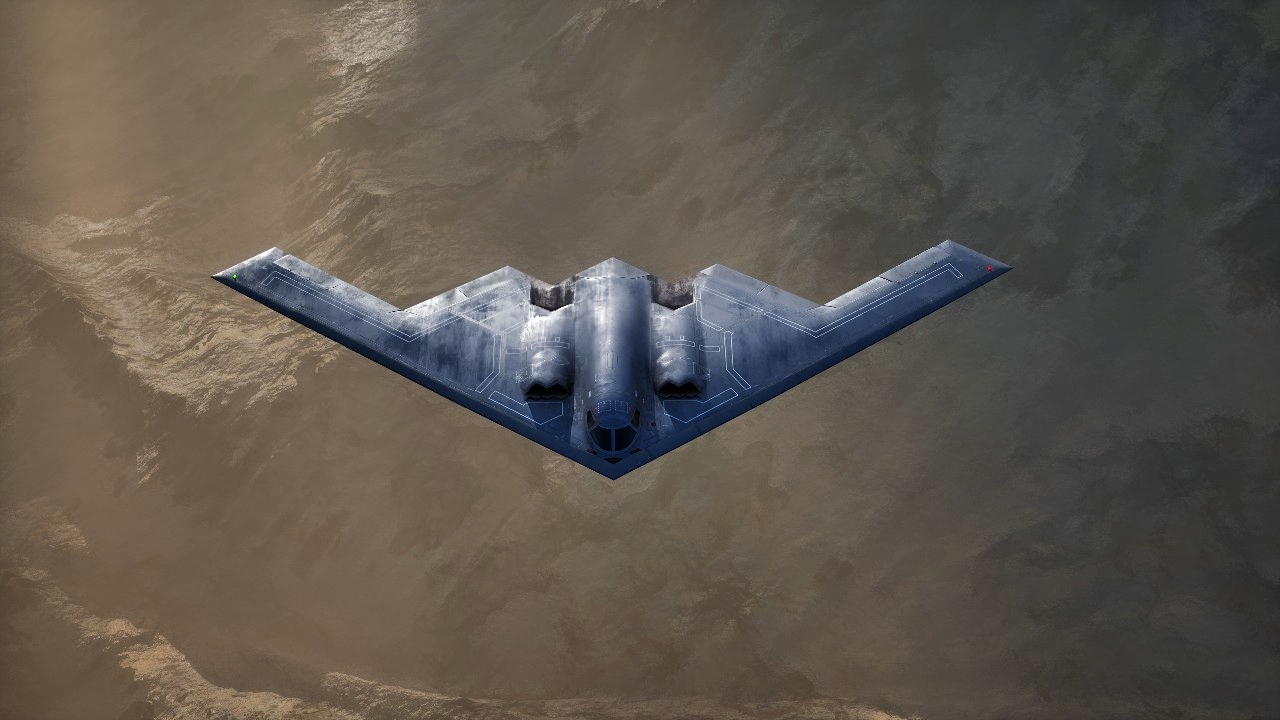
Seven B-2 Spirit bombers flew 18 hours non-stop from Missouri to strike Iran's Fordow, Natanz, and Isfahan nuclear sites on June 22, 2025.
The Middle East has seen no shortage of crises in the past decade. But what unfolded between the United States, Israel, and Iran across 2025 and into 2026 is something qualitatively different — a direct military confrontation between Washington and Tehran that has shaken global energy markets, killed thousands, closed one of the world’s most critical shipping lanes, and triggered a leadership decapitation that left Iran under new and untested rule.
Two military campaigns. One fragile ceasefire. A Strait of Hormuz that remains effectively closed. And a nuclear question that neither war has definitively resolved.
Here is how it all happened — and where it stands today.
Background: How Decades of Tension Finally Boiled Over
The hostility between the United States and Iran traces back to the Islamic Revolution of 1979 and the subsequent hostage crisis, which poisoned the relationship for generations. But the immediate trigger for what happened in 2025 and 2026 was Iran’s nuclear program.
In 2015, the Obama administration negotiated the Joint Comprehensive Plan of Action (JCPOA) — a deal that capped Iran’s uranium enrichment in exchange for sanctions relief. It was imperfect, but it worked as a containment mechanism. Trump abandoned it in 2018. The Biden administration kept most sanctions in place and failed to negotiate a replacement. By the time Trump returned to office in 2025, Iran had enriched uranium to 60% purity — just below weapons-grade — in quantities sufficient for multiple nuclear devices if further processed.
By May 2025, the IAEA reported Iran’s stockpile of 60%-enriched uranium had reached over 408 kilograms, a nearly 50% jump since February. The agency warned it was enough for multiple nuclear weapons. Iran was also restricting IAEA inspections and hiding nuclear material. The IAEA censured Iran on June 12, 2025. Two days later, Israel moved.
Act One: The 12-Day War (June 2025)
On June 13, 2025, Israel launched a major surprise offensive against Iran — targeting nuclear facilities, military infrastructure, air defenses, and regime command sites. The operation, called Operation Rising Lion, was the first direct open conflict between the two countries.
Israel’s objectives were clear: destroy Iran’s air defense network, degrade its nuclear program, and set back its ballistic missile capabilities. In those first days, Israeli strikes systematically dismantled Iran’s ability to defend its own airspace — a calculated opening move that would matter enormously nine days later.
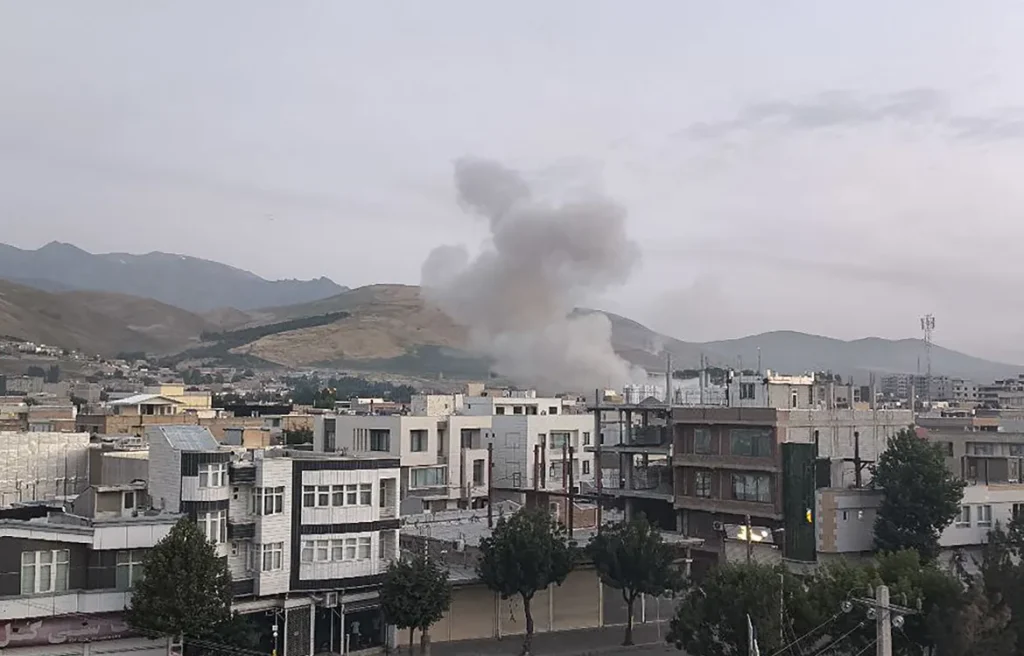
On June 22, 2025, the United States entered the fight. In an operation codenamed Operation Midnight Hammer, seven B-2 Spirit stealth bombers — flying 18 hours non-stop from Whiteman Air Force Base in Missouri, refueling mid-air three times — dropped fourteen GBU-57A/B Massive Ordnance Penetrator “bunker buster” bombs across three targets: the Fordow underground enrichment plant, the Natanz nuclear facility, and the Isfahan Nuclear Technology Center. Tomahawk missiles from a submarine added to the strike. F-35 and F-22 fighters entered Iranian airspace to draw surface-to-air defenses — no launches were detected.
It was the first US attack on Iranian territory since a 1988 naval engagement, and the first US strike on an Iranian target since the assassination of Qasem Soleimani in 2020.
Trump declared the strikes had “completely and totally obliterated” Iran’s nuclear facilities. A Pentagon damage assessment released in July 2025 found Iran’s nuclear program had been set back approximately two years. Iran’s foreign minister acknowledged “severe damage.” Iran retaliated by striking a US base in Qatar. On June 24, Trump announced a ceasefire — mediated by Oman — ending the 12-Day War.
The conflict killed approximately 700 Iranian civilians and 30 Israelis, including several key nuclear scientists targeted specifically by Israeli intelligence.
The Interlude: Economic Collapse and the 2026 Iranian Protests
The 12-Day War did not end Iran’s internal crisis — it accelerated it.
In September 2025, the UN reimposed sweeping sanctions on Iran using the “snapback” mechanism. The Iranian rial entered freefall. Food prices surged. Treasury Secretary Scott Bessent called the currency’s collapse in December 2025 the “grand culmination” of maximum pressure.
On December 28, 2025, protests erupted across Iran — the largest since the Women, Life, Freedom movement of 2022, and arguably the most politically dangerous the Islamic Republic had ever faced. They spread across all 31 provinces into January 2026. The regime’s response was brutal: Iranian security forces massacred thousands of civilians, with human rights groups reporting over 6,000 dead and tens of thousands arrested.
The protests weakened the regime’s domestic legitimacy at the precise moment it was facing maximum external pressure. Western governments, including the United States, publicly encouraged the demonstrations.
Act Two: The 2026 War — A Fundamentally Different Campaign
If the 12-Day War was a surgical operation with defined targets and a diplomatic off-ramp, what began on February 28, 2026 was something else entirely.
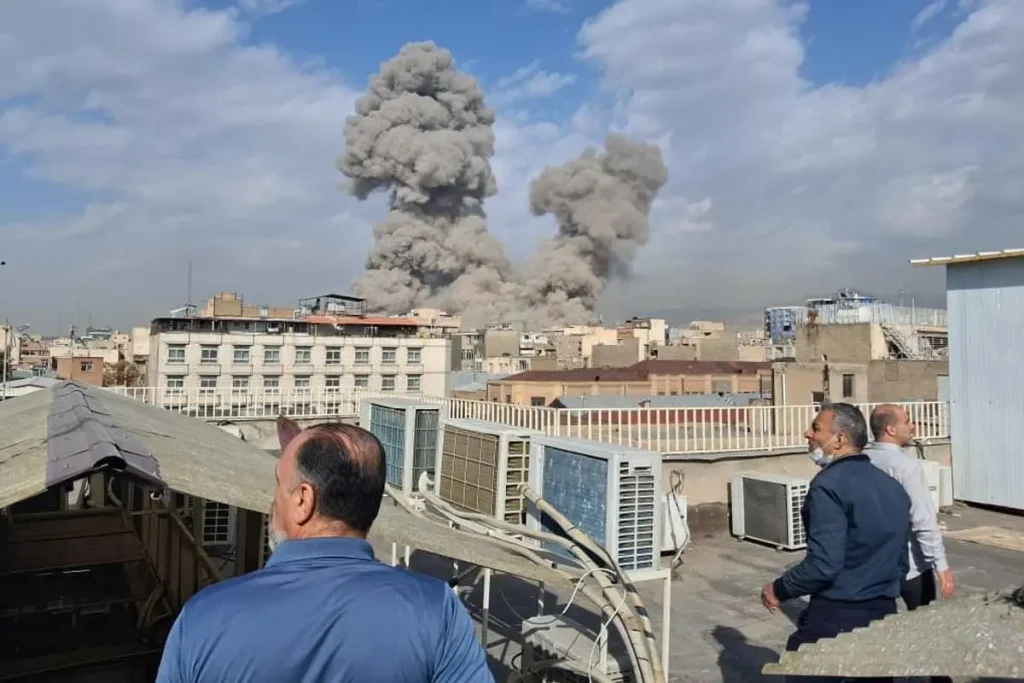
In the early hours of February 28, US and Israeli forces launched nearly 900 strikes in 12 hours against Iranian missiles, air defenses, military infrastructure — and the Iranian leadership itself. The opening salvo killed Supreme Leader Ali Khamenei, who had ruled Iran since 1989, along with dozens of other senior officials. His son, Mojtaba Khamenei, was subsequently appointed as his successor — a dynastic transfer of power that struck many observers as simultaneously historic and absurd.
The scale of the operation and its explicit targeting of the Iranian head of state represented a categorical escalation over June 2025. There was no defined endpoint. There was no Oman waiting in the wings. This was not a campaign designed to degrade a nuclear program. It was a campaign designed to change a regime.
Trump’s stated justification was that Iran had restarted its nuclear program and was developing ballistic missiles capable of reaching the United States. US intelligence agencies had assessed differently — that Iran did not pose an imminent nuclear threat and would need until 2035 at the earliest to build such missiles. The contradiction between Trump’s claim that the nuclear program had been “obliterated” in 2025 and his 2026 claim that it presented an “imminent threat” was noted by critics at home and allies abroad.
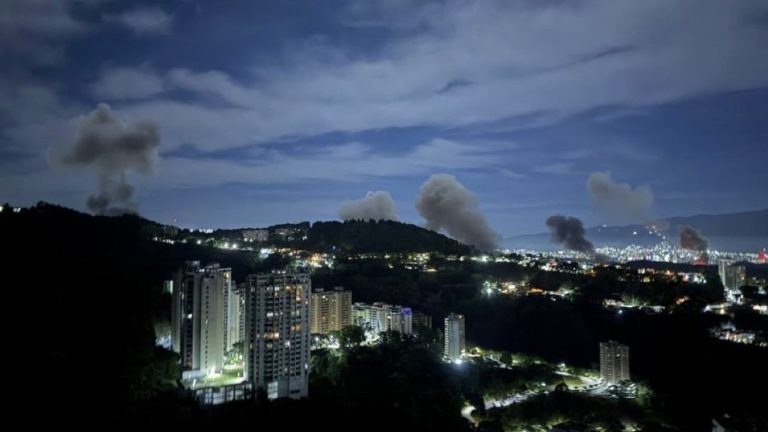
Iran’s retaliation was broader and more damaging than in 2025. Missiles and drones struck US military bases across nine countries — Bahrain, Kuwait, Qatar, Saudi Arabia, Oman, the UAE, Iraq, Jordan, and Israel. Strikes hit Abu Dhabi, Doha, Kuwait City, and Riyadh. Iranian missiles struck Tel Aviv, though most were intercepted by US naval forces and regional air defenses. UK bases in Bahrain, Qatar, and Cyprus were also hit; the RAF deployed in a defensive capacity.
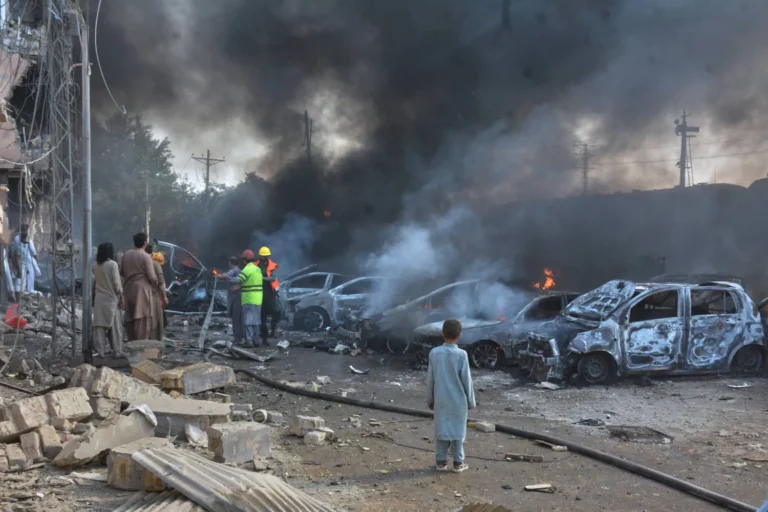
One strike hit a girls’ school adjacent to a naval base in Minab, near Bandar Abbas, killing approximately 170 civilians — a moment that generated significant international condemnation.
The Strait of Hormuz: The Global Economy’s Chokepoint
Iran’s most consequential retaliatory move was not its missiles. It was the closure of the Strait of Hormuz.
The Strait of Hormuz — the narrow waterway between Iran and Oman through which roughly 20% of global oil supply passes — was shut to foreign shipping by Iran beginning February 28. The Iranian Revolutionary Guard Corps broadcast warnings to all vessels: “No ship is allowed to pass the Strait of Hormuz.” Although the UK Royal Navy declared the closure not legally binding, almost all commercial shipping stopped.
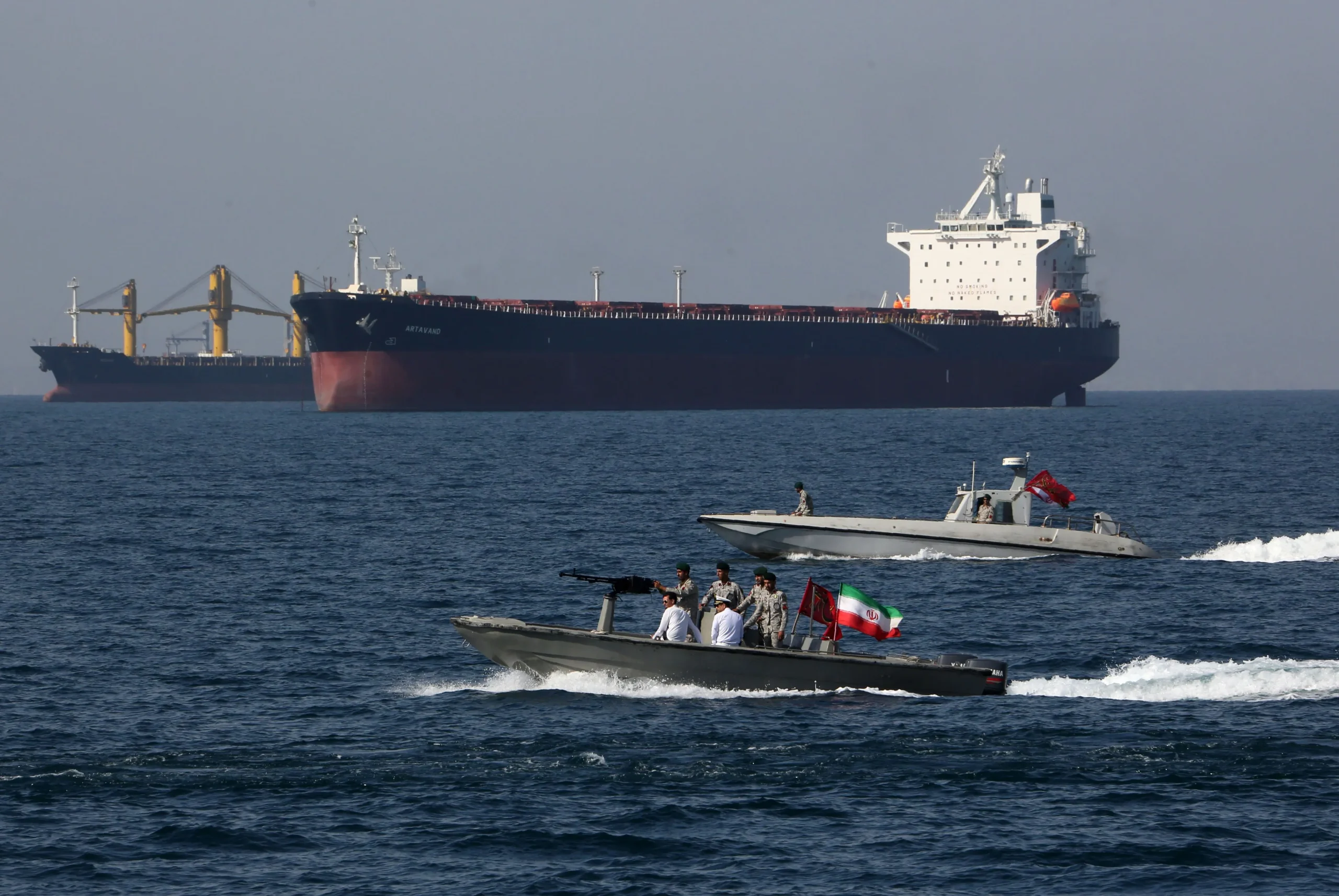
Brent crude oil prices surged past $100 a barrel, with wild daily swings. Fuel shortages emerged in parts of Asia. Global supply chains shuddered. The first 100 hours of the US operation, codenamed Operation Epic Fury, cost approximately $3.7 billion — mostly unbudgeted.
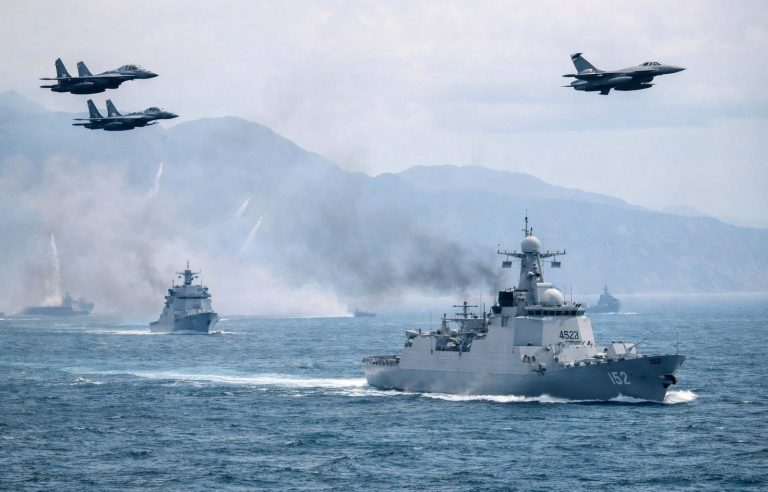
The US military began a campaign on March 19 to reopen the strait by force, targeting Iranian naval vessels and drone platforms. On April 13, after mediation talks in Islamabad failed, the US Navy imposed a full naval blockade of Iran, targeting all ships seeking to use Iranian ports. The result: a dual blockade. The US blockading Iran. Iran blockading the Gulf. Almost no commercial shipping moving through either direction.
Iran briefly announced on April 17 that the strait would be open during the ceasefire period. But neither blockade has been formally lifted as of May 2026.
The April 8 Ceasefire — and Why It Hasn’t Held Properly
After 40 days of sustained combat, Pakistan brokered a conditional two-week ceasefire on April 8, 2026 — since extended, though talks have repeatedly stalled.
Iran’s counter-proposal demanded an end to all US-Israeli strikes, security guarantees against future aggression, war reparations, and — most pointedly — international recognition of Iranian sovereignty over the Strait of Hormuz. The United States rejected the last condition outright.
Trump made clear that the ceasefire was contingent on the “complete, immediate, and safe opening of the Strait of Hormuz.” Iran has not done so. The US has not lifted its naval blockade. The diplomatic impasse mirrors the military one: neither side has achieved what it set out to achieve, and neither is willing to concede the point that would allow the other to claim victory.
Pakistan and China have submitted a 5-point peace initiative calling for immediate cessation of all hostilities and humanitarian access. Talks are ongoing but fragile.
The Nuclear Question: Still Unresolved
Here is the uncomfortable truth at the center of two wars: Iran’s nuclear question has not been definitively answered.
US intelligence assessments suggest that as of May 2026, Iran remains approximately one year away from a nuclear weapon — roughly consistent with what Israeli intelligence had projected before the June 2025 war. Iran moved much of its enriched uranium stockpile before the 2025 strikes. The underground facilities at Fordow were severely damaged but not collapsed. The IAEA has been denied access to all damaged sites since June 2025, making independent verification impossible.
The Carnegie Endowment for International Peace noted in May 2026 that the February 2026 campaign’s primary motivation was not a new nuclear development but Iran’s conventional military capabilities and its brutal crackdown on domestic protesters. The nuclear justification, analysts argue, was presented to the public but was not the driving strategic rationale.
Iran has not abandoned its claimed “right to enrich.” Without a new nuclear agreement, there is no mechanism to verify whether it is rebuilding — or to stop it if it tries.
Key Facts: The US-Iran Conflict, 2025–2026
| 12-Day War | June 13–24, 2025 |
| Operation Midnight Hammer | June 22, 2025 (US strikes on Fordow, Natanz, Isfahan) |
| 2026 War began | February 28, 2026 |
| Khamenei killed | February 28, 2026 |
| Successor | Mojtaba Khamenei (son) |
| Strait of Hormuz closed | February 28, 2026 — ongoing |
| Ceasefire (Pakistan-mediated) | April 8, 2026 — fragile and conditional |
| Nuclear setback (est.) | ~1–2 years from pre-war capability |
| Cost of first 100 hours (US) | ~$3.7 billion |
| Countries struck by Iran | 9 (including all Gulf states, Israel) |
What Comes Next
Three things remain unresolved and will define what the 2025–2026 Iran conflict ultimately means.
First, the Strait of Hormuz. Until commercial shipping freely passes again, the global economic cost of this conflict continues to compound. Every week the strait stays effectively closed is a week of higher energy prices, stressed supply chains, and growing pressure on everyone — including Washington — to find an exit.
Second, Iran’s nuclear program. The bombs fell. The facilities were damaged. But the knowledge, the scientists who survived, and potentially the enriched uranium stockpile remain. Unless a new verification agreement emerges — and the current diplomatic climate makes that look distant — the nuclear question will resurface.
Third, Iran’s new leadership. Mojtaba Khamenei is untested. His father’s death has not produced the regime collapse Trump anticipated. Whether the new leadership consolidates, moderates, or radicalizes in response to the humiliation of the strikes is the central geopolitical question of the next two years in the Middle East.
The 12-Day War was meant to be a surgical strike. The 2026 campaign was meant to finish the job. Neither has delivered the clean outcome its architects promised. The Middle East rarely does.
Sources: Wikipedia (2026 Iran War, 2025 US Strikes on Iranian Nuclear Sites, Strait of Hormuz Crisis), Britannica, Al Jazeera, Carnegie Endowment for International Peace, House of Commons Library, Oxford University, AJC, Jerusalem Post, IAEA
About the Author