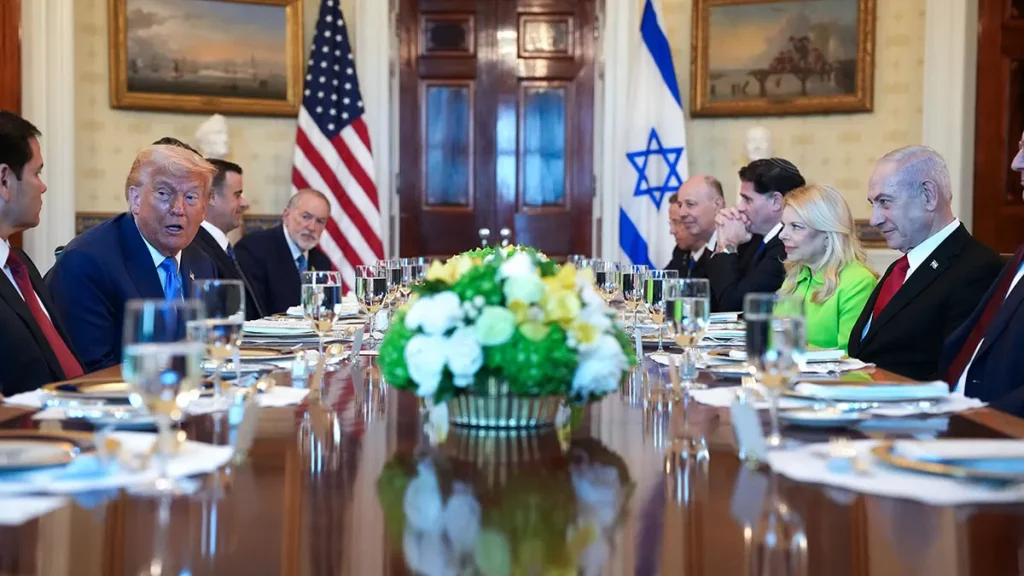
In October 2025, after more than two years of war, Israel and Hamas signed a ceasefire agreement brokered by the United States, Egypt, and Qatar. President Trump announced it at the White House alongside Israeli Prime Minister Benjamin Netanyahu. It was called the “Comprehensive Plan to End the Gaza Conflict.” The world exhaled.
Seven months later, that exhale looks premature.
As of May 2026, Gaza remains under daily Israeli strikes. More than 800 Palestinians have been killed since the ceasefire supposedly began. The Strip’s population — nearly 1.8 million people — is almost entirely displaced. Phase 2 of the peace plan, meant to advance Hamas disarmament and reconstruction, is deadlocked. And in the West Bank, settler violence is at its worst recorded level since monitoring began in 2013.
This is not a post-war situation. It is something harder to name: a managed catastrophe operating under the cover of a signed agreement.
How the Ceasefire Came About — and What It Actually Said
The October 9, 2025 agreement, signed in Sharm el-Sheikh, Egypt, came after a second major Israeli offensive launched in March 2025 that further devastated what remained of Gaza’s infrastructure. By the time the deal was signed, more than 70,000 Palestinians had been confirmed killed since October 7, 2023 — a figure independent researchers and The Lancet believe significantly undercounts the true toll when deaths from disease, malnutrition, and bodies still buried under rubble are factored in.
The plan laid out three phases. Phase 1 called for an immediate halt to hostilities, the release of all remaining Israeli captives held by Hamas, the release of Palestinian prisoners held by Israel, withdrawal of Israeli forces to a designated “Yellow Line” inside Gaza, and the entry of 600 aid trucks per day.
On October 13, Hamas released the last 20 living Israeli captives in exchange for 250 Palestinian prisoners serving long sentences and the return of 1,700 Palestinians who had disappeared since October 7, 2023. Representatives from 30 countries gathered to witness the signing.
It looked like a turning point.
The Ceasefire in Practice: 2,400 Violations and Counting
Whatever the agreement said on paper, the situation on the ground told a different story almost immediately.
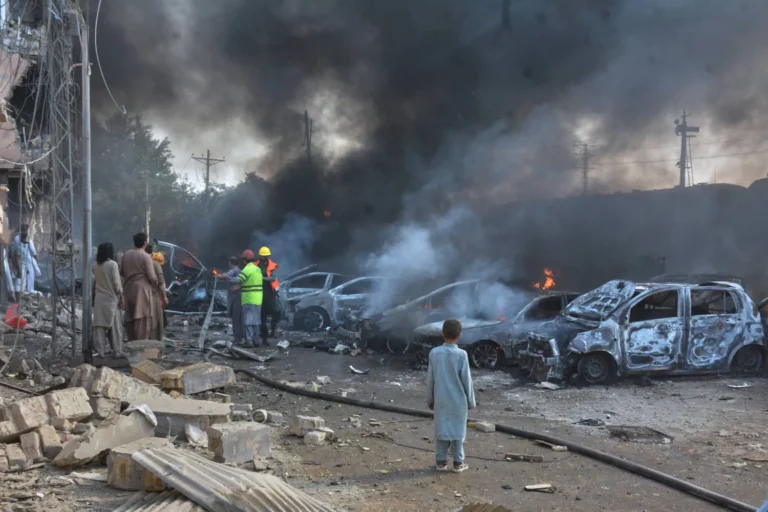
According to Gaza’s Government Media Office, Israel committed at least 2,400 violations of the ceasefire between October 10, 2025 and April 14, 2026 — through airstrikes, artillery shelling, and direct shootings. In the first 44 days of the truce alone, 342 Palestinians were killed across 497 documented violations.
Since the ceasefire began, at least 850 Palestinians have been killed by Israeli military action, including more than 200 children and seven humanitarian workers, according to Gaza’s Ministry of Health as of May 9, 2026. The total death toll from the conflict since October 7, 2023 now stands at more than 75,800 across both sides — 73,770 Palestinians and 2,039 Israelis, per the most recent confirmed data.
The Israeli military has consistently stated that its strikes target Hamas militants and facilities, including cases where it claims operatives used civilian infrastructure. However, independent conflict tracker ACLED found that Israel’s claims of combatants killed consistently exceed what could be independently verified — in one six-month period, Israel claimed over 2,100 operatives killed while ACLED data indicated closer to 1,100.
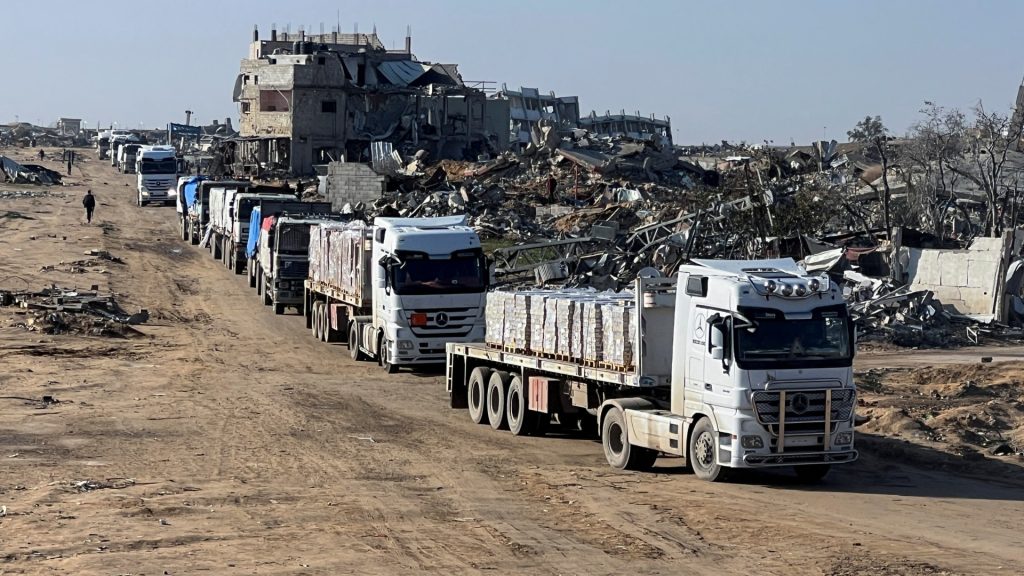
On the humanitarian side, the promised 600 trucks of aid per day have not materialized. Between October 2025 and February 2026, only 37 percent of the allocated aid trucks entered Gaza. Israel has blocked essential food items including meat, dairy, and fresh vegetables while allowing in non-nutritious snacks and soft drinks. Ninety percent of Gaza’s water and sanitation infrastructure remains damaged. Disease outbreaks — scabies, chickenpox, rodent-borne infections — are spreading across overcrowded displacement camps.
This is what the ceasefire looks like from inside Gaza.
Phase 2: Where the Real Fight Is
If Phase 1 was supposed to stop the killing, Phase 2 is where the conflict’s future is actually being negotiated — and right now, it is completely stalled.
Phase 2 centers on two things that are fundamentally incompatible in the current moment: Hamas disarmament, and the establishment of post-war governance in Gaza.
Israel and the United States are demanding Hamas fully disarm before reconstruction begins. Hamas has rejected this, calling it unacceptable to demand disarmament “in a crude manner” while Israel continues to violate the ceasefire and control most of the Strip. Hamas has said it will not discuss Phase 2 at all unless Israel first fully implements Phase 1 — including completing its withdrawal and allowing full aid access.
The US-appointed Special Envoy Nickolay Mladenov has been tasked with mediating. But in May 2026, a leaked letter from Mladenov’s office suggested the “Board of Peace” — the governance body set up under the plan — did not intend to hold Israel to Phase 1 terms if Hamas refused to accept the disarmament framework. For Palestinian observers, this was confirmation of what they had suspected: the ceasefire was being enforced asymmetrically, with Hamas accountable for compliance and Israel largely unaccountable for violations.
Meanwhile, Israel reportedly controls between 50 and 55 percent of Gaza’s territory, maintaining effective occupation through the Yellow Line and buffer zones that continue to expand. The full Israeli withdrawal stipulated in Phase 1 has not happened.
The West Bank: A Parallel Crisis Getting Worse
Gaza dominates headlines. The West Bank has been getting worse, quietly and consistently.
Since February 28, 2026 — when a regional escalation began — settler violence in the West Bank has surged to its highest recorded level since monitoring started in 2013. In March 2026 alone, there were over 200 settler attacks resulting in casualties or property damage across more than 100 communities — roughly six attacks per day. Six Palestinians were killed by settlers in March, making it the second-deadliest month for settler violence on record.
Between October 7, 2023 and April 2026, more than 1,088 Palestinians have been killed in the occupied West Bank, including at least 238 children. Forty-two of those deaths occurred in the first months of 2026 alone.
In April, the Israeli security cabinet approved the establishment of 34 new Israeli settlements in the occupied West Bank — all illegal under international law. Demolitions in East Jerusalem continue. The UN has warned these actions are eroding any realistic path to a two-state solution.
Palestinian municipal elections were held in parts of the West Bank and, for the first time since 2006, in part of Gaza on April 25, 2026. The UN commended the Palestinian Central Elections Commission for managing the process under extraordinarily difficult conditions. It was a moment of civilian normalcy in the middle of a situation that is anything but normal.
The Bigger Regional Picture
The Gaza conflict has never existed in isolation. It sits at the center of a wider regional transformation that played out dramatically in 2025.
Israel fought a 12-day war with Iran in June 2025, in which US and Israeli strikes significantly damaged Iran’s nuclear facilities. Hezbollah in Lebanon was weakened, its leader Hassan Nasrallah assassinated in 2024. Bashar al-Assad’s government fell in Syria in late 2024. The so-called Axis of Resistance — Iran, Hamas, Hezbollah, the Houthis — has been battered but not destroyed.
As of May 2026, Israel and Lebanon are in ceasefire negotiations with a three-week extension announced by Trump. The Houthis in Yemen continue to pose a threat to shipping in the Red Sea. And Iran, despite its nuclear setbacks, remains an active regional actor.
Hamas has read this regional context clearly. The weakening of its allies has strengthened, not softened, its resolve to retain its weapons and organizational structure in Gaza. Without those assets, its leverage — in negotiations and on the ground — disappears entirely.
What Gaza Looks Like on the Ground Today
For the 1.8 million Palestinians still inside Gaza, the ceasefire has meant neither safety nor normalcy.
As of April 2026, 1.7 million people are sheltering across more than 1,600 displacement sites. Eighty percent of those sites have frequent rodent and pest infestations. Skin diseases are widespread in nearly half of all camps. Medical evacuations abroad remain limited, with the referral route to the West Bank still banned.
More than 270 journalists have been killed since October 2023 — making this the deadliest conflict for media workers in modern recorded history. UNRWA, the UN agency for Palestinian refugees, has had 391 staff members killed. Since the war began, 972 incidents impacting UNRWA premises have been recorded.
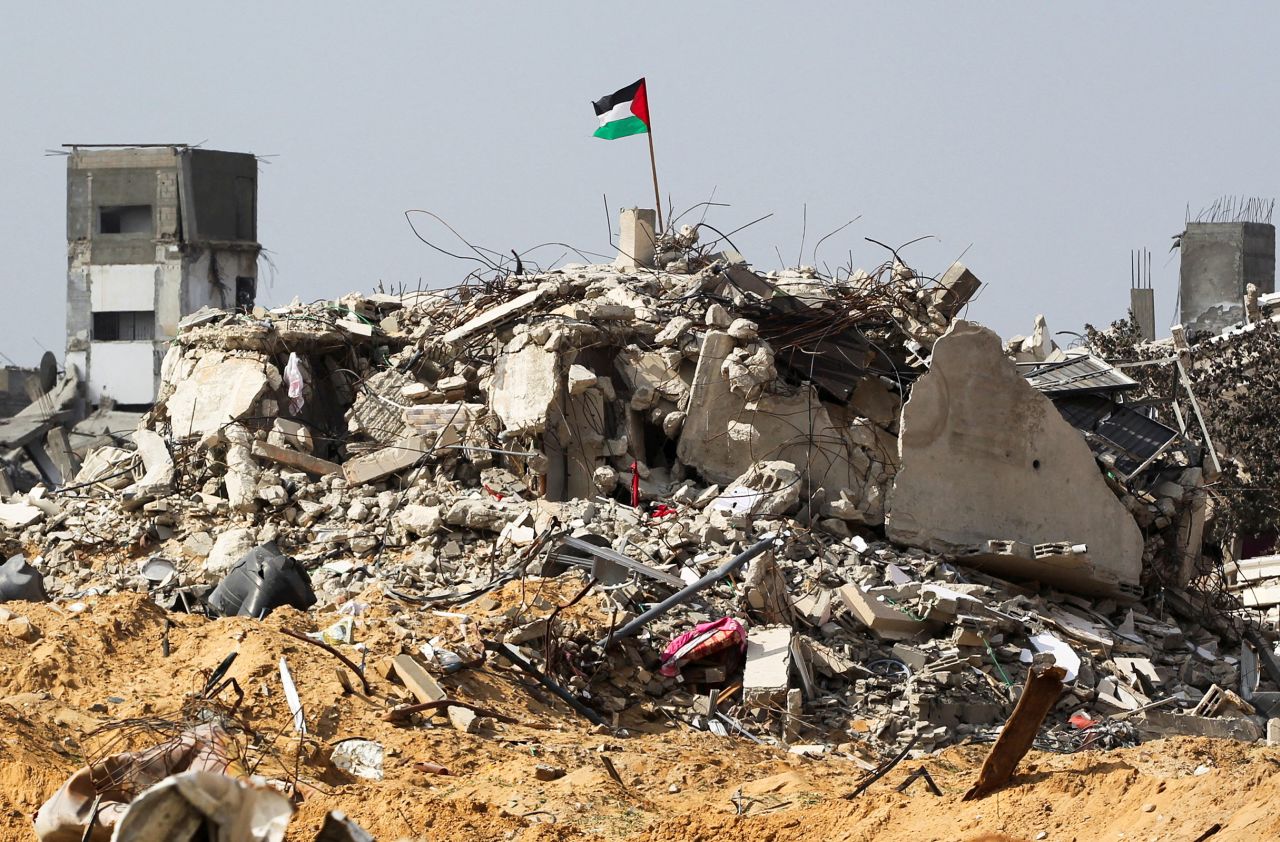
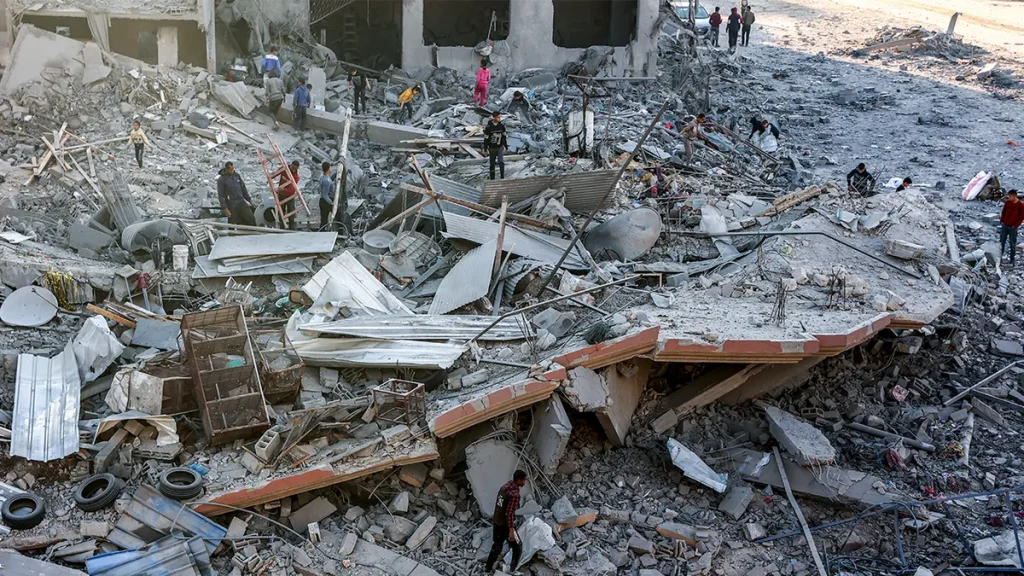
The physical destruction of Gaza is staggering. Oxfam estimates over 2,500 residential buildings were destroyed by January 2026, and Israel continued building new structures inside the Strip even as Palestinian homes were reduced to rubble.
Key Facts: Israel-Palestine Conflict, May 2026
| War began | October 7, 2023 (Hamas attack on Israel) |
| Palestinians killed (Gaza) | 72,736+ confirmed; real toll estimated higher |
| Israelis killed (total) | 2,039+ |
| Palestinians killed (West Bank) | 1,088+ since October 2023 |
| Displaced in Gaza | ~1.8 million (nearly entire population) |
| Ceasefire signed | October 9, 2025 |
| Ceasefire violations (Israel) | 2,400+ documented through April 2026 |
| Phase 2 status | Stalled — Hamas disarmament unresolved |
| Israeli territorial control in Gaza | ~50–55% of the Strip |
The Core Question Nobody Has Answered
What happens to Gaza after the fighting definitively stops — if it ever does?
The US plan envisions a demilitarized Gaza governed by a technocratic body backed by Arab states, with Hamas excluded from power. Israel wants Hamas destroyed as a military and political force. Hamas insists it will not disarm and intends to remain a political actor in any post-war arrangement.
The Palestinian Authority, headquartered in Ramallah and deeply weakened by years of dysfunction and Israeli restrictions, is theoretically meant to eventually take over Gaza’s governance. But its legitimacy in Gaza — especially after sitting out the war — is sharply contested. The April 2026 municipal elections were a first step toward rebuilding Palestinian institutional life, but a small one.
The two-state solution — a Palestinian state in the West Bank and Gaza alongside Israel — remains official UN policy and the stated position of most of the international community. But on the ground, the conditions for it are being systematically dismantled: expanding settlements, continued occupation, governance vacuums, and a population that has been through nearly three years of war.
What exists today is not peace. It is not war in the conventional sense either. It is a fragile, violent, contested in-between — where 75,000 people are dead, 1.8 million are displaced, a ceasefire is violated daily, and the hardest questions about who governs, who disarms, and who rebuilds remain unanswered.
The agreement signed in October 2025 was supposed to end this conflict. So far, it has mostly managed it.
Sources: UNRWA Situation Reports 217–220, Gaza Ministry of Health (via OCHA/WAFA), Al Jazeera, UN Security Council briefings, Genocide Watch, Wikipedia Gaza Peace Plan, NPR, ABC News, ACLED, Oxfam
About the Author