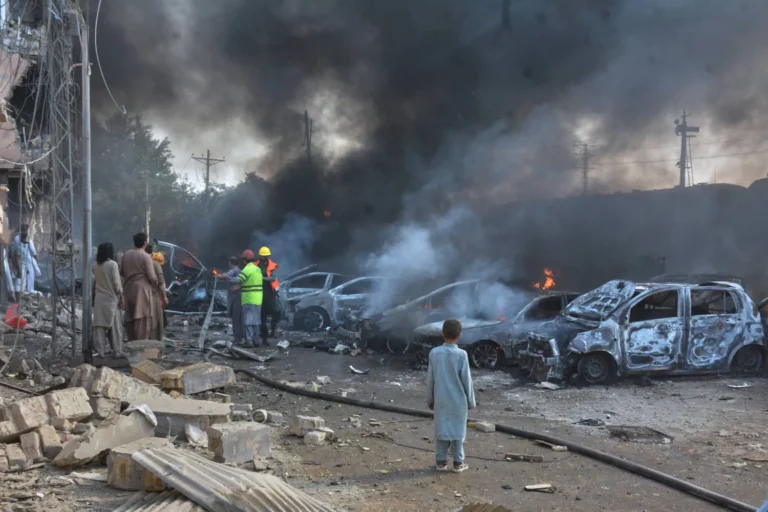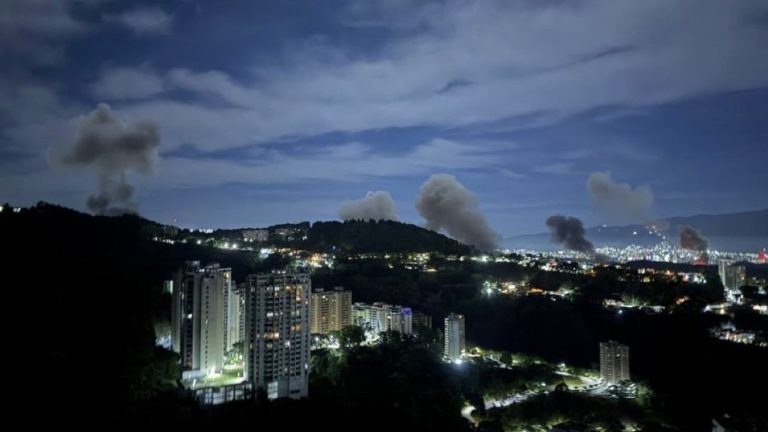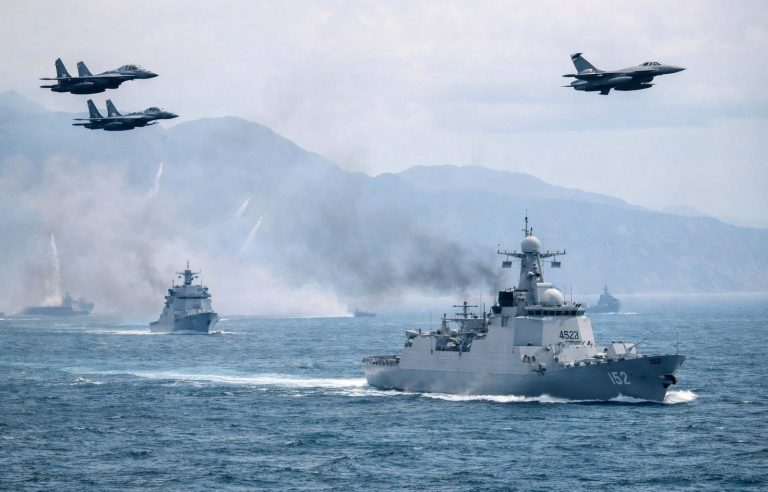
Four years after Russia launched its full-scale invasion of Ukraine in February 2022, the war grinds on. The front lines have shifted slowly. Hundreds of thousands are dead. Millions remain displaced. And yet, as of May 2026, something has changed — not on the battlefield, but in the diplomatic corridors of Washington, Moscow, and Kyiv.
The question being asked everywhere from Brussels to Beijing is no longer will this war end, but on whose terms.
A War That Was Never Supposed to Last This Long
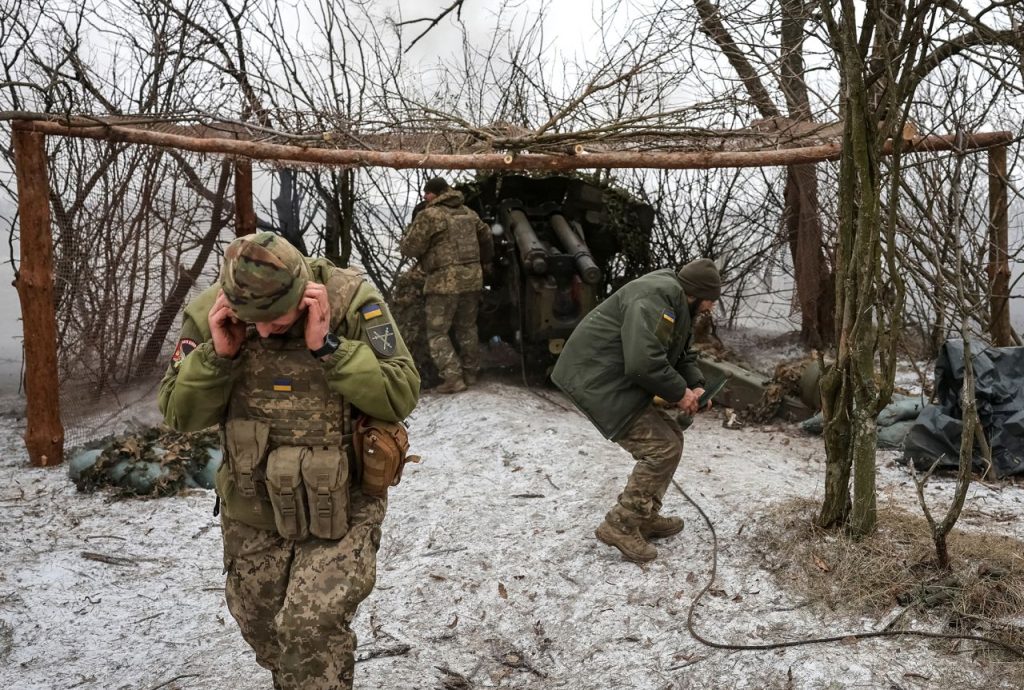
When Russian President Vladimir Putin ordered the invasion of Ukraine on February 24, 2022, Western intelligence agencies feared a rapid collapse of Kyiv. Ukrainian resistance proved otherwise. Within weeks, the operation that Moscow expected to conclude in days had evolved into what is now the largest land war in Europe since 1945.
The initial Russian push on Kyiv failed catastrophically. Ukrainian forces, armed with Western weapons and fighting on home soil, pushed back hard. Russia regrouped, refocused on the Donbas — the industrial east — and settled into a war of attrition. That grinding logic has defined the conflict ever since.
By early 2026, Russia controls roughly one-fifth of Ukrainian territory, including most of Donetsk, Luhansk, Zaporizhzhia, Kherson, and the Crimean peninsula it annexed in 2014. Progress has been slow and enormously costly. The 2025 death toll alone — across both sides — exceeded 80,000 combatants, making it the deadliest year of the conflict by some estimates.
Ukraine, meanwhile, has not stood still. Its drone program has become one of the most sophisticated in the world. Ukrainian strikes have hit Russian oil depots, military infrastructure, and — in a signal of reach that once seemed unthinkable — targets near Moscow itself. The psychological and strategic weight of those strikes cannot be understated.
The Diplomatic Mess: Trump, Witkoff, and a 20-Point Plan Nobody Agreed To
If 2024 was the year of continued stalemate, 2025 and early 2026 have been defined by diplomacy — most of it American, much of it chaotic.
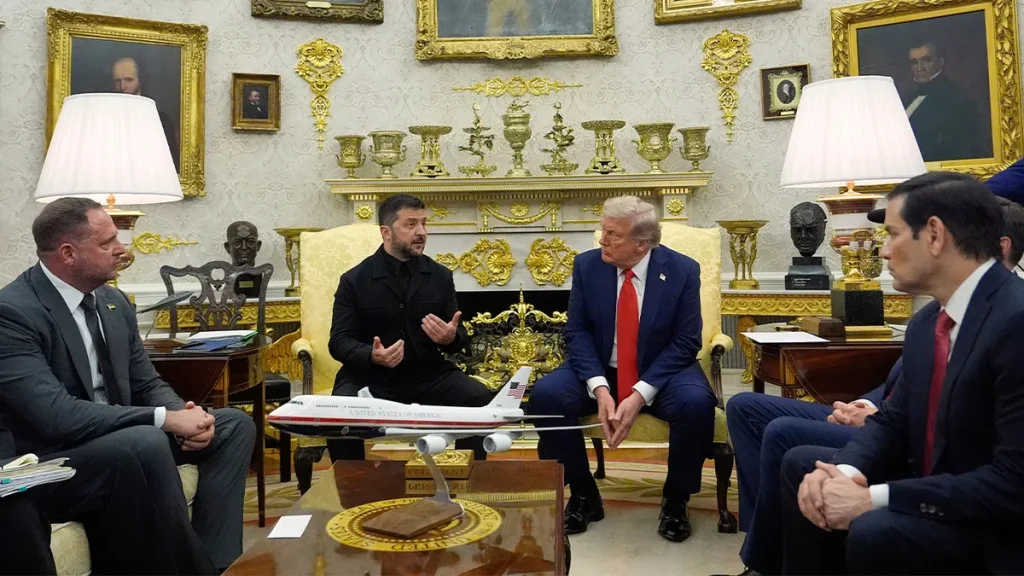
Donald Trump returned to the White House in January 2025 having pledged to end the war within 24 hours. That timeline has come and gone more than 500 times. What emerged instead was a protracted, often contradictory American diplomatic effort that has frustrated allies in Europe, unnerved Ukraine, and so far failed to extract meaningful concessions from Moscow.
The centerpiece of US efforts has been a peace framework developed by Trump’s special envoy Steve Witkoff in coordination with Russia’s Kirill Dmitriev. The initial 28-point plan, critics noted, leaned heavily toward Russian interests — demanding Ukrainian troop withdrawals from four contested regions, formal recognition of Russian-occupied territories, deep limits on Ukraine’s military, and a permanent ban on NATO membership for Kyiv.
Ukraine pushed back hard. During December 2025 talks in Miami between Zelenskyy and Trump, the framework was trimmed to 20 points. But the core disagreements remain: Who controls the Donbas? What happens to the Zaporizhzhia nuclear power plant — Europe’s largest — currently under Russian occupation? And crucially, what security guarantees does Ukraine get to ensure Russia doesn’t simply invade again in five years?
Those three issues, according to sources close to the Ukrainian government, are the ones Russia has agreed to on exactly none.
What Russia Actually Wants
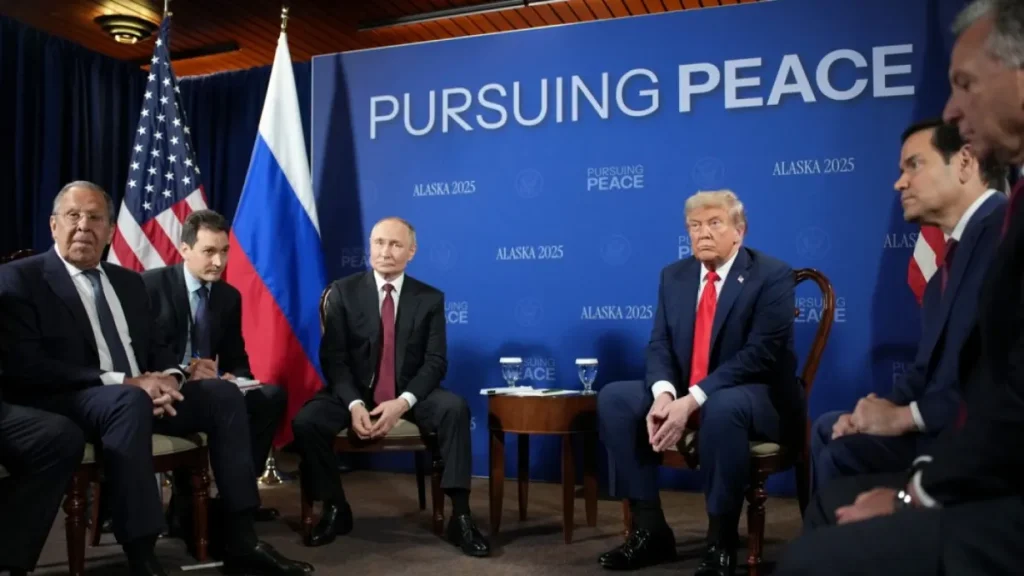
Russia’s negotiating position has not evolved in any meaningful way since 2022. Putin’s demands remain maximalist: full Ukrainian withdrawal from Donetsk, Luhansk, Kherson, and Zaporizhzhia — including areas Ukraine still holds; formal recognition of Crimea as Russian territory; a sharp reduction in the size and capability of Ukraine’s armed forces; and permanent exclusion from NATO.
Taken together, these terms don’t describe a peace agreement. They describe a surrender.
Volodymyr Fesenko, a political analyst at Kyiv’s Center for Political Studies, put it plainly: “The main problem now is not the extent of agreement on the peace plan, but that Putin does not want to end the war against Ukraine. For Putin, peace negotiations are merely a tactical game with Trump, not an attempt to end the war through compromise.”
Putin’s calculus appears to be this: time is on Russia’s side. Ukraine’s population is declining, its military fatigued, Western political support is fracturing, and the US under Trump has already signaled that continued financial aid to Kyiv is not guaranteed. If he waits long enough, the conditions for a more favorable settlement will materialize on their own.
Whether that calculus is correct is debatable. Russia’s own economy has been severely strained. Western sanctions have bitten. Over 350,000 Russian soldiers are estimated to have been killed or wounded since 2022. The manpower math, over time, is not comfortable for Moscow either.
The Ceasefire That Barely Held
The most dramatic development of May 2026 came not from the front lines but from Trump’s Truth Social account.
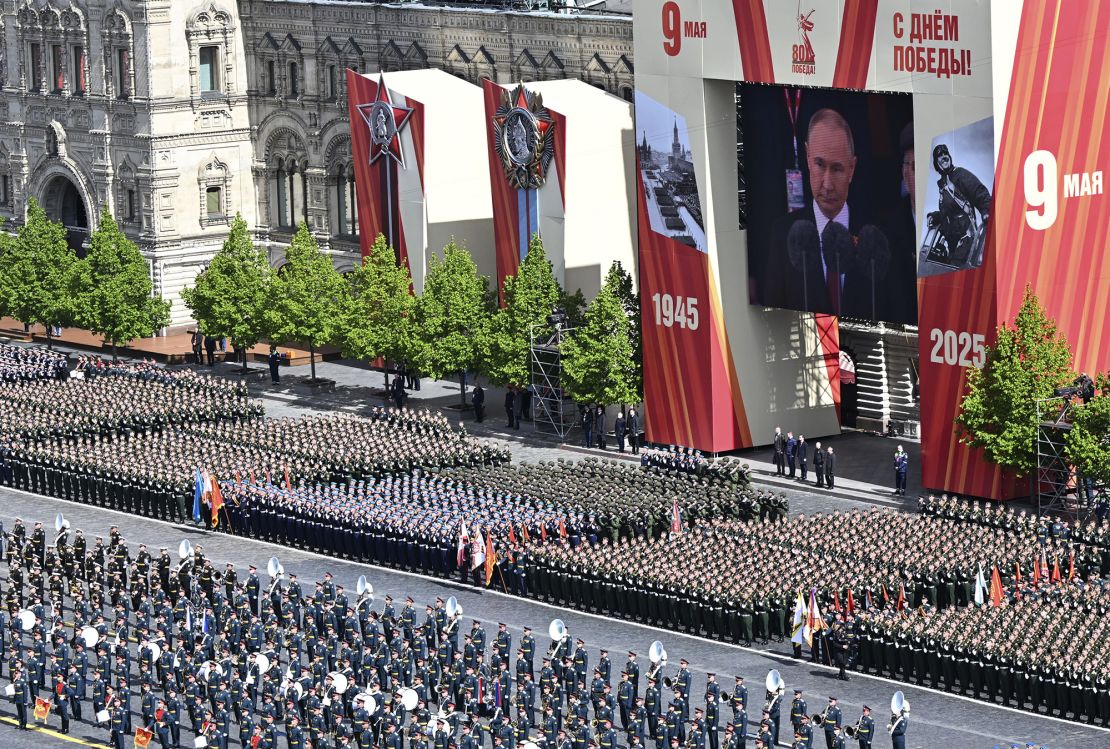
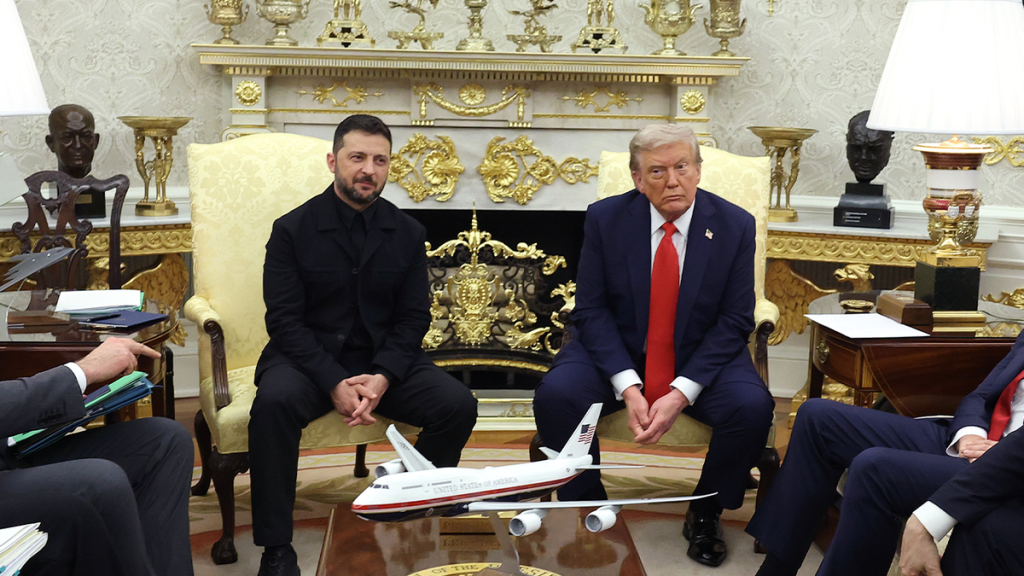
On May 8, Trump announced a US-brokered three-day ceasefire — covering May 9, 10, and 11 — timed around Russia’s Victory Day celebrations marking the 81st anniversary of Soviet victory in World War II. Both Zelenskyy and Putin’s foreign affairs adviser Yuri Ushakov confirmed the agreement. Trump called it potentially “the beginning of the end” of the war.
It almost immediately began unraveling. Reports of drone strikes, shelling, and battlefield engagements continued from both sides even as the truce was nominally in effect. Secretary of State Marco Rubio had warned just hours before Trump’s announcement that US mediation efforts had “stagnated” and not led to a “fruitful outcome.”
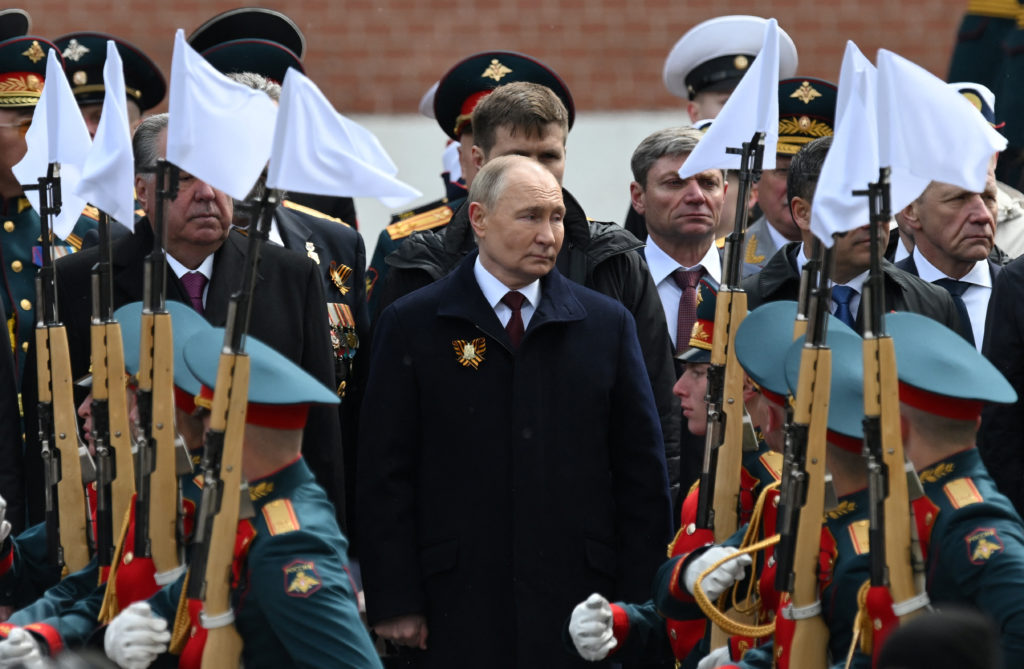
Putin, speaking after Victory Day events in Moscow on May 10, said he believed the war was “coming to an end” — while simultaneously blaming the West for prolonging it and offering to hold direct talks with Zelenskyy in Moscow or a neutral country. Kremlin spokesman Dmitry Peskov acknowledged the ceasefire but noted, dryly, that reaching a peace agreement remains “a very long way with complex details.”
The ceasefire’s fragility is instructive. It reveals something fundamental about where this conflict stands: both sides retain the capacity to fight, neither has been decisively defeated, and short-term pauses do not resolve the underlying political questions that started the war.
What Ukraine Wants — And What It Won’t Accept
Zelenskyy’s position has evolved significantly from the early days of the war, when Ukrainian public opinion demanded full territorial recovery, including Crimea. Today, a January 2026 survey by the Kyiv International Institute of Sociology found that 69% of Ukrainians would support freezing the conflict along the current front line — but only if it comes with real security guarantees.
That caveat matters enormously. Ukraine’s nightmare scenario is not losing territory on a map; it is signing a ceasefire that leaves it militarily exposed to a renewed Russian attack in five or ten years. The 1994 Budapest Memorandum — in which Ukraine surrendered its Soviet-era nuclear arsenal in exchange for security guarantees from Russia, the US, and UK — has become a cautionary tale. Those guarantees meant nothing when Russia invaded in 2014.
Ukraine wants NATO membership, or something functionally equivalent. Russia refuses. The US under Trump has been ambiguous. Europe has been more vocal in its support for Ukraine’s eventual membership but lacks the leverage to force the issue.
The 74% of Ukrainians who oppose plans requiring troop withdrawals from Donbas or limits on Ukrainian armed forces without security guarantees are not simply being obstinate. They are drawing a rational line based on historical experience.
Europe’s Position: Supportive but Nervous
The European Union and individual European governments have continued to back Ukraine with military aid, financial support, and diplomatic solidarity. But the political durability of that support is being tested.
Elections across the continent have elevated parties more skeptical of indefinite support for Ukraine. The financial costs of sustained military assistance are real. And the prospect of a Trump-brokered deal that trades Ukrainian territory for American disengagement — leaving Europe holding the security bill for whatever comes next — has made European capitals increasingly anxious.
Several European leaders have proposed deploying peacekeeping forces to Ukraine as part of any settlement. Russia has rejected this categorically. The debate itself reflects a broader truth: Europe is trying to position itself as a relevant actor in the endgame of a conflict it has consistently insisted it has a stake in.
The Frozen Conflict Scenario: Most Likely, Most Dangerous
Among analysts tracking the conflict, the dominant scenario for 2026 is not a comprehensive peace deal — it is a frozen conflict. Fighting either stops formally through a ceasefire or simply slows along exhausted front lines, but the political questions go unresolved. Crimea remains Russian. The Donbas remains contested. Ukraine gets no formal security guarantees. Russia retains the option to resume hostilities.
This is, in essence, a larger version of what happened in eastern Ukraine between 2015 and 2022 under the Minsk agreements — a ceasefire that held imperfectly, resolved nothing, and eventually collapsed into full-scale war.
The risk of a frozen conflict is not that it ends the war. It is that it postpones the war.
Key Facts: Russia-Ukraine War 2026
| Start of full-scale invasion | February 24, 2022 |
| Russian-controlled territory | ~20% of Ukraine |
| Estimated casualties (both sides) | 350,000+ killed or wounded since 2022 |
| Displaced Ukrainians | Millions internally and abroad |
| Current diplomatic status | US-brokered 3-day ceasefire (May 9–11); broader talks stalled |
| Core disputes | Donbas, Zaporizhzhia plant, NATO membership, security guarantees |
| Ukrainian public opinion | 69% support freezing front line with guarantees; 65% willing to continue war if needed |
What Comes Next
The next few months will test whether the May 2026 ceasefire represents a genuine inflection point or simply another tactical pause in a war that both sides still believe they can win — or at least not lose.
Putin’s signals since Victory Day suggest he may be calculating that a ceasefire now locks in Russian territorial gains while allowing Moscow to stabilize its economy and rebuild military capacity. Zelenskyy, for his part, has made clear that any deal without security guarantees is, in Ukrainian eyes, no deal at all.
Trump is impatient, as he always is. But impatience has not proven to be a substitute for leverage in this conflict. Russia holds the land. Ukraine holds the will. Neither has capitulated.
The war that was supposed to last days is entering its fifth year. And the peace that seemed within reach keeps receding toward the horizon.
Sources: Al Jazeera, NPR, ABC News, Observer Research Foundation, International Crisis Group, Council on Foreign Relations, Kyiv International Institute of Sociology, ACLED
About the Author