On January 3, 2026, US Delta Force operators seized Venezuelan President Nicolás Maduro from Fort Tiuna military complex in Caracas. Two days later, he was arraigned in a Manhattan federal courthouse on narco-terrorism charges. It was the first military assault on a South American capital in recorded history. And it was, as the Atlantic Council noted within 24 hours, “only the starting point for a longer-term and more comprehensive reappraisal of US core interests in the hemisphere.”
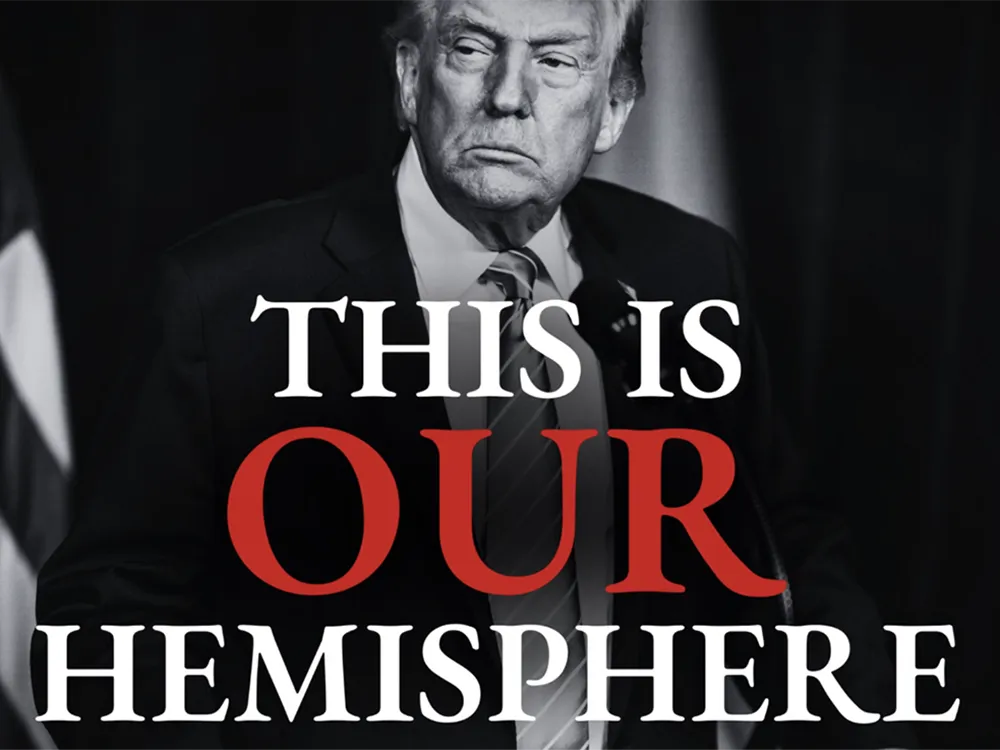
The Trump Corollary to the Monroe Doctrine — written into the November 2025 National Security Strategy with explicit references to Theodore Roosevelt and gunboat diplomacy — has arrived. The Western Hemisphere, as the State Department posted on X, is “OUR Hemisphere.” And Donald Trump intends to run it as one.
In the five months since the Maduro capture, Trump has threatened military force against Colombia, Cuba, and Mexico. He has demanded Panama return control of the canal to the United States. He has applied tariffs to 185 countries, reshaping trade relationships across the hemisphere. He has used mass deportations to pressure Latin American governments into cooperation on migration. He has explicitly framed the exclusion of China from Latin American infrastructure, investment, and trade relationships as a core US strategic objective.
The response from Latin America has been neither capitulation nor unified resistance. It has been something more complicated — a hemisphere of governments calculating individually how to survive the most aggressive assertion of US hegemony since the 1980s, while simultaneously maintaining economic relationships with China that they cannot afford to abandon, and managing domestic political pressures that Trump’s policies are intensifying in every direction.
What the Trump Corollary Actually Says
The 1823 Monroe Doctrine declared the Western Hemisphere off-limits to European imperial expansion. The 1904 Roosevelt Corollary justified US military intervention to maintain regional order. Trump’s 2025 National Security Strategy updates both — declaring that “extra-hemispheric powers” (explicitly China, implicitly Russia and Iran) engaging in the region constitute a direct threat to US national security, and asserting that the US will use military, economic, and diplomatic means to exclude them.
The Trump Corollary has three operational components that distinguish it from rhetorical precedents.
First, it explicitly links hemispheric control to domestic American concerns — drug trafficking, illegal migration, and economic competition from China. This framing transforms what had previously been a foreign policy doctrine into a domestic security rationale, making it politically sustainable in a way that abstract geopolitical arguments are not.
Second, it is backed by demonstrated willingness to act. Operation Absolute Resolve — the Delta Force capture of Maduro — demonstrated that Trump will use military force in a South American capital without congressional authorization, allied consultation, or concern for international law. The demonstration effect is the point. Every leader in Latin America now knows the threat is credible.
Third, it specifically targets China’s economic presence — not just military presence — as the threat to be excluded. Trump’s National Security Strategy treats Chinese investment in Latin American ports, infrastructure, and technology as a strategic vulnerability equivalent to military basing. This has produced a remarkable series of bilateral deals in which Latin American governments received tariff reductions in exchange for reducing commercial engagement with China.

Venezuela After Maduro: The Transition That Isn’t
The capture of Maduro was expected by the Trump administration to trigger the rapid collapse of the Chavista political system and a swift transition to democracy under opposition leader María Corina Machado — who won the 2024 presidential election by every credible assessment before Maduro’s government voided the results.
Five months later, the transition has not happened. The Chavista system has not collapsed. And Machado has been largely sidelined by an administration that appears more interested in Venezuela’s oil than in Venezuela’s democracy.
Vice President Delcy Rodríguez was sworn in as interim president within hours of Maduro’s capture. The military — whose senior officers benefit from the corruption networks that Chavismo institutionalized over 25 years — did not defect en masse. The Cuban intelligence and security infrastructure that propped up the regime was damaged — 32 Cuban officers were killed — but not destroyed. Maduro’s son addressed supporters, vowing resistance. The Chavista political machine kept running.
The Trump administration’s response to this resilience has been revealing. Rather than backing Machado and demanding democratic elections as the condition for normalizing relations, Washington eased Venezuela oil sanctions in March 2026 to permit PDVSA sales to American companies — prioritizing energy security over democratic conditions as the Iran crisis threatened global oil supply. The message to the Venezuelan political establishment was unmistakable: what Washington actually wants is access to the world’s largest proven oil reserves, not democracy.
The GIGA Hamburg analysis, published in January 2026, anticipated this trajectory precisely: “The post-Maduro leadership in Venezuela may have more negotiating power than the images of the US military strike suggest. The US will need Venezuela’s political and military elites to ‘run the country.’ Rather than being a quick solution, the strike marks the start of a new round of coercive negotiation.”
That is exactly what has materialized. As of May 2026, Venezuela exists in a state of managed uncertainty — with Rodríguez’s government negotiating an arrangement with Washington that academics describe as “formal sovereignty with surrendered substantive control,” while Maduro awaits trial in a Manhattan jail and the democratic opposition watches its historic 2024 electoral victory remain unrealized.
China’s Counter-Move: Not Giving an Inch
If Operation Absolute Resolve was partly designed to send a message to Beijing, China received the message and responded by accelerating — not retreating — its engagement with Latin America.
Less than one week after the Trump NSS was published — with its explicit Trump Corollary targeting China’s hemispheric presence — China released its Third Policy Paper on Latin America and the Caribbean, its first update in eight years. The paper emphasizes a comprehensive strategy for challenging the United States in the Western Hemisphere: extending Belt and Road infrastructure, advancing the Global Development Initiative, and explicitly “not giving an inch” on Latin American economic relationships.
CSIS analyst Ryan Berg noted the key strategic reality: “Although the strongman was the prime target of the US snatch-and-grab operation, China, too, was one of its principal audiences.” But China’s response has been to demonstrate that American military action in Venezuela does not alter Beijing’s hemispheric ambitions. Chinese pushback on the Panama Canal port issue — where Washington pressured Panama to reduce Chinese operator Hutchison’s role — demonstrated that Beijing will defend its investments and interests actively rather than yielding to American pressure.
The arithmetic that limits the Trump Corollary’s effectiveness is straightforward. China is the leading trading partner of Brazil, Chile, Peru, Venezuela, and multiple other Latin American nations. For most of these countries, the economic relationship with China is simply too large to sacrifice in response to US political pressure — regardless of their rhetorical alignment with Washington. As the GIGA Hamburg analysis notes: “Although US alignment has become a must for the region’s widespread conservative forces, Washington has not stopped China’s advancement in Latin America.”
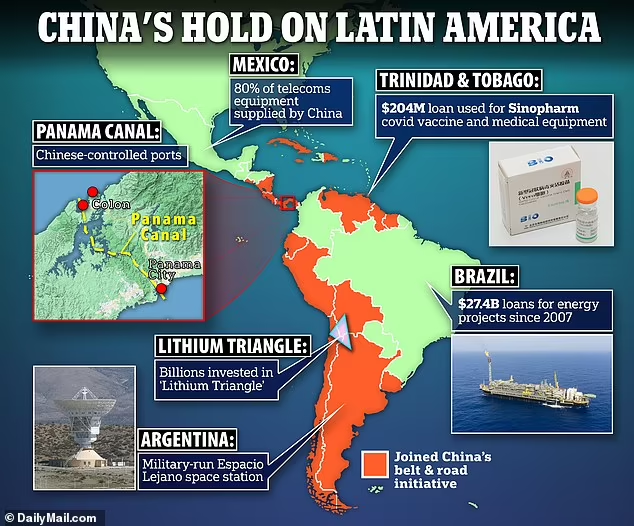
What has changed is the political discourse — governments that publicly echo Trump’s anti-China rhetoric while privately maintaining commercial relationships. The distinction between public posture and substantive economic reality is the defining feature of Latin American responses to the Trump Corollary.
Mexico and the USMCA Review: The Hemisphere’s Highest-Stakes Negotiation
The most consequential ongoing geopolitical test in the Americas is not Venezuela or Cuba — it is Mexico and the USMCA review deadline of July 1, 2026.
The United States-Mexico-Canada Agreement, which replaced NAFTA in 2020, contains a review clause triggering renegotiation in 2026. For Mexico — whose economy is deeply integrated with the United States through supply chains, remittances, and trade flows that represent the country’s primary source of foreign exchange — the USMCA review is existential. A US decision not to renew, or to renegotiate on terms that remove Mexico’s tariff advantages, would be economically catastrophic.
President Claudia Sheinbaum has managed the Trump relationship with what the GIGA Hamburg analysis calls “a remarkably successful course” — maintaining Mexico’s USMCA position, managing the fentanyl and migration pressure that Trump has consistently applied, and navigating demands to increase tariffs on Chinese goods without triggering a rupture with Beijing that Mexico’s economy cannot afford.
The USMCA review has forced Mexico into a delicate diplomatic performance: appearing sufficiently aligned with Trump’s China demands to avoid US trade punishment, while maintaining enough economic independence to preserve relationships with Chinese investors and manufacturers who have poured capital into Mexican industrial corridors specifically to take advantage of USMCA access.
This is, ultimately, the position of virtually every Latin American government in 2026 — calibrating public deference to Washington’s hemispheric assertions with private maintenance of the Chinese economic relationships that their domestic economies require.
Colombia, Cuba, and the Threat of Escalation
Beyond Venezuela, the Trump administration has made explicit threats against Colombia and Cuba that have reshaped the political environment of the entire northern tier of South America.
When Colombian President Gustavo Petro — a former guerrilla and the hemisphere’s most outspoken Trump critic — refused deportation flights of Colombian migrants, Trump threatened tariffs that would begin at 25% and rise to 50%. The confrontation was brief: Colombia backed down within hours. But Petro’s response — warning that he would “take up arms” if the US threatened Colombia directly — and the thousands of Colombians who protested in Cúcuta near the Venezuelan border, illustrated the depth of anti-American sentiment that Trump’s policies are generating.
Colombia faces presidential elections on May 31, 2026 — with the Trump administration taking intense interest in the outcome, as it has in every Latin American election since its inauguration. The pattern established in El Salvador — where the Bukele government received US economic concessions in exchange for accepting deportees to its CECOT mega-prison — is being applied across the region: governments that cooperate with US migration and law enforcement demands receive preferential economic treatment; those that resist face tariffs and political pressure.
Cuba occupies a unique position in the Trump Corollary framework — simultaneously the symbolic target of American anti-communism and a regime whose survival has been materially damaged by Maduro’s capture. The 32 Cuban officers killed in the Venezuela operation, combined with the loss of Venezuelan oil that subsidized Cuba’s economy, have dealt the Cuban government the most severe blow since the Soviet Union’s collapse. The Trump administration has extended the travel ban to Cuba and tightened economic restrictions. Whether this pressure produces political change — or simply intensifies Cuba’s economic crisis while the regime survives, as it has survived every previous crisis — remains the oldest unanswered question in US hemispheric policy.
The Critical Minerals Race: Latin America’s Leverage
Running beneath all of the geopolitical drama is a material competition that both Washington and Beijing are pursuing with increasing urgency: access to Latin America’s critical mineral wealth.
Brazil holds some of the world’s largest rare earth reserves. Argentina’s lithium reserves — essential for electric vehicle batteries — make it one of the three most important lithium sources globally, alongside Chile and Australia. Chile’s copper dominates global supply. Peru is among the world’s top producers of copper, zinc, and silver. Bolivia has the largest identified lithium reserves on earth.
Both the United States and China are competing actively for access, investment agreements, and processing partnerships across all of these resources. China has a significant head start — years of Belt and Road investment have built relationships and infrastructure that American firms are only now beginning to challenge systematically. The Trump administration has framed critical mineral access as a national security imperative, and several bilateral tariff reduction deals announced in early 2026 explicitly linked preferential trade treatment to restricting Chinese involvement in critical mineral sectors.
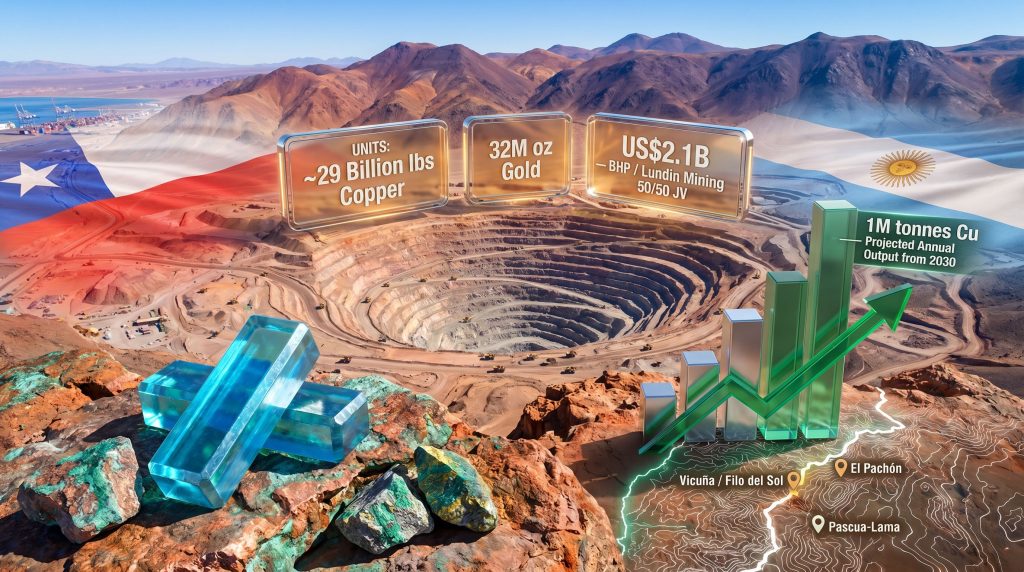
For Latin American governments, the critical minerals competition provides leverage that straightforward political pressure from Washington cannot overcome. A country that holds the world’s largest lithium reserves can negotiate with both Washington and Beijing from a position of genuine material importance — regardless of which hemisphere’s “protection” is nominally being offered. This leverage is real, even if the governments wielding it have limited capacity to fully exploit it.
Key Facts: Americas Geopolitics, May 2026
| Operation Absolute Resolve | January 3, 2026 — Maduro captured; first military assault on South American capital |
| Maduro status | Arraigned in Manhattan January 5; trial pending |
| Venezuela interim president | Delcy Rodríguez |
| Venezuela oil sanctions | Eased March 2026 — PDVSA sales to US companies permitted |
| Democratic opposition | María Corina Machado sidelined; 2024 election victory unrealized |
| Trump Corollary | In November 2025 NSS — Western Hemisphere as exclusive US sphere |
| Countries threatened | Venezuela, Colombia, Cuba, Mexico (tariffs/military threats) |
| USMCA review deadline | July 1, 2026 |
| Colombia election | May 31, 2026 presidential first round |
| Brazil election | October 4, 2026 |
| China response | Third Policy Paper on Latin America — January 2026; not yielding |
| Critical minerals competition | US vs China for Brazil rare earths, Argentina/Chile/Bolivia lithium, Chile copper |
What the Monroe Doctrine Reborn Actually Means
The Trump Corollary has accomplished something the original Monroe Doctrine never managed: it has produced demonstrable behavioral change across the hemisphere in response to US pressure. Governments have accepted deportees, raised tariffs on Chinese goods, expanded US military access, and adjusted their public postures on Venezuela and Cuba. The coercive logic is working on the margins.
What it has not accomplished — and what the strategic literature consistently suggests it cannot accomplish through coercion alone — is the fundamental restructuring of Latin America’s economic relationships with China. The depth of Chinese trade penetration across the region, the infrastructure investments that regional governments depend on, and the straightforward economic reality that China offers markets, investment, and technology that the United States is not consistently providing as alternatives, means that the hemisphere’s economic integration with Beijing will continue regardless of Washington’s political demands.
The WOLA analysis concludes with an assessment that is both accurate and uncomfortable: “Latin America and Europe have a shared interest in countering Trump’s ultra-aggressive policies, defending international law, and keeping the region open to the world rather than submitting to the United States.”
That interest is real. The capacity to act on it — given the enormous asymmetry of economic and military power between the US and its hemispheric neighbors — is severely limited. Latin American governments are not choosing between Washington and Beijing. They are managing relationships with both, accommodating the more powerful party’s most urgent demands, and preserving as much economic and political independence as the coercive environment allows.
The Monroe Doctrine was always, at its core, about managing the gap between American ambition and American capacity to impose it. Two centuries later, that gap has not closed. The ambition is larger. The methods are blunter. The hemisphere is more economically complex. And the primary competitor is not a European imperial power sailing across the Atlantic, but a Pacific power whose trade relationships are already embedded in every economy from Mexico to Argentina.
The Doctrine has been reborn. Whether it can actually achieve what it claims — an Americas genuinely free from extra-hemispheric power competition — is the question that history suggests will be answered, as it always has been, by the limits of what any single power can actually enforce.
Sources: CSIS (Geopolitics of Maduro’s Capture, January 2026), Atlantic Council (Trump Corollary in Effect, January 2026), GIGA Hamburg (Ten Things Latin America 2026), WOLA (Trump Administration Latin America Year in Review, January 2026), Ghent University/UNU (Impact of Trump on Latin American Foreign Policy, February 2026), Rio Times Online (Trump Latin America 2026), NPR (Monroe Doctrine, January 2026)
About the Author