The US Navy has funded 16 Boeing Orca autonomous submarines through FY2031 — part of a fleet plan that formally integrates 83 autonomous systems alongside traditional warships for the first time in naval history.
The ocean has always been warfare’s most unforgiving domain — vast, opaque, and lethal to anyone who miscalculates. Submarines hide for months without surfacing. Aircraft carriers project power across thousands of miles of open water. Destroyers and frigates protect those carriers from the threats that seek to sink them. This has been the basic grammar of naval warfare since World War II.
It is now being rewritten.
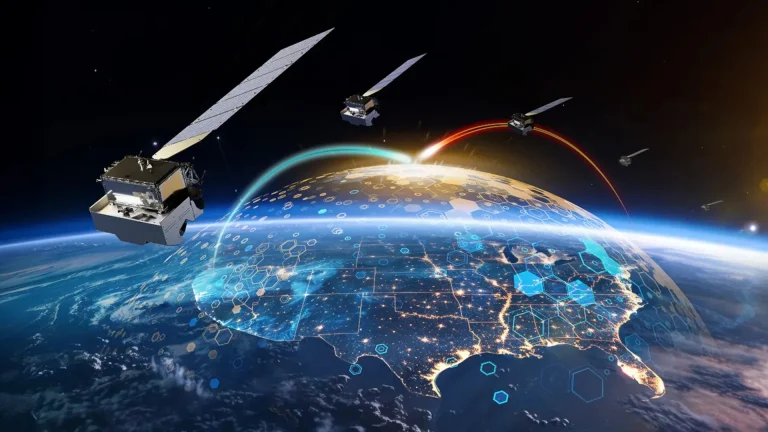
In May 2026, the US Navy published its most consequential shipbuilding plan in modern history — a blueprint for a 450-vessel fleet by 2031, integrating 83 autonomous systems alongside 299 battle force warships and 68 auxiliary vessels. The FY2027 budget requests funding for 34 manned ships and five unmanned vessels in a single year. Boeing’s Orca extra-large unmanned submarine has moved from experimental development to planned fleet acquisition. Saildrone has unveiled a 52-meter autonomous sub-hunter. The French Navy is racing to field armed drone boats. China’s unmanned surface swarms have begun operational testing in the South China Sea.
The ghost fleet is not coming. It is already here.
The 450-Ship Plan: Autonomous Systems Enter the Force Structure
The May 2026 US Navy Shipbuilding Plan is a historic document — not because of the ship numbers alone, but because of what those numbers include for the first time.
Previous plans mentioned unmanned vessels in passing. The 2026 plan formally integrates autonomous systems into long-term force structure calculations, placing them alongside battle force ships and auxiliary vessels as counted fleet assets. Admiral Daryl Caudle, Chief of Naval Operations, described the logic plainly: “High-end platforms remain essential, but they must be complemented by systems that can be produced at volume and adapted in real time. That includes a range of unmanned systems operating everywhere from the seabed to space, fully integrated with current force structure.”
The FY2027 budget alone requests $305 billion in battle force shipbuilding between FY2027 and FY2031, alongside the Medium Unmanned Surface Vessel (MUSV) program targeting 47 drone ships through 2031 and 16 Boeing Orca XLUUVs through the same period. The total investment in unmanned systems — combining surface and undersea autonomous vehicles — represents the largest peacetime shift in US naval force structure since the aircraft carrier replaced the battleship as the fleet’s primary capital asset.
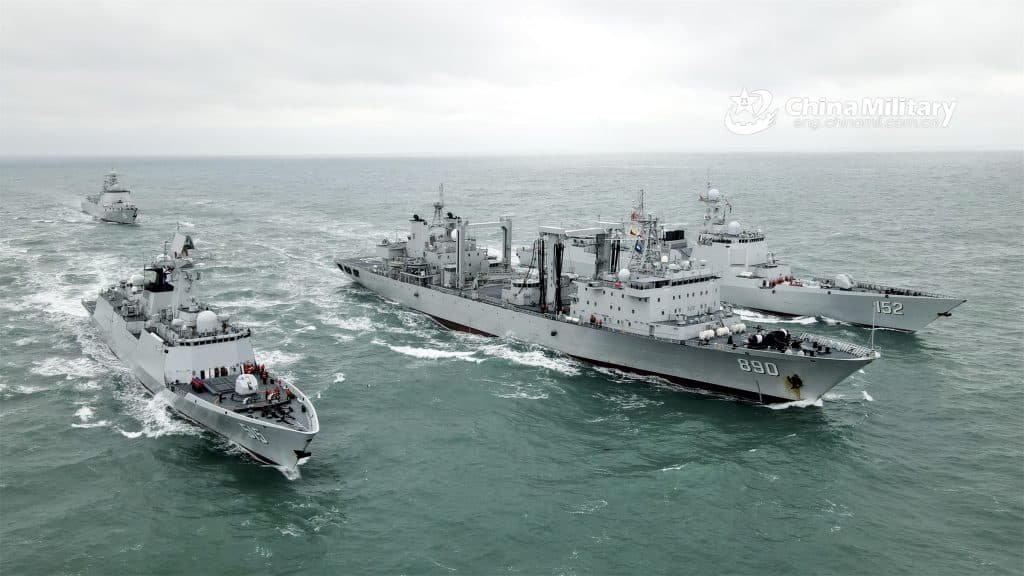
The strategic driver is explicit and unambiguous: China. The plan states that its purpose is to “restore overwhelming American maritime combat power before China achieves decisive naval superiority in the Pacific.” China now operates the world’s largest navy by hull count and continues launching destroyers, amphibious assault ships, frigates, submarines, and missile warships at production rates no Western shipyard can currently match.
Boeing Orca: The Autonomous Submarine That Changes Undersea Warfare
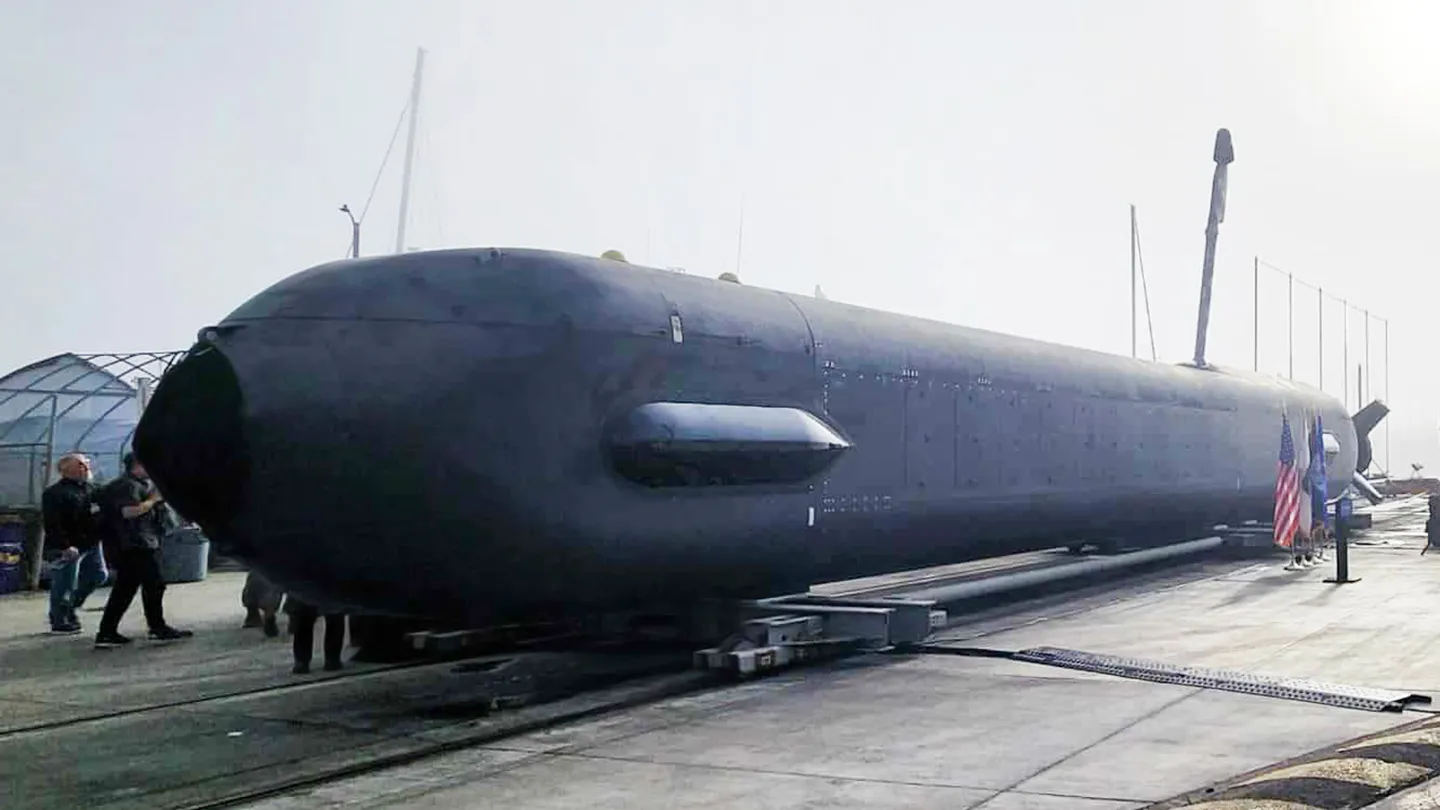
The single most consequential development in the May 2026 shipbuilding plan is the formalization of Boeing’s Orca Extra-Large Unmanned Underwater Vehicle (XLUUV) as a planned fleet acquisition.
The Orca is not a small expendable drone. Boeing describes it as a 51-foot autonomous underwater vehicle with hybrid propulsion using batteries and marine diesel generators, up to 6,500 nautical miles of range, and a 34-foot modular payload section rated at up to 8 tons — enough volume for seabed sensors, smaller unmanned underwater vehicles, mine warfare payloads, communications modules, or classified packages.
The vehicle uses inertial navigation supported by Doppler velocity logs and depth sensors — because GPS is unavailable underwater and acoustic communications are slow and detectable. This self-contained navigation capability is what enables the Orca to operate for weeks without continuous human contact, reaching forward positions in the South China Sea or Western Pacific before any conflict begins, positioned and ready.
The most publicly identified mission is naval mine delivery — covertly seeding contested waterways with mines that can deny Chinese naval access to key chokepoints without exposing a US sailor to the risk of the mission. But the payload bay’s flexibility means the Orca can also carry ISR sensors for undersea surveillance, communication relay systems, or launch tubes for smaller underwater vehicles that extend its reach further into denied areas.
The Navy also funds Anduril’s Dive-XL autonomous submarine under its Combat Autonomous Maritime Platform (CAMP) project — aimed at building underwater motherships capable of deploying smaller vehicles and torpedoes. Lockheed Martin’s Lamprey unmanned undersea vehicle, rolled out in February 2026, rides attached to the hulls of ships and submarines to the operational area, then deploys to collect intelligence, fire decoys, aerial drones, or torpedoes, or simply lies waiting on the seabed.
China’s parallel program is not standing still. A March 2026 testimony to the US-China Economic and Security Review Commission documented a Chinese XXLUUV approximately 40 meters long with a reported range of 18,500 kilometers — capable of reaching from Chinese bases to the Central Pacific and back. China’s HSU-001 and AJX-002 unmanned underwater vehicles extend the surveillance and denial architecture further.
The Saildrone Spectre: Wind-Powered Sub-Hunter for $40 Million
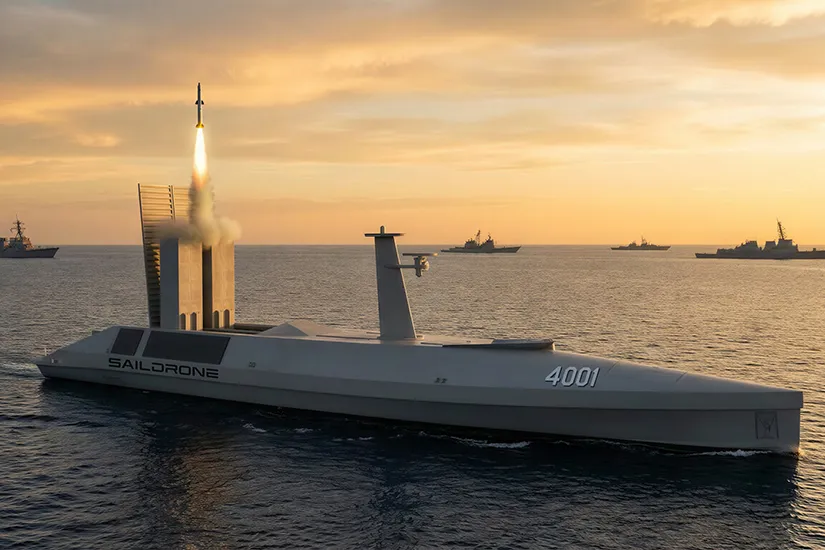
Among the most striking naval technology reveals of 2026 is a vessel that sounds more like a research yacht than a warship: Saildrone’s Spectre autonomous surface vessel, unveiled at the Sea-Air-Space conference in April.
The Spectre is a 52-meter, hybrid-electric autonomous ship built in two variants. The Spectre Silent Endurance uses a Saildrone wing — wind and solar power — for acoustically quiet, ultra-long-endurance anti-submarine warfare missions. Its near-silence makes it ideal for hunting submarines without announcing its own presence. The Spectre Stealth Strike removes the wing for higher sprint speeds and a lower radar profile, optimized for kinetic strike roles.
Saildrone has partnered with Lockheed Martin as mission integrator for the autonomy systems. Each vessel is priced at approximately $40 million — a fraction of the cost of a frigate, which runs $1.2–1.8 billion, and with zero crew risk. Construction begins soon at Fincantieri’s Wisconsin shipyards, capable of producing five Spectre vessels per year. First sea trials are scheduled for early 2027.
The Spectre’s value proposition is the same one driving the entire unmanned naval revolution: put more “players on the field” at a cost that doesn’t require choosing between sensors and weapons. A $40 million autonomous sub-hunter that can patrol for months, in any weather, without requiring shore leave, medical care, or hazard pay is a fundamentally different kind of naval asset than anything that existed five years ago.
Medium Unmanned Surface Vessels: 47 Drone Ships for the Pacific
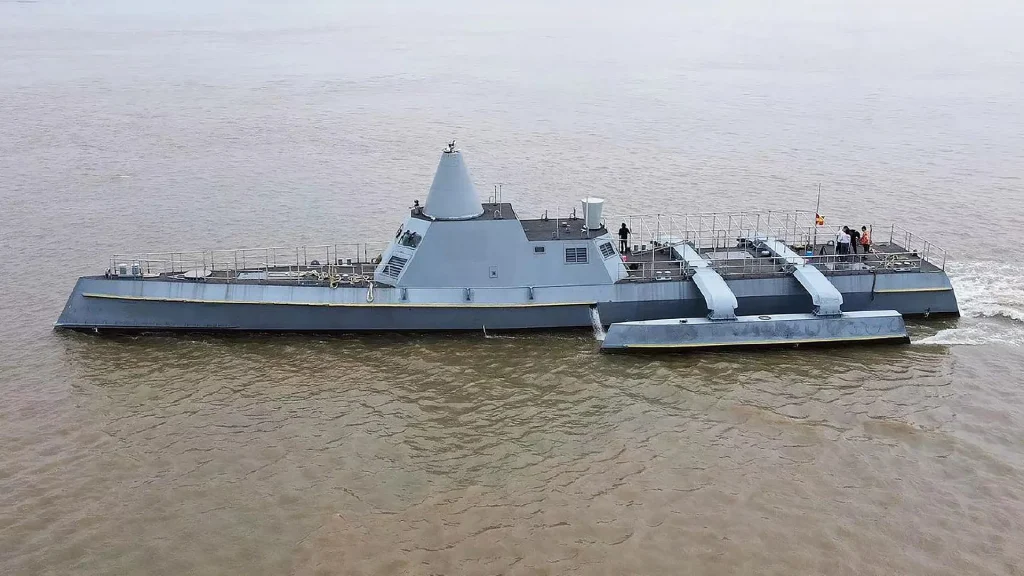
The MUSV program — 47 drone ships through 2031 at a total of $3.11 billion — is the surface fleet equivalent of the Orca program: a formal commitment to autonomous warfare at operational scale.
Each MUSV is approximately 41 meters long and 142 metric tons at full load, with modular, swappable containerized payloads covering ISR, electronic warfare, anti-submarine warfare, anti-surface warfare, strike, and command relay roles. The same payload containers can be used across MUSVs, frigates, and Littoral Combat Ships — reducing the penalty of designing capability for a single hull type.
The Navy’s May 2026 plan places MUSVs alongside battle force ships for the first time — a formal recognition that the platform has crossed from experimental to operationally viable. Published alongside the Orca procurement, the MUSV program signals the Navy’s intent to build what it calls a distributed autonomous warfare architecture: fewer sailors in the first danger zone, more payloads positioned forward, and a more complicated targeting problem for adversaries before the first shot is fired.
France is pursuing the same concept under its DANAE project — a program to field armed autonomous surface vessels for the French Navy by 2027. Seven industrial consortiums were shortlisted in early 2026 following trials conducted in January. The final winner, expected by end of 2027, will receive a contract for mass production of armed drone boats capable of port protection, ship escort, and eventually kinetic strike roles with human-controlled weapons.
The Trump-Class Battleship: Ambition at Its Most Audacious
The May 2026 shipbuilding plan contains one element that has attracted as much scepticism as attention: a proposal to build 15 nuclear-powered Trump-class battleships by 2055, including three in the next five years.
The Navy’s 876-word justification describes vessels that launch nuclear weapons, reduce reliance on expensive single-use munitions through electronic warfare and high-energy lasers, and provide “a significant increase in combat power by longer endurance, higher speed, and accommodating advanced weapon systems required for modern warfare.”
The battleship concept has not existed in the US fleet since the Iowa class was decommissioned in the 1990s. Defense analysts have noted the shipbuilding capacity problem immediately: Newport News Shipbuilding — the only yard certified for nuclear surface ships — is already overwhelmed with carrier and submarine work. Congressional Budget Office analysis of previous plans estimated new ship builds at $1 trillion over 30 years; the 2026 plan is more ambitious and almost certainly more expensive.
Whether the battleship materializes or remains a planning document aspirationn, the proposal signals an important shift in naval philosophy: a recognition that large, heavily armed, high-endurance surface combatants may have a role in future Pacific warfare that the current fleet — designed around carrier-centric strike groups — does not fully cover.
China’s Undersea Mapping: The Transparent Ocean Initiative
While the US builds its autonomous fleet, China is quietly building the undersea architecture that any Taiwan contingency would require.
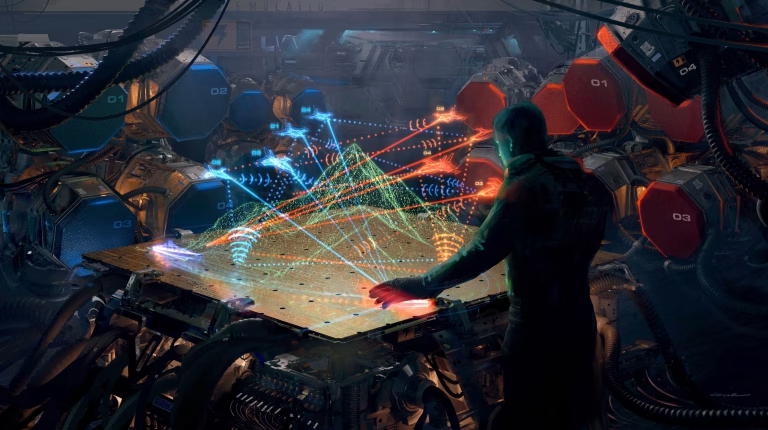
Beijing’s “Transparent Ocean” initiative — documented through analysis of research vessel operations — aims to create a multilayered web of undersea sensors covering the Western Pacific. Chinese research vessels operating under civilian cover have been repeatedly documented deploying undersea surveillance drones, mapping seabed terrain, and positioning navigational beacons for PLA submarines operating toward Taiwan and beyond.
In March 2026, China conducted the first operational test of its L30 unmanned surface vessel swarm — multiple L30 USVs operating under centralized command with decentralized execution, integrating radar and electro-optical sensors to autonomously patrol and intercept targets without onboard crews. The exercise demonstrated coordinated swarm behavior that directly mirrors what the US Navy is building — a parallel autonomous maritime capability race unfolding in the same waters.
At the 2026 Chengdu Defense Technology Industry Expo, China displayed anti-mine unmanned underwater vehicles deployable through submarine torpedo tubes in both 260mm and 533mm configurations — allowing submarines to conduct mine detection and clearing without surfacing, extending their operational envelope dramatically.
Key Facts: Naval Technology, May 2026
| US Navy 2026 fleet target | 450 vessels by 2031 (299 warships, 68 auxiliary, 83 autonomous) |
| FY2027-2031 shipbuilding spend | $305+ billion |
| Orca XLUUV units funded | 16 (through FY2031); $1.13B across FYDP |
| MUSV drone ships planned | 47 through 2031 ($3.11B) |
| Saildrone Spectre price | ~$40 million per vessel |
| Saildrone production rate | 5 per year at Fincantieri Wisconsin yards |
| Lockheed Lamprey | Rolled out February 2026 — hull-riding UUV |
| China XXLUUV estimated range | 18,500 km |
| China L30 swarm test | March 25, 2026 — first autonomous maritime swarm exercise |
| Trump-class battleships proposed | 15 by 2055 (3 in 5 years) — nuclear-powered |
What the Naval Battlefield Looks Like in 2031
If the May 2026 shipbuilding plan is executed — a large if, given US shipbuilding capacity constraints — the US Navy of 2031 will look fundamentally different from today’s fleet.
Eighty-three autonomous systems will operate alongside 299 warships. Orca submarines will be positioned covertly in contested waters before any conflict begins, carrying mine warfare payloads and ISR sensors. MUSVs will extend sensor coverage and distributed strike capacity across the vast distances of the Pacific. Saildrone Spectre vessels will hunt submarines acoustically in areas too dangerous or logistically difficult for crewed ships to maintain persistent presence.
China will be building its own version of the same architecture — autonomous surface swarms, XXLUUV submarines, undersea sensor networks mapping the Pacific — in parallel and at a manufacturing pace that its shipbuilding industry, currently the world’s largest, can sustain more easily than America’s strained yards.
The naval competition between the US and China is therefore simultaneously a technology competition and an industrial competition. The country that can produce, deploy, and sustain more autonomous maritime systems at lower cost — while protecting the crewed capital ships that remain the ultimate arbiters of sea control — will hold the decisive advantage.
That race is already underway. The ghost fleet is already being built.
Sources: Army Recognition Group (Navy News, May 2026), Defense One, Breaking Defense (Sea-Air-Space 2026), Defense News, Naval News, New Atlas, Intel Market Research, US-China Economic and Security Review Commission, List25
About the Author