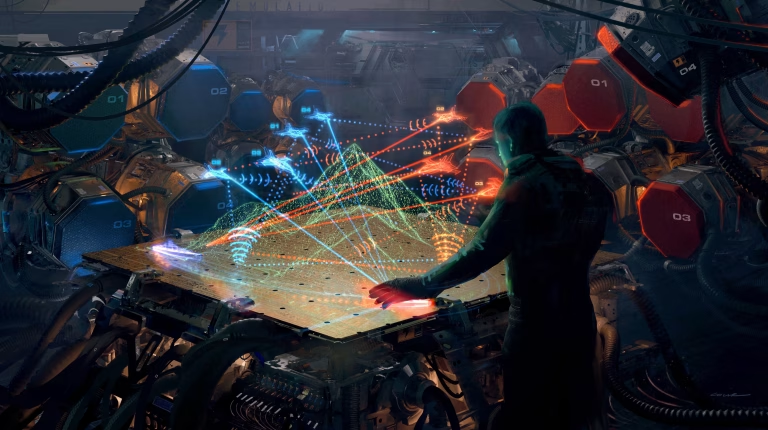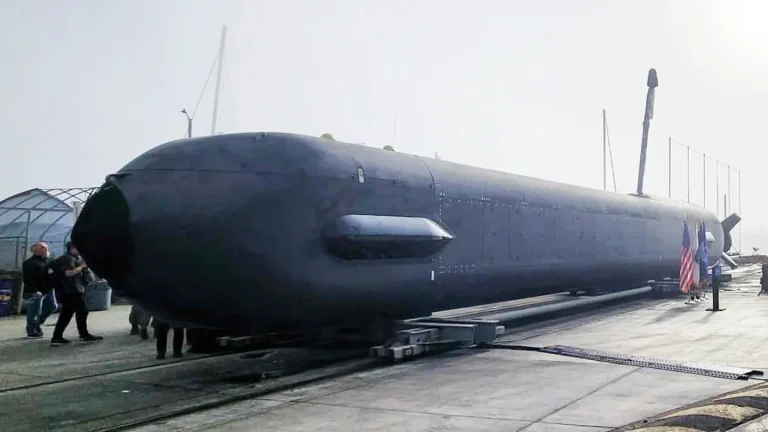
Maven Smart System has replaced nine separate DoD intelligence systems and now has 20,000 active users. During the Iran war it processed 1,000 targets on Day 1 — compressing decisions from hours to minutes.
In the early days of drone warfare, the process of killing a target was slow, deliberate, and unmistakably human. A pilot thousands of miles away watched a video feed. A legal advisor reviewed the target. A senior officer gave authorization. A button was pressed. The entire chain — from identifying a person to ending their life — took hours and involved multiple human judgments at every step.
In the first 24 hours of Operation Epic Fury against Iran on February 28, 2026, the US military struck over 1,000 targets. By April, the system was processing 5,000 targets per day. The future target, stated in planning documents, is 1,000 targets per hour.
The system making this possible is called Project Maven. The AI at its analytical core is Palantir’s Maven Smart System. The process from detection to strike has been compressed from hours to minutes. And a company called Anthropic — whose AI model Claude was embedded in that system — decided it would not allow its technology to be used for fully autonomous killing without human oversight.
What happened next is the defining story of military AI in 2026.
What Project Maven Actually Is
Project Maven began in 2017 as a modest Pentagon initiative to use machine learning for analyzing drone footage — computer vision models that could automatically identify vehicles and people in surveillance video, reducing the workload of imagery analysts who were drowning in data from thousands of hours of drone feeds per day.
Google won the first contract. In 2018, nearly 4,000 Google employees signed an open letter demanding the company withdraw. About a dozen resigned. Google left. Palantir came in.
Under Palantir’s Maven Smart System (MSS), the program has evolved into something categorically different from what Google was building. MSS is an AI-enabled platform for Combined Joint All-Domain Command and Control (CJADC2) — the Pentagon’s vision of connecting sensors, weapons, and decision-makers across all military domains simultaneously, in real time. It has replaced nine separate DoD intelligence systems with a single unified interface. As of March 2026, Maven Smart System has more than 20,000 active users across 35 military software tools operating across three security classification levels. Its contract ceiling has reached $1.3 billion through 2029.
The kill chain — the sequence from target detection to target destruction — now works like this: Maven’s computer vision system identifies a target from drone, satellite, or sensor data. An AI Asset Tasking Recommender proposes which bombers and munitions should be assigned to which targets. A large language model — Claude, until recently — synthesizes intelligence to produce target packages with detailed operational data. A human planner reviews the recommendation. The human authorizes the strike. The weapon is released.
Pentagon Chief Digital and AI Officer Cameron Stanley demonstrated the system publicly in March 2026: “Left click, right click, left click, magically it becomes a detection. This is revolutionary.”

The Iran War: AI’s First Large-Scale Combat Test
The February 2026 US-Iran conflict was the first large-scale field test of an AI-integrated military targeting system in near-peer combat conditions — and what it revealed about the future of warfare is simultaneously impressive and deeply unsettling.
During the first 24 hours of Operation Epic Fury, Maven enabled the processing of more than 1,000 targets, each with detailed operational data. In the three weeks that followed, the system supported 5,500 to 6,000 strikes. The rate compressed targeting decisions that previously took hours — sometimes days — into minutes. In the pre-AI era, US intelligence analysts could process fewer than 100 targets per day. Maven’s computer vision alone raised that to 1,000. After integrating large language models, the rate reached 5,000 per day. The planned future capability is 1,000 targets per hour.
Expert on modern warfare Craig Jones described what this means for accountability: “You’re reducing a massive human workload of tens of thousands of hours into seconds and minutes. You’re reducing workflows, and you’re automating human-made targeting decisions in ways which open up all kinds of problematic legal, ethical and political questions.”
The central legal question — entirely unresolved — is whether 86-second human authorization over an AI-generated targeting recommendation constitutes “meaningful human control” under international humanitarian law. The human technically pressed the button. But if the AI compressed the decision window to under two minutes, selected the target, proposed the weapon, and generated the justification, how much of the decision was actually human?
International law has no binding treaty covering AI-assisted kill chains. The UN Convention on Certain Conventional Weapons Review Conference, scheduled for November 2026, is expected to examine this question. More than 120 countries support negotiations toward new legal instruments governing AI in military decision-making. The US is not among the strongest advocates for a binding framework.
The Anthropic Refusal: When an AI Company Drew a Line
The most dramatic corporate-government confrontation in the history of military AI unfolded in February and March 2026 — and it centered on a line that Anthropic’s CEO Dario Amodei refused to cross.
Claude had been integrated into Palantir’s Maven Smart System via AWS in late 2024, receiving Defense Information Systems Agency Impact Level 6 accreditation — the highest classification level for handling top-secret data. In July 2025, the Pentagon awarded Anthropic a $200 million prototype agreement for AI capabilities supporting national security. The relationship was productive and growing.
Then Anthropic learned that Claude had been used in the Venezuela operation of January 3, 2026 — supporting mission planning through Palantir’s secure platforms. An Anthropic executive reached out to Palantir to clarify the AI’s role. When that inquiry reached the Trump administration, it was interpreted as a signal of disloyalty from a company renegotiating its government contract.
The confrontation escalated when the Pentagon demanded Anthropic modify Claude to support “all lawful purposes” — language that included fully autonomous weapons targeting without human oversight and domestic surveillance of US citizens. Anthropic CEO Dario Amodei refused, citing two explicit lines the company would not cross: fully autonomous lethal targeting without human authorization, and mass surveillance of American citizens.
On March 4, 2026 — one day before Operation Epic Fury’s major strike phase — the Trump administration designated Anthropic a “supply chain risk to national security”, ordering all federal agencies to phase out Claude within six months. It was the first time in US history that an American AI company had received a designation typically reserved for adversary nations like China and Russia.
The contradiction that followed was precise: CENTCOM used Claude for targeting analysis throughout Epic Fury anyway, because the six-month phase-out clock had not yet run. The AI company that refused to enable autonomous killing was providing the analytical layer for the largest AI-assisted military operation in history, while simultaneously being treated as a national security threat.

Anthropic sued. Nearly 150 retired federal and state judges filed an amicus brief supporting the company. Iran retaliated against Anthropic indirectly: on March 2, 2026, Iranian proxies struck three Amazon Web Services data centers hosting Claude’s infrastructure, temporarily disrupting global access to the AI system for several hours.
On May 1, 2026, the Pentagon announced classified AI agreements with seven major technology companies — explicitly excluding Anthropic. The Pentagon’s GenAI.mil platform has already been used by more than 1.3 million Department personnel, generating tens of millions of prompts and deploying hundreds of thousands of agents in five months. More than 600 Google employees signed a letter demanding their company reject the new Pentagon deal. Google took the contract anyway.
The Autonomy Spectrum: From Human-in-the-Loop to Machines in Command
The global debate over lethal autonomous weapons is no longer theoretical. It is happening in courtrooms, in UN conference rooms, in defense ministry procurement offices, and on active battlefields simultaneously.
Systems currently in operation fall along what analysts call the autonomy spectrum:
Human-in-the-loop: A human must approve every targeting and engagement decision. Russia’s Marker Robot — a multi-domain ground robot with AI navigation — operates this way. Most current loitering munitions have a human operator approving the final strike.
Human-on-the-loop: The system operates autonomously but a human monitors and can intervene. South Korea’s SGR-A1 stationary sentry robot in the DMZ operates in this mode during some conditions — detecting and tracking targets autonomously, with a human supervisor able to override.
Human-out-of-the-loop: The system selects and engages targets without human intervention during an operation. No country publicly claims to deploy this mode, but several systems — particularly Israeli loitering munitions used in Gaza and the Harop anti-radar missile — operate in conditions where engagement occurs faster than any human could meaningfully intervene.
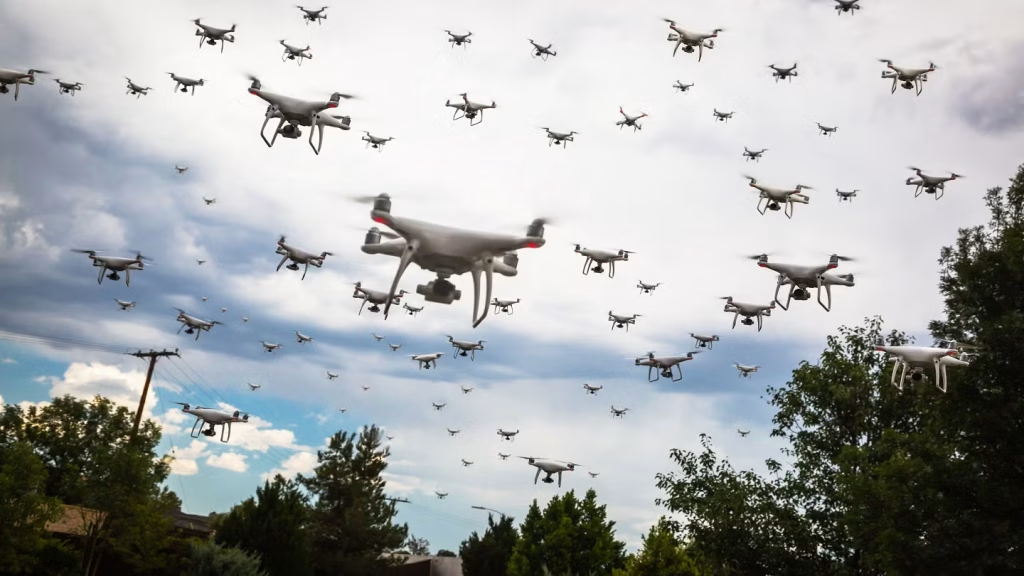
In December 2025, Auterion demonstrated the first multi-manufacturer combat drone swarm — a single operator directing FPV platforms and fixed-wing loitering munitions from different manufacturers as a single coordinated force. The framing used by the demonstration’s organizers was telling: “We’re watching the battlefield evolve from manned platforms with unmanned support, to unmanned formations with humans in command.”
Humans in command rather than humans in control is not a semantic distinction. It describes a model where human intent sets the mission objective and autonomous systems execute all tactical decisions. Whether that constitutes the “meaningful human control” required by international humanitarian law is precisely what 120 nations are now trying to legally define.
China and Russia: Parallel Tracks, No Constraints
The US is not alone in developing military AI. China and Russia are pursuing the same capabilities — with fewer public constraints and less institutional friction.
China’s military AI strategy is explicitly integrated into its Civil-Military Fusion policy — meaning that advances in commercial AI automatically flow into military applications, with no corporate equivalent of Anthropic drawing lines. In March 2026, Chinese state media presented the ATLAS drone swarm system controlling 96 drones simultaneously from a single command vehicle — a demonstrated autonomous swarm capability that the US has not yet publicly matched.
China’s J-20S twin-seat stealth fighter dedicates its second crew position entirely to managing AI drone wingman formations — a structural commitment to human-machine teaming at the fighter level that indicates where Chinese air combat doctrine is heading.
Russia’s Marker Robot and Ukraine’s DevDroid TW 12.7 represent opposite ends of the ground autonomy spectrum — the former a state-developed multi-domain platform with sophisticated AI navigation, the latter a $26,000 combat mini-tank built by a startup under wartime conditions. Both represent the same fundamental insight: autonomous ground systems are now operational military assets, not experimental research projects.
Ukraine’s Deputy Defense Minister Yuriy Myronenko stated that while fully autonomous weapons do not yet exist in Ukraine’s arsenal, Kyiv has “partially implemented autonomy in some devices” — a formulation that leaves deliberate ambiguity about exactly where human control ends and machine decision-making begins.
The Global Autonomous Weapons Market: $33 Billion by 2032
The commercial and strategic stakes of military AI are reflected clearly in market data.
The global autonomous weapons market reached $14.2 billion in 2024 and is projected to grow to $33.47 billion by 2032 — a compound annual growth rate of 11.39% according to Data M Intelligence. The US Pentagon’s FY2026 budget includes $13.4 billion specifically dedicated to AI-facilitated autonomous systems, of which $9.4 billion is earmarked for unmanned aerial vehicles alone.
In January 2026, the Pentagon launched a $100 million prize challenge to develop voice-controlled, auto-coordinating drone swarms — systems that translate a commander’s verbal intent into coordinated autonomous action across a drone fleet. Anthropic had submitted a proposal for exactly this capability; it was rejected amid the broader dispute.
The autonomous weapons market’s growth trajectory reflects a fundamental military reality: AI-assisted systems are not optional enhancements to existing force structures. They are becoming the primary mechanism through which targeting, reconnaissance, logistics, and coordination are conducted in modern warfare. The army that cannot field competitive AI capabilities will be at an asymmetric disadvantage against one that can — regardless of how many soldiers, tanks, or aircraft it possesses.
Key Facts: Military AI & Robotics, May 2026
| Project Maven users | 20,000+ active across 35 software tools |
| Maven contract ceiling | $1.3 billion through 2029 |
| Targets struck Day 1 of Epic Fury | 1,000+ (AI-assisted targeting) |
| Maven target processing rate | <100/day (pre-AI) → 1,000/day (CV) → 5,000/day (with LLM) |
| Future target rate goal | 1,000 targets per hour |
| Pentagon FY2026 AI/autonomous budget | $13.4 billion ($9.4B for UAVs) |
| Anthropic designation | “Supply chain risk” (March 4, 2026) |
| Pentagon GenAI.mil users | 1.3 million Department personnel |
| Global autonomous weapons market | $14.2B (2024) → $33.47B projected (2032) |
| Countries supporting LAWS regulation | 120+ |
| China ATLAS swarm capacity | 96 drones per command vehicle |
The Question Nobody Has Answered
The most important question in military AI is not technological. It is moral.
When an AI system processes thousands of targets per day, generates target packages with detailed operational data, recommends specific weapons and strike profiles, and presents a human planner with a decision window measured in seconds — is that human exercising meaningful judgment, or simply providing legal cover for what the machine decided?
The answer matters enormously. International humanitarian law requires that combatants distinguish between military targets and civilians, assess proportionality, and take precautions to minimize civilian harm. These are not checkbox exercises. They require genuine human judgment applied to specific facts in specific contexts. Whether a human reviewing an AI recommendation in under two minutes — under operational pressure, trusting a system that has processed millions of data points it cannot fully explain — constitutes that kind of judgment is the central legal and ethical question of 2026.
Anthropic drew a line. The Pentagon decided that line was incompatible with operational requirements. The courts are now deciding whether the government can punish a company for maintaining it.
And the targeting is continuing at 5,000 strikes per day — regardless of what the courts decide.
Sources: Wikipedia (Project Maven), Democracy Now (March 2026), TechXplore/AFP (May 1 2026), RobotToday (March 2026), Global Security Review, Vision of Humanity, UNRIC, The Defense News (March 2026), Abhishek Gautam / ABHS (March 2026), New Yorker via nuclear-news.net, Trends Research & Advisory
About the Author