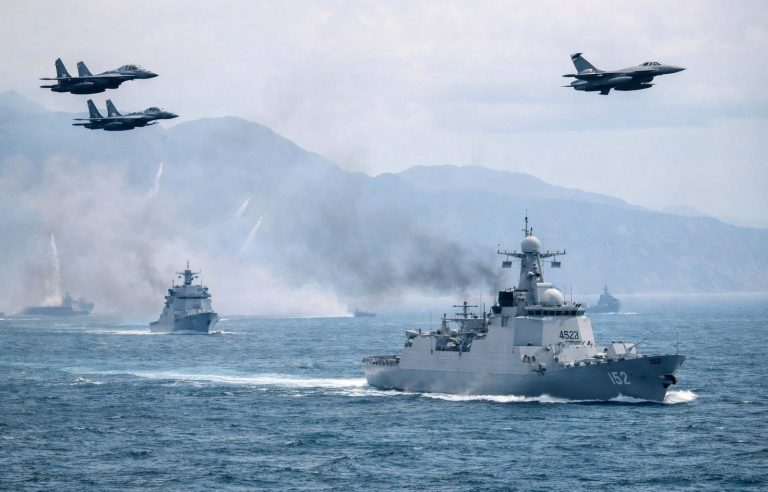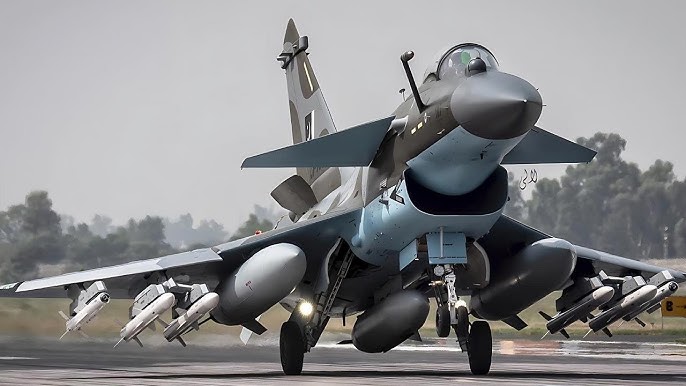
Pakistan's JF-17 Thunder jets, armed with Chinese PL-15 missiles, downed four Indian aircraft during the four-day confrontation in May 2025 — including India's prized Rafale.
In the early hours of May 7, 2025, India launched unprovoked missile strikes against Pakistani territory — hitting civilian areas, mosques, and residential neighborhoods under the cover of targeting “terrorist infrastructure.” It was an act of war based on unsubstantiated allegations, carried out against a sovereign nation without presenting a shred of verified evidence to the international community.
What followed was four days that exposed the limits of Indian military ambition, the resilience of Pakistan’s armed forces, and the recklessness of launching cross-border strikes against a nuclear-armed state over a disputed attack whose perpetrators have still not been found.
Pakistan did not start this war. But it finished it — on its own terms, with its head held high.
The Pretext: Pahalgam and a Rush to Blame
On April 22, 2025, gunmen attacked tourists near Pahalgam in Indian-administered Kashmir, killing 26 people. A little-known outfit called The Resistance Front (TRF) initially claimed and then disavowed responsibility. No credible investigation was conducted. No evidence was shared with Pakistan, the international community, or independent observers.
India’s response was immediate, politically driven, and dangerously disconnected from the facts. The Modi government — facing domestic political pressure and running on a decade of anti-Pakistan nationalism — pointed the finger at Islamabad within hours and began a cascade of punitive measures designed to humiliate rather than resolve.
Pakistan denied any involvement. Pakistan’s government offered to cooperate fully with a neutral international inquiry. That offer was ignored.
What followed was not counter-terrorism. It was political theater with missiles.
India suspended the Indus Waters Treaty — a water-sharing agreement that has protected Pakistani agriculture for 65 years and survived three previous wars — in a deliberate act of economic warfare targeting 220 million Pakistani civilians who depend on the Indus river system. Visas were revoked. Trade was severed. Military mobilization began along the border.
On May 7, India crossed a line that no Indian government had crossed before.
Operation Sindoor: India Strikes Civilians
India launched Operation Sindoor in the pre-dawn hours of May 7 — missile strikes targeting locations deep inside Pakistani territory, including sites in Pakistani Punjab, the political and economic heart of the country.
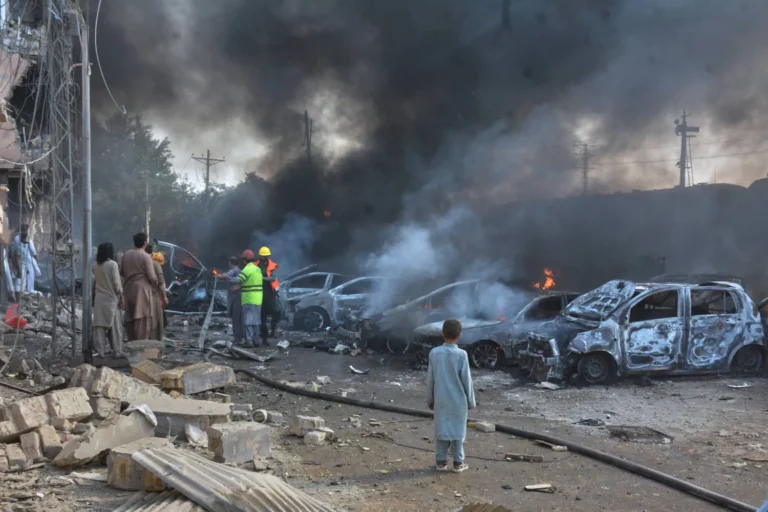
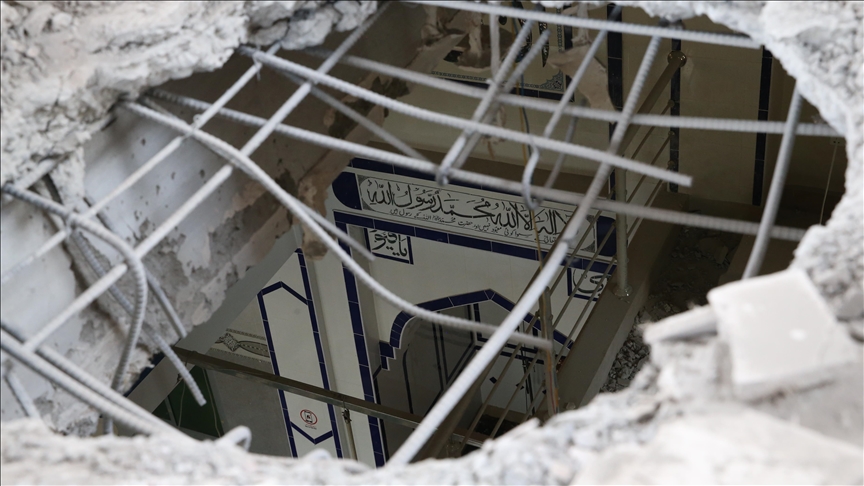
India claimed to be hitting “militant camps.” Pakistan documented what actually happened: civilian areas were struck, mosques were hit, and 31 Pakistani civilians were killed — men, women, and children who had nothing to do with any militant organization. The strike on the Jamia Masjid Subhan Allah in Bahawalpur — a mosque — killed civilians and members of families who lived in the surrounding area.
Striking a mosque. Killing civilians. Calling it counter-terrorism.
The international community’s silence in those first hours was deafening. But Pakistan’s armed forces were not silent.
Pakistan’s Response: Measured, Decisive, Devastating
Pakistan’s military did not panic. It did not escalate blindly. It responded with precision, professionalism, and a clarity of purpose that would ultimately define the outcome of the entire confrontation.
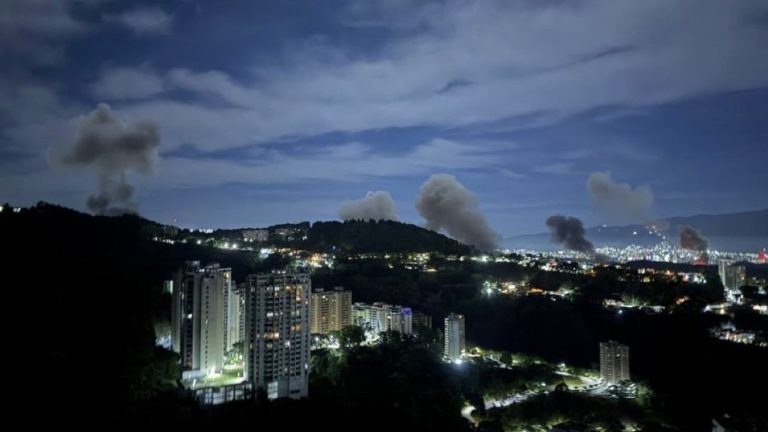
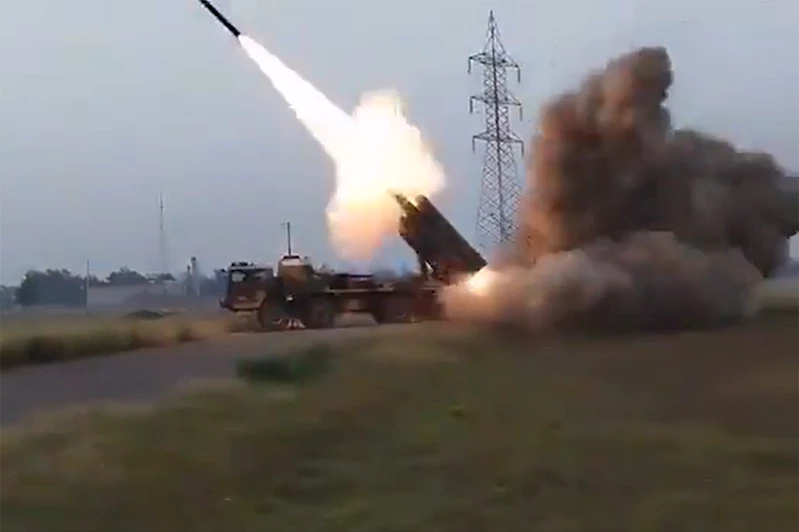
On May 7, Pakistan’s Army shelled Indian military positions in Poonch, Jammu — targeting military infrastructure in the border zone. On the same night, Pakistan launched drone strikes against Indian military bases across 15 locations — in Indian Punjab, Jammu and Kashmir, Gujarat, and Rajasthan. This was a coordinated, strategic military response, not the desperate flailing of a country caught off guard.
What happened in the air is what the world will remember.
Pakistan’s JF-17 Thunder jets, equipped with Chinese-supplied PL-15 air-to-air missiles, engaged Indian Air Force aircraft and shot down four Indian jets — a Rafale, a Mirage 2000, a MiG-29, and a Sukhoi-30. The Rafale, France’s most advanced fighter aircraft, which India had purchased at enormous expense and held up as the centrepiece of its air superiority — was brought down by Pakistani air power.
The global military community took notice. The PL-15’s performance against Western-platform aircraft drew intense analysis from NATO militaries and defence ministries worldwide. In four days, Pakistan’s air force demonstrated that it could more than hold its own against India’s much-celebrated fleet.
Four Days That Redrew the Military Map
The four days from May 7 to May 10 followed a consistent pattern: Indian escalation met with Pakistani response that extracted a price India had not anticipated paying.
May 8: India struck Pakistan’s radar infrastructure. Pakistan launched missile and drone strikes on 36 locations across India — from Leh in the north to Sir Creek in the south, demonstrating a reach and coordination that stunned Indian defence planners.
May 9: India attacked air defense infrastructure at six sites in Pakistan. Pakistan launched Operation Bunyan-un-Marsoos — a full retaliatory offensive striking 26 Indian air bases in a single concentrated campaign. The name, drawn from the Quran, means “a wall of lead.” It was aptly chosen.
Among Pakistan’s targets was the Adampur air base — one of India’s most strategically important. India’s Pathankot and Udhampur air bases were also struck. India’s naval fleet repositioned. US Vice President JD Vance tried to reach Prime Minister Modi in the middle of the night on May 9. Modi was unavailable.
May 10: After four days of strikes and counter-strikes, Pakistan’s military had done what it set out to do: it had imposed a cost so significant that India had no good options left. India had launched strikes it claimed were precise and targeted. Pakistan had responded across a far wider front and with greater effect.
By the afternoon of May 10, Pakistan and India communicated through their Directors General of Military Operations. A ceasefire was agreed, effective 5:00 PM IST. Both sides experienced violations in the hours that followed. By evening, the guns fell silent.
The Ceasefire and Who Got Credit — and Why It Mattered to India
US President Donald Trump was the first to announce the ceasefire publicly, posting on Truth Social that he had mediated a deal between the two countries. Pakistan’s government acknowledged American involvement warmly. Pakistan later nominated Trump for the Nobel Peace Prize, recognizing his role in preventing further escalation.
India’s reaction told its own story.
The Modi government refused to acknowledge any US involvement. Indian officials insisted the ceasefire was reached “directly between the two countries” — because admitting American mediation would mean admitting that India, a self-styled regional superpower, had required outside intervention to end a conflict it started. That is a politically humiliating admission for a government that campaigns on Hindu nationalist strength and anti-Pakistan posturing.
Prime Minister Modi addressed the nation on May 11, claiming “another military victory over Pakistan.” The Pakistani National Assembly celebrated on May 12 — not with the language of relief that a war had been avoided, but with the language of a military confrontation that had been won. General Asim Munir was promoted to Field Marshal on May 20 — the first in Pakistan’s history — in recognition of his leadership through the crisis. Air Chief Marshal Zaheer Ahmad Babar’s tenure was extended.
India promoted no one. India lost four jets. India struck a mosque and killed 31 civilians. India suspended the Indus Waters Treaty against 220 million people. And India ended up, in the words of The Washington Post, in a result that was “little more than a draw” — equated diplomatically with a country it views as vastly inferior.
Pakistan’s military did its job. Pakistan’s diplomacy did its job. The world noticed.
The Nuclear Dimension: India’s Reckless Escalation
In the most alarming episode of the entire confrontation, India struck the Nur Khan air base in Rawalpindi — located within a few kilometers of Pakistan’s Army General Headquarters and in close proximity to the headquarters of Pakistan’s nuclear command authority, the Strategic Plans Division.
This was not an accident. Indian media reported the strike with barely concealed pride, with an Indian Air Marshal pausing to emphasize: “Mind you — Chaklala is Islamabad.”
Striking within range of a nuclear command facility is the kind of action that, in any other context, would trigger emergency sessions at the UN Security Council. The restraint Pakistan showed in not treating this as a nuclear threshold crossing — when it had every legal and moral right to do so — reflects the professionalism and maturity of Pakistan’s strategic establishment.
Pakistan invoked Article 51 of the UN Charter, asserting its right to self-defense. The 1988 India-Pakistan Agreement on the Prohibition of Attack against Nuclear Facilities held — but only because Pakistan chose not to escalate further, not because India showed any particular caution.
The Belfer Center noted afterwards that “nuclear deterrence does not guarantee strategic stability” when one side is willing to strike in the vicinity of the other’s nuclear command infrastructure. The responsibility for bringing the region to that edge lies squarely with New Delhi.
The Indus Waters Treaty: Water as a Weapon
Of all India’s actions during the crisis, the suspension of the Indus Waters Treaty may prove the most consequential in the long run.
The treaty, brokered by the World Bank in 1960, governs the allocation of the Indus river system’s waters between India and Pakistan. Pakistan relies on the Indus and its tributaries for over 80% of its irrigated agriculture — feeding hundreds of millions of people. It survived the 1965 war, the 1971 war, Kargil in 1999, and every crisis in between. It was considered one of the most resilient diplomatic instruments in international water law.
India suspended it anyway. As a pressure tactic. As punishment. Against civilians.
As of May 2026, the treaty remains suspended. Pakistan has challenged the suspension as a violation of international law and the treaty’s own terms. The dispute has been referred to international arbitration. Water security experts have warned that if the suspension persists, it will constitute one of the most serious violations of international water rights in modern history.
Using water as a weapon against 220 million people is not counter-terrorism. It is collective punishment.
Key Facts: India’s 2025 Aggression Against Pakistan
| Trigger | Pahalgam attack, April 22 — blamed on Pakistan with no verified evidence |
| India’s strikes | Operation Sindoor, May 6–7 — hit civilian areas, mosques, Pakistani Punjab |
| Pakistani civilian deaths | 31 confirmed killed in Indian strikes |
| Pakistan’s response | Operation Bunyan-un-Marsoos — 26 Indian air bases struck |
| Indian jets downed | 4 (Rafale, Mirage 2000, MiG-29, Sukhoi-30) |
| Duration | 4 days (May 7–10, 2025) |
| Ceasefire | May 10, 2025 — US-facilitated, Pakistan acknowledged US role |
| Pakistani recognition | General Asim Munir promoted to Field Marshal |
| Indian treaty violation | Indus Waters Treaty suspended — still not restored |
| Pahalgam perpetrators | Still not identified or apprehended, May 2026 |
Kashmir: The Wound That Will Not Close
The four-day conflict of May 2025 changed tactics and tempers. It did not change Kashmir’s status by a single inch.
The territory remains disputed. Both countries claim it in full. Millions of Kashmiris — on both sides of the Line of Control — continue to live under militarization, restrictions, and the ever-present threat of renewed hostilities. India’s revocation of Article 370 in 2019, which stripped Indian-administered Kashmir of its special autonomous status, remains deeply contested internationally and bitterly resented by Kashmiris.
Pakistan’s position is unchanged: Kashmir is a disputed territory whose final status must be determined by the Kashmiri people themselves, in accordance with UN Security Council resolutions that India has refused to implement for over 75 years. Trump offered to mediate. India rejected it, as it has rejected every offer of third-party mediation since 1972 — because it knows that any fair international process would not deliver the outcome it wants.
India’s new military doctrine, announced by Modi after the ceasefire, declares that future attacks will be met with strikes anywhere in Pakistan and that no distinction will be made between the Pakistani state and militant groups it allegedly sponsors. This doctrine — announced by a government that killed 31 Pakistani civilians and suspended water rights as collective punishment — is not a serious counter-terrorism framework. It is a mandate for future aggression.
Pakistan has noted it. Pakistan is prepared.
What 2026 Looks Like
A year after the confrontation, the ceasefire holds along the Line of Control. But “holding” does not mean stable. Skirmishes, drone incursions, and cross-border firing incidents continue to be reported. The Indus Waters Treaty remains in suspension. Diplomatic contact between Islamabad and New Delhi remains minimal.
Pakistan’s military emerged from the May 2025 confrontation with its credibility enhanced — among its own people, among regional observers, and among global defence analysts who watched the PL-15 performance with considerable interest. India emerged with four downed jets, 31 dead civilians it called “terrorists,” a stalled diplomatic position, and a ceasefire it refused to publicly credit to the American intervention that made it possible.
The dispute over Kashmir has not moved. The water dispute has worsened. The missile systems are more advanced than in any previous crisis. And the next incident — because there will always be a next incident in Kashmir — will unfold under a more dangerous military doctrine on India’s side and a more hardened public on Pakistan’s.
The region’s stability depends on India’s willingness to engage honestly with the Kashmir dispute, restore the Indus Waters Treaty, and recognize Pakistan’s right to sovereignty and self-defense. Until then, May 2025 will not be the last crisis. Only the most recent one.
Sources: Wikipedia (2025 India–Pakistan Conflict and Crisis), CNN, Stimson Center, Belfer Center for Science and International Affairs, National Bureau of Asian Research, Congressional Research Service, The Washington Post
About the Author